A reign mark tells you what a pot claims. It does not tell you what the pot is. That distinction is the whole of this guide, and getting it the wrong way round is the single most expensive mistake a new collector makes.
Most mark guides are lookup tables: here is the Kangxi mark, here is the Qianlong mark, now go and match yours. That is useful for about ninety seconds. What follows instead is how the marks work, why so many of them name the wrong reign, and what the mark can and cannot settle about the object in your hands.
What a reign mark actually says
A Chinese reign mark is a sentence, not a signature. The British Museum puts it plainly: marks “comprise characters for the dynasty, emperor’s reign and for ‘made in the years of’” (Room 95 gallery guide).
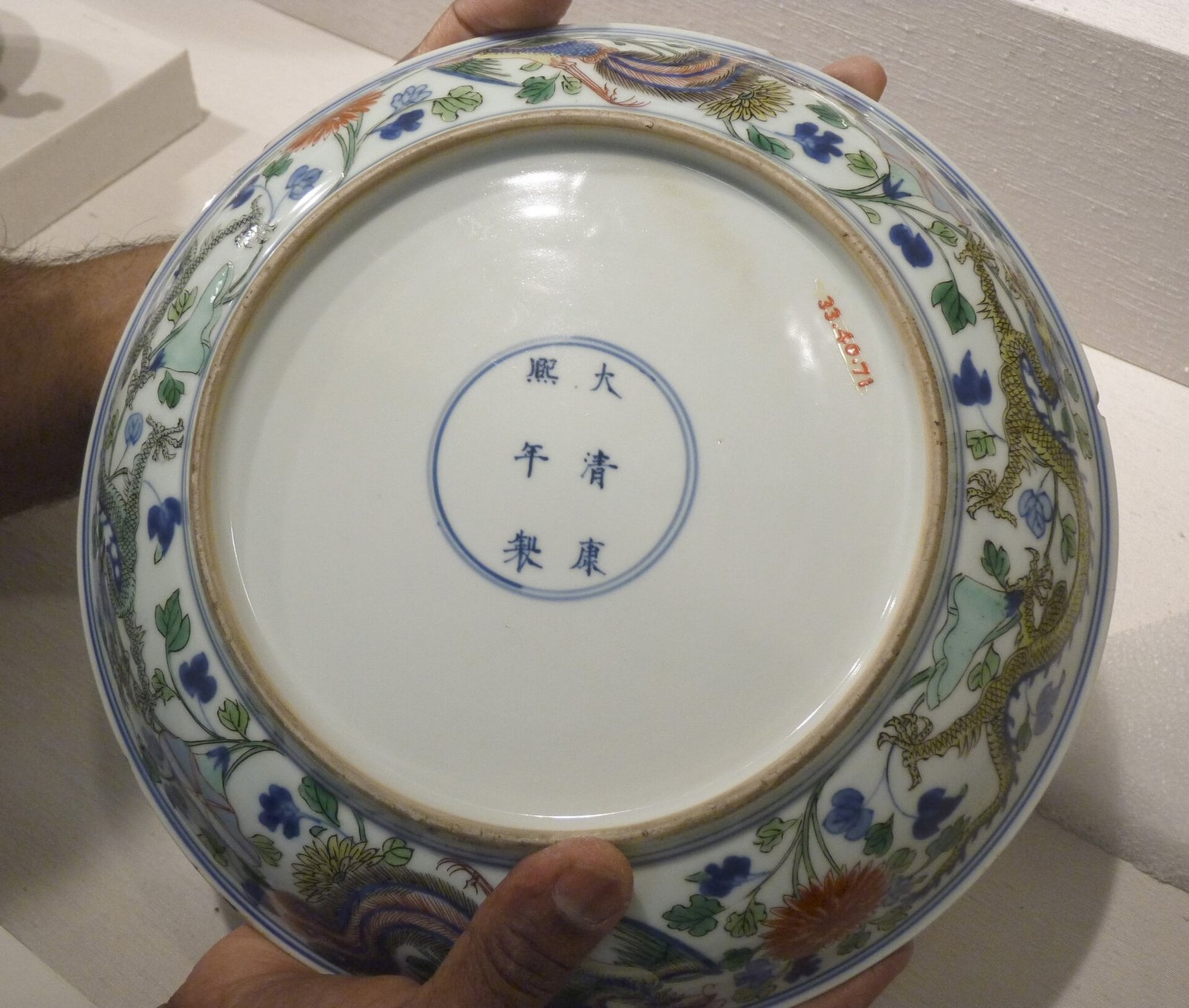
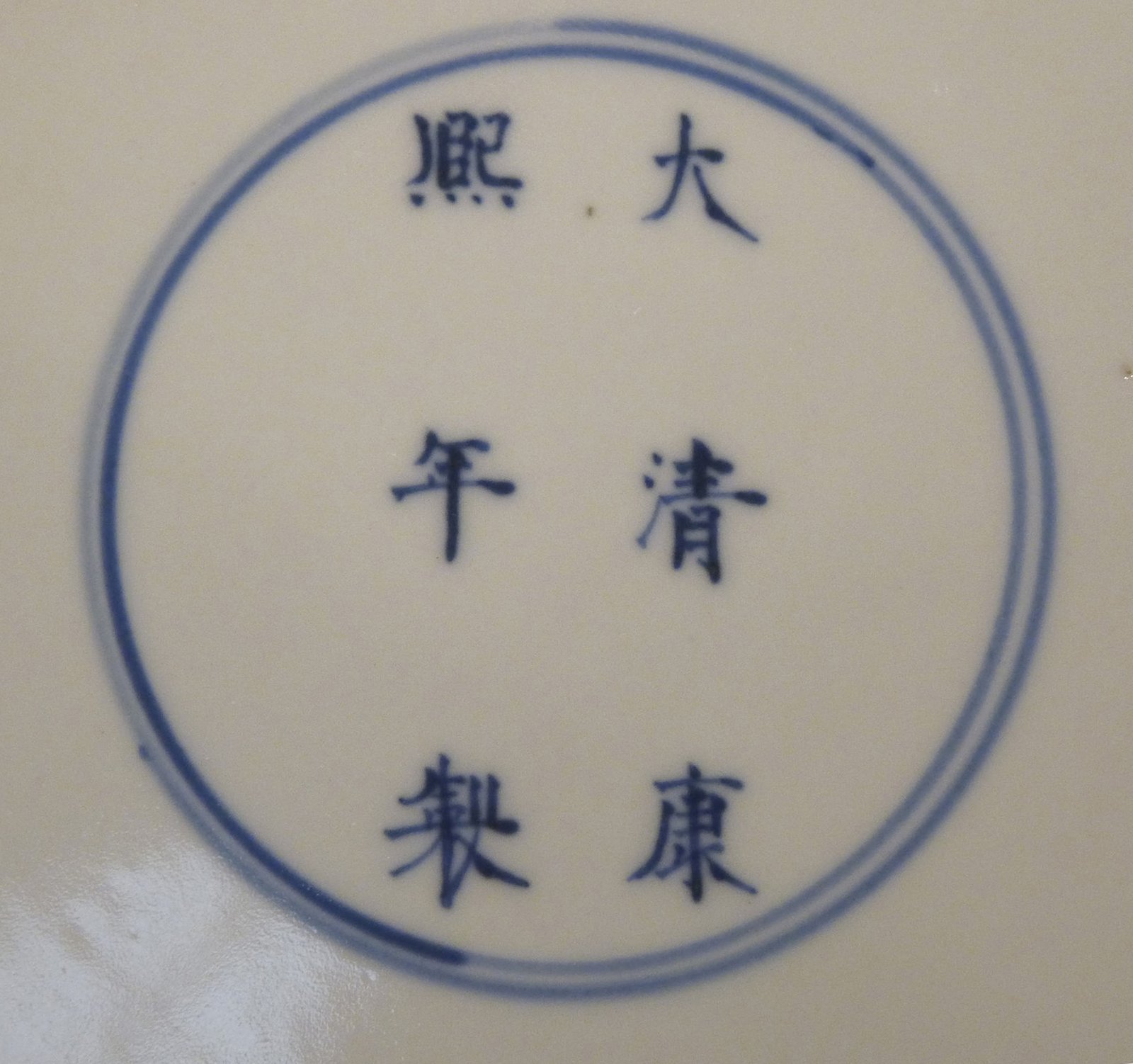
The standard six-character formula is 大 + dynasty + reign name + 年製 — “made in the [X] reign of the great [Y] dynasty”. The Metropolitan Museum’s Handbook of Chinese Ceramics reads a Ming example as Da Ming Xuande nianzhi; the V&A transliterates a Qing example as Da qing tong zhi nian zhi.
Read it from the top right, in columns, right to left and top to bottom. In the usual three-by-two grid, characters one to three run down the right-hand column and four to six down the left. Horizontal marks exist too — the British Museum records a Xuande mark running horizontally around a vase neck, read right to left (museum no. 1968,0422.34) — so a mark that is not on the base is not automatically wrong.
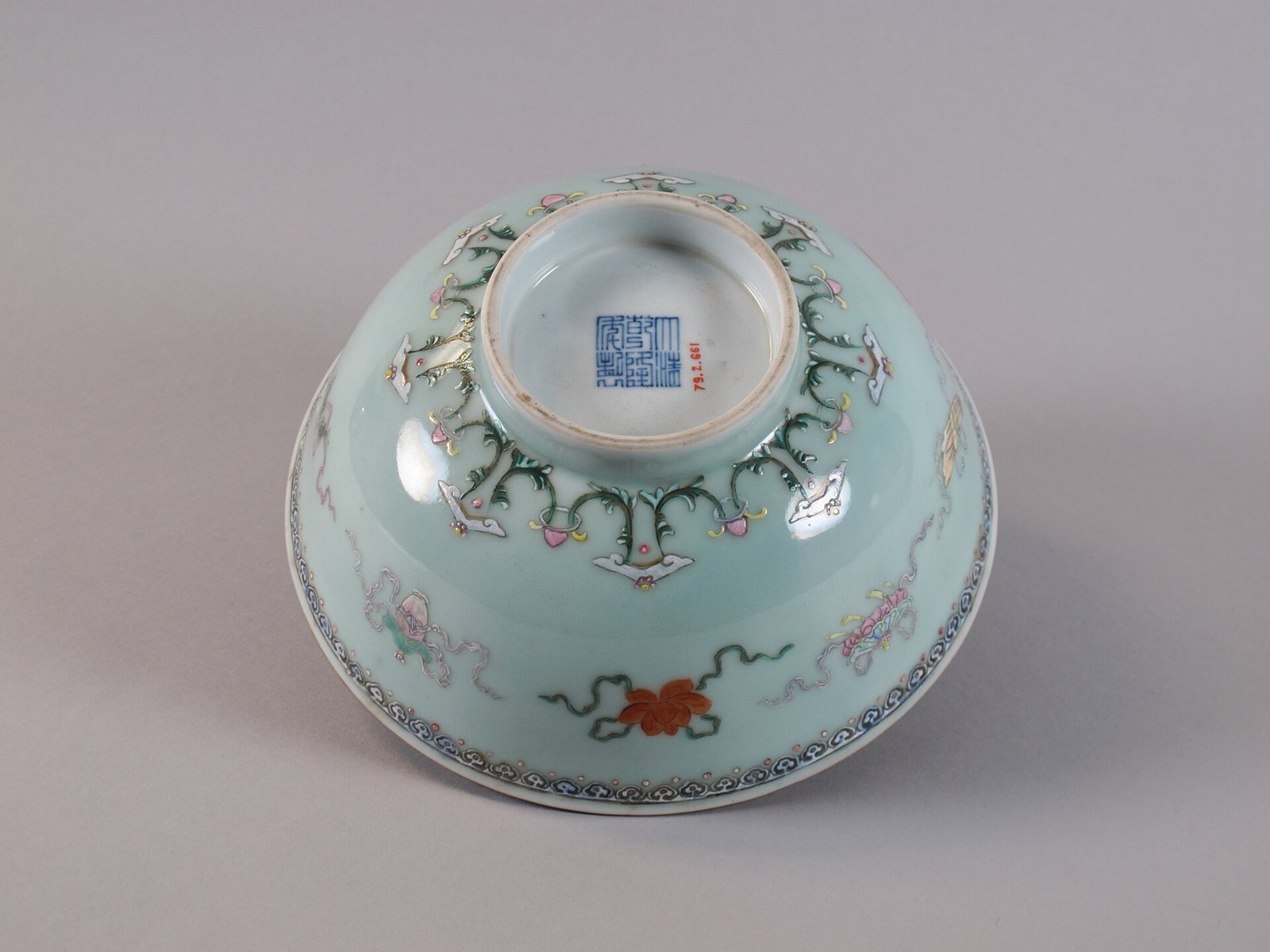
The four-character form simply drops Da and the dynasty, leaving the reign name and 年製. The British Museum dates the four-character mark to the Yongle era and notes that the six-character version “became standard in the Xuande era”. Four-character marks never disappear: a Percival David famille rose teapot carries a four-character Qianlong mark in a double square.
| Reign | Dates | Six-character mark |
|---|---|---|
| Shunzhi | 1644–61 | 大清順治年製 |
| Kangxi | 1662–1722 | 大清康熙年製 |
| Yongzheng | 1723–35 | 大清雍正年製 |
| Qianlong | 1736–95 | 大清乾隆年製 |
| Jiaqing | 1796–1820 | 大清嘉慶年製 |
| Daoguang | 1821–50 | 大清道光年製 |
| Xianfeng | 1851–61 | 大清咸豐年製 |
| Tongzhi | 1862–74 | 大清同治年製 |
| Guangxu | 1875–1908 | 大清光緒年製 |
| Xuantong | 1909–11 | 大清宣統年製 |
Reign dates follow the Metropolitan Museum’s List of Rulers of China. Xuantong is given as 1908/9–1912 deliberately: Puyi succeeded on Guangxu’s death in November 1908, but the era conventionally begins with the new year, and institutions differ over which to print.
Regular script or seal script — and why it dates things
Ming and early Qing marks are normally written in kaishu, regular script, usually enclosed in a double circle or a double square. Zhuanshu, seal script, is in use on imperial porcelain by the Yongzheng reign, and under Qianlong it takes over. The British Museum’s wording is exact and worth keeping: “Throughout the 60-year reign of the Qianlong emperor, seal script base marks predominated over standard script marks.”
Note the verb. Predominated, not replaced. Regular-script Qianlong marks exist, and anyone who tells you a regular-script Qianlong mark is automatically wrong has over-read the rule.
Mark and period, or apocryphal?
“Mark and period” is not dealer shorthand. It is a formal cataloguing category used by the Met, Cleveland and the V&A in their own period fields, and it means exactly one thing: the piece carries the reign mark of X and was made during X’s reign. The mark and the object agree.
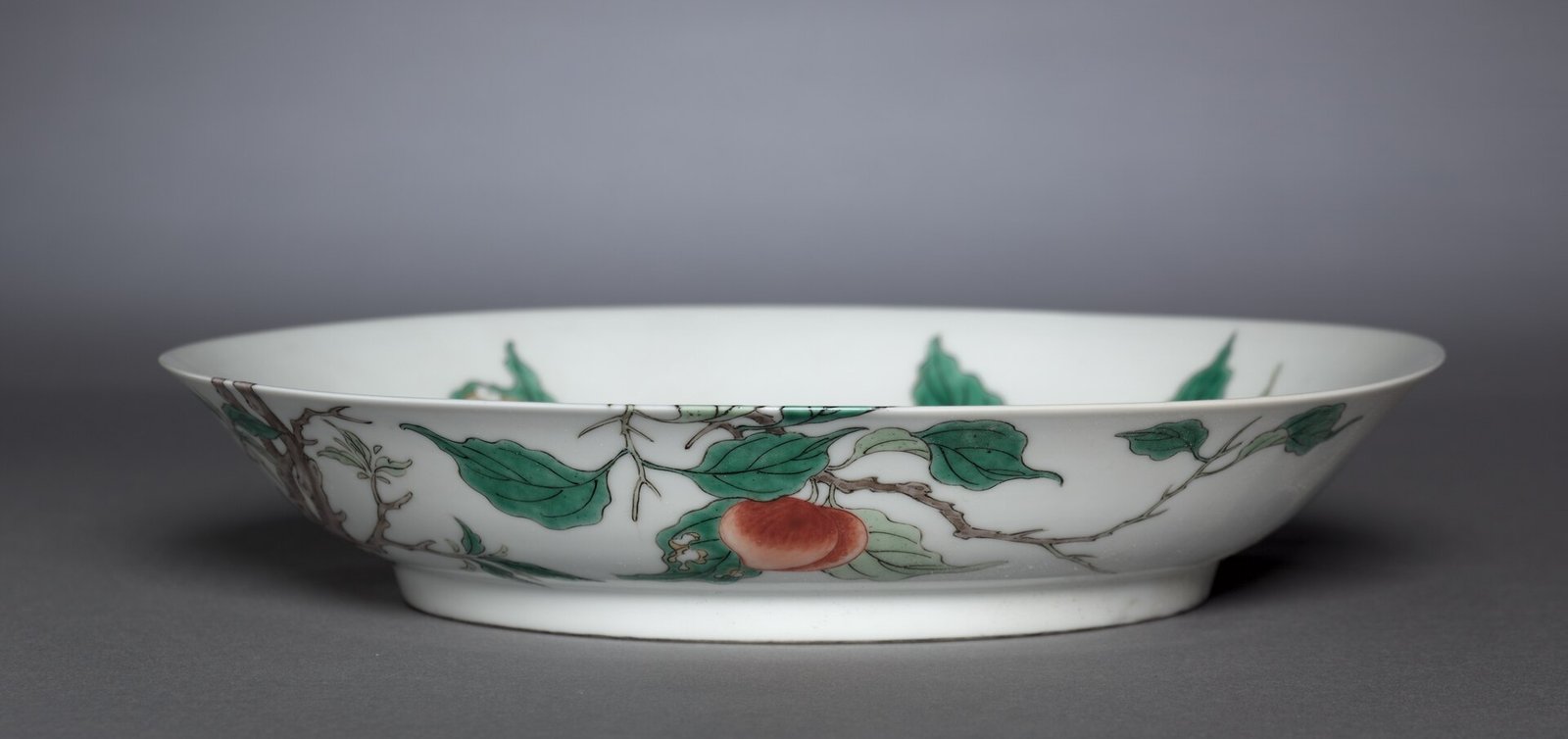
An apocryphal mark names a reign earlier than the piece’s actual date. The Met’s 1989 handbook records a cup as “Apocryphal mark of Chenghua period, 1465–87, but Qing dynasty, 18th century, Yongzheng period”. The V&A uses both “apocryphal” and “False mark” — worth knowing if you are reading UK catalogues.
An apocryphal mark is usually not a forgery
This is the part the internet gets wrong, and the Metropolitan Museum addresses it directly:
Sometimes… these apocryphal reign marks might have been meant to deceive; but they were often used as a kind of “salute” to ceramics of an earlier time.
Suzanne G. Valenstein, A Handbook of Chinese Ceramics, The Metropolitan Museum of Art
A salute. Marking a piece with an admired earlier reign was an ordinary act of homage, practised for centuries, and often carried out in workshops that had no interest in deceiving anyone. The Met goes further, noting that later re-workings of earlier designs were “frequently… correctly marked and, unlike many copies, were not meant to deceive”, and that “copies of Chinese ceramics can be very fine, valuable works of art in their own right”.
So the correct question is never “is this mark real?” It is: what was this object made to be, and is it a good one? A superb Yongzheng cup with a Chenghua mark is a superb Yongzheng cup.
How common is the practice? The Met calls it “widespread” and stops there. No museum or scholarly source publishes a percentage, and anyone quoting you one has invented it. We would rather print the honest word.
The Kangxi mark question — and a myth we are not going to repeat
You will read, in auction catalogues and on a great many websites, that the Kangxi emperor issued an edict forbidding his reign mark on non-imperial porcelain, lest broken sherds bearing the imperial name be trodden underfoot. It is a lovely story. We can find no institutional source for it whatsoever.
No edict, order or decree of that kind appears in the British Museum, the V&A, the Met, Cleveland, the Smithsonian, the National Palace Museum in Taipei or the Palace Museum in Beijing. Even sympathetic specialist sources concede that no such edict text survives. We are not going to publish it as fact.
What is true is more useful. The underlying observation the myth was invented to explain is real, and it is documented:
- Kangxi reign marks cluster late in the reign. The Metropolitan Museum’s own handbook catalogues Kangxi-marked wares as “Kangxi mark, late in the period, ca. 1700–22” across multiple accessions (several of them read “probably late in the period”). One caution, because we checked: the museum’s current online record for one of those pieces, a celadon vase (14.40.366) with a full six-character mark, now gives 1678–88. The pattern holds; individual datings move, as they should.
- Early Kangxi imperial pieces carry other marks. One of the first officially commissioned imperial Kangxi pieces, a dish of 1671 in the British Museum’s Percival David Collection, is marked 康煕辛亥中和堂製 — a hall mark and a cyclical date, “made in the xinhai year of the Kangxi period for the Hall of Central Harmony” (museum no. PDF.653). An imperial dish, made for the emperor, with no reign mark on it.
- The double circle is recorded as a mark in its own right. The Met catalogues a Kangxi vase whose mark is simply “a double circle” (accession 29.100.308).
- The early years were a distinct period. The Met groups Shunzhi and Kangxi up to 1683 as the “Later Transitional Period”; the imperial factory came back under court direction only with Zang Yingxuan’s arrival in 1683.
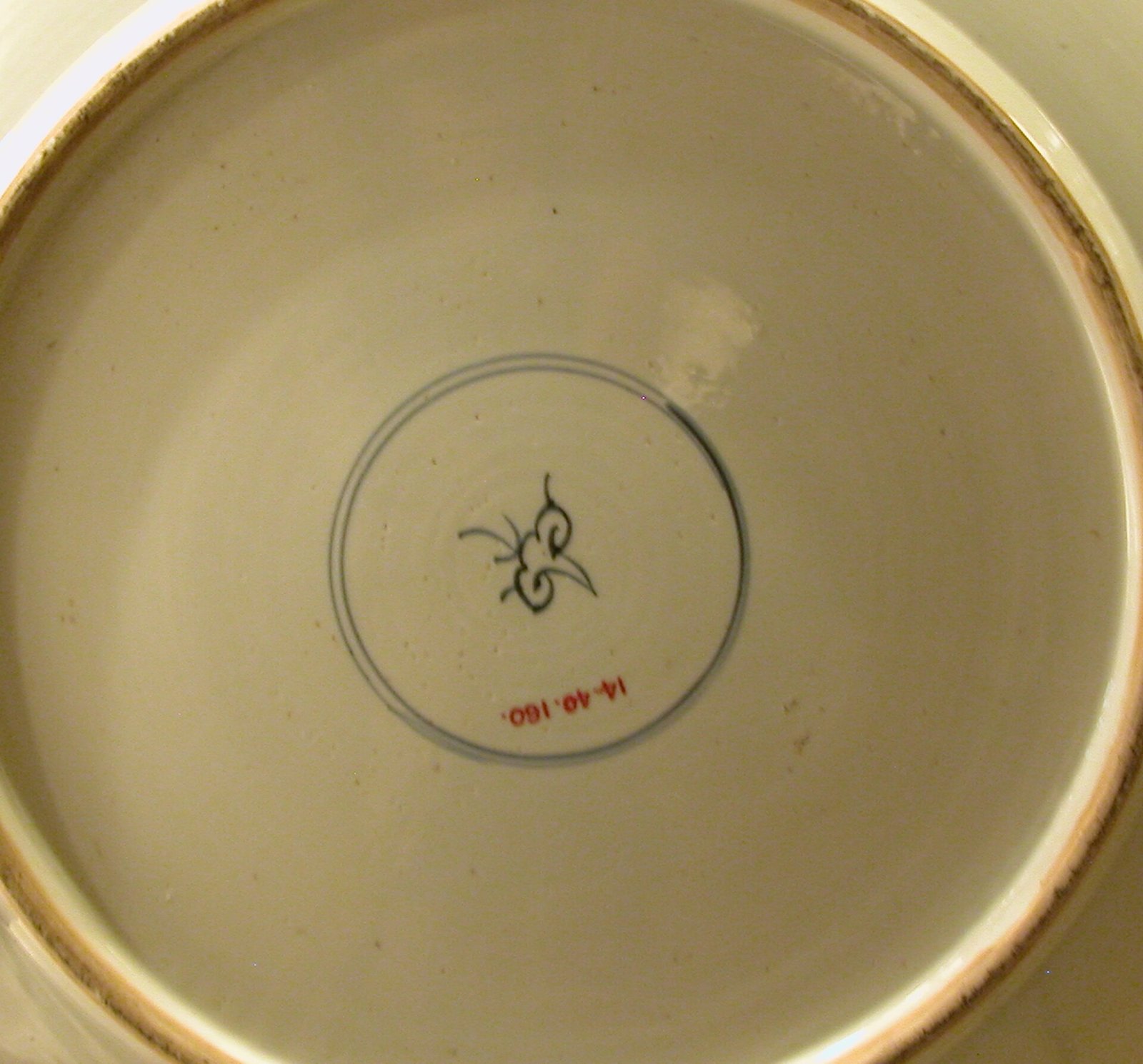
So: reign marks are conspicuously rare on early Kangxi porcelain, and that is a genuine dating signal. It simply does not need an edict to explain it. On the leaf, artemisia, conch and censer marks so often listed as Kangxi substitutes: the Met’s famille verte plate 14.40.160, which the museum catalogues as “Kangxi mark and period”, carries a symbol within a double ring rather than a reign mark — a documented Kangxi-period substitute mark on a museum record. We do not say which symbol it is, because the museum does not, and the trade names for these marks are not consistent.
Which marks get copied most
Chenghua, overwhelmingly. The British Museum records that Chenghua doucai wares were so admired that Jingdezhen potters “imitated them for 500 years”, and that one Chenghua palace-bowl design “was copied from the Kangxi period (AD 1662–1722) onwards”. Documented Chenghua-marked pieces that are not Chenghua include Met 1984.362 (Yongzheng, per the 1989 handbook; the current online record says only “early 18th century”), Met 1977.183.2 (c. 1662–83) and V&A C.836&A-1910 (Kangxi).
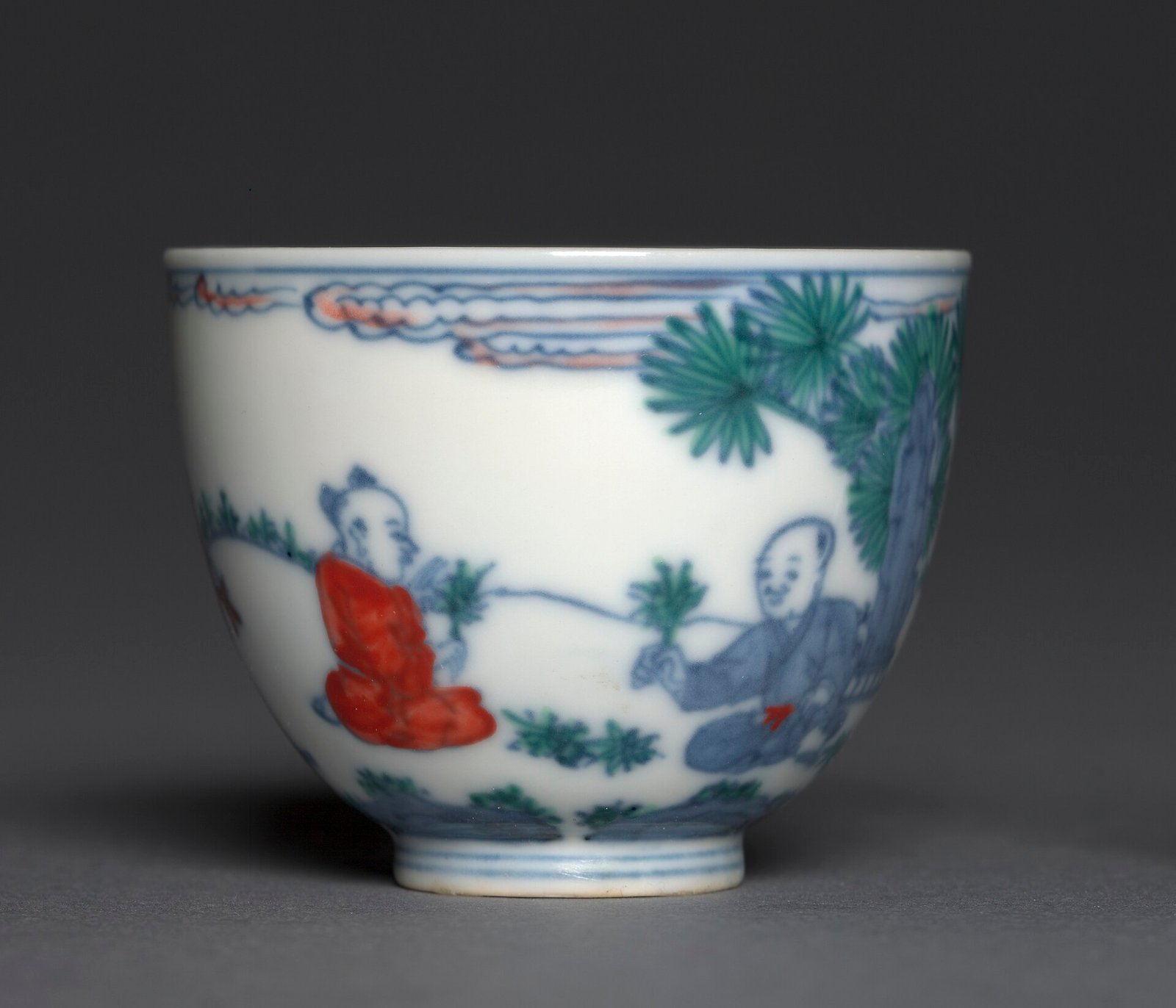
Xuande is, in our experience, the next most copied Ming mark. Among Qing reigns, Kangxi and Qianlong marks are, in our experience, applied retrospectively in large numbers, particularly on late nineteenth- and twentieth-century wares.
What a 19th-century piece with an 18th-century mark looks like
There is no institutional checklist for this, and we will not invent one. But three sourced facts let you reason about it honestly:
- The body changed. The Met records a gradual shift to a high-kaolin porcelain body from the late Ming, universal at Jingdezhen by the Kangxi era — and then “the composition of the body was changed again in the nineteenth/twentieth century”.
- Standards fell. Of Daoguang wares the Met is blunt: “an obvious deterioration in the fabric of the porcelain and a totally lackluster approach to the decoration”.
- The kilns that made the originals had burned down. Imperial kiln activity halted in 1855, when Taiping forces took Jingdezhen and burned the imperial factories. The Met adds, carefully, that it is not certain whether they were ever rebuilt.
The marks that are not reign marks
A great deal of what people bring us as “the mark” is not a reign mark at all.
- Hall marks (堂名 tangming) name a building. 中和堂 on the 1671 British Museum dish; 居仁堂 Jurentang on Yuan Shikai’s vases; 大雅齋 Dayazhai on the Empress Dowager Cixi’s wares of about 1874–75.
- Imperial command marks such as 康熙御製, “made by imperial command of the Kangxi emperor”, recorded by the British Museum on a falangcai bowl of about 1720–22.
- Cyclical (ganzhi) date marks naming a year in the sixty-year cycle: 辛亥 xinhai = 1671 on PDF.653; 己丑 jichou = 1709 on a Met powder-blue vase; 癸巳 guisi on a Qianlong bottle in the British Museum.
- Potter’s marks, which are the exception rather than the rule. The British Museum notes that many Dehua figures bear the marks of individual potters or their families, and adds: “This is unusual in Chinese ceramics.” That sentence explains most of the confusion — buyers read a reign mark as a maker’s mark, because on European ceramics that is what a base mark usually is.
- Commendation and symbol marks. Real categories, but we could not source a museum-published base example, so we leave them to the reference books rather than illustrate them from guesswork.
What a mark cannot tell you
The Met sets out the logical trap with unusual candour. A mark “can be helpful in dating the later porcelains — assuming, of course, that the mark is not apocryphal”. Which is circular: you must judge the object first, and only then does the mark add anything.
Nor do styles change on the day an emperor dies. “There are no sharp lines of demarcation that coincide with historical events such as changes in the reigns of individual emperors,” the Met observes; the potters and painters working under Yongzheng were “apt to be alive and working after the accession of the new emperor”.
The best argument against trusting marks comes from a museum correcting itself
The Met owns two sets of vases marked Hongxian, the reign title of Yuan Shikai, who accepted the throne in December 1915 and died in June 1916. One pair, accession 25.152.1–2, is catalogued as “Hongxian mark and period (1915–16)”. The other, accession 68.4.1, the museum’s own 1989 handbook also called Hongxian mark and period.
The Met now dates 68.4.1 to the 1930s–40s. The mark is retrospective, applied within twenty years of a reign of under three months, and one of the great museums accepted it as period for decades.
This is not a scandal. It is normal scholarship — the British Museum notes that “Chinese ceramics are constantly being redated and reattributed”. But it is the most honest thing anyone can tell you about marks: if the Metropolitan Museum can be wrong about a mark for thirty years, the mark is not the evidence. The object is.
And Jingdezhen never stopped. The Met records a vase made there in the 1930s, faithfully copying a Qianlong piece published only a few years earlier, which sits beside the original in the Percival David collection. That is the honest answer to “why does my vase have a Qianlong mark but feel wrong?” — the copying is a continuous five-hundred-year practice, not a modern fraud wave.
How we handle marks at Xanadu
Every piece we catalogue records the mark as we read it, in characters, with a transliteration and a translation — and separately records whether we believe the object to be of the period. Where a mark is apocryphal we say so on the listing, in the same words we would use in the shop. Where a piece is unmarked we say that too, rather than reaching for a reign name to make the entry look better.
If you have a marked piece and want a second opinion, send photographs of the object and of the base together: a free valuation costs you nothing, and the base alone is never enough.
Sources
- British Museum, Room 95 Chinese ceramics gallery guide (Sir Percival David Collection)
- Suzanne G. Valenstein, A Handbook of Chinese Ceramics, The Metropolitan Museum of Art
- The Metropolitan Museum of Art, List of Rulers of China
- British Museum, dish PDF.653, Jingdezhen 1671
- V&A, jar and lid C.836&A-1910
- The Metropolitan Museum of Art, vase 68.4.1
Written by James Treacher. Every factual claim on this page is traceable to a named museum source. Where the trade repeats something we could not verify — the Kangxi edict above all — we say so rather than pass it on.