These are the reference pages we wish had existed when we started buying. Each one is written from objects we have handled or from named museum sources, and each one says openly where the evidence runs out.
That last part is the difference. A great deal of what is published about Asian ceramics is confident, tidy and unsourced — the Kangxi edict that no museum can produce, the “Five Great Kilns” presented as a Song category, the dating rule for heaping and piling that the Metropolitan Museum’s own definition contradicts. Where we found claims like that, we say so on the page rather than pass them on.
Start here
Chinese reign marks: mark and period, or apocryphal?
What a reign mark says, how to read it, why most name the wrong reign — and why an apocryphal mark is usually homage rather than forgery. The most useful page on this site if you own one marked object.
Reading the base: dating Chinese porcelain by its foot rim
Spur marks, unglazed rims, the colour the exposed body fired, where the glaze stops. The underside is much harder to fake than the front, and almost nobody photographs it.
What a hairline does to value: a dealer’s condition guide
Crackle is not damage. A firing fault is not later damage. The condition vocabulary used precisely, how to inspect a piece, and why we will not give you a percentage table.
By period
Song ceramics: the five great kilns, and why that phrase is Ming
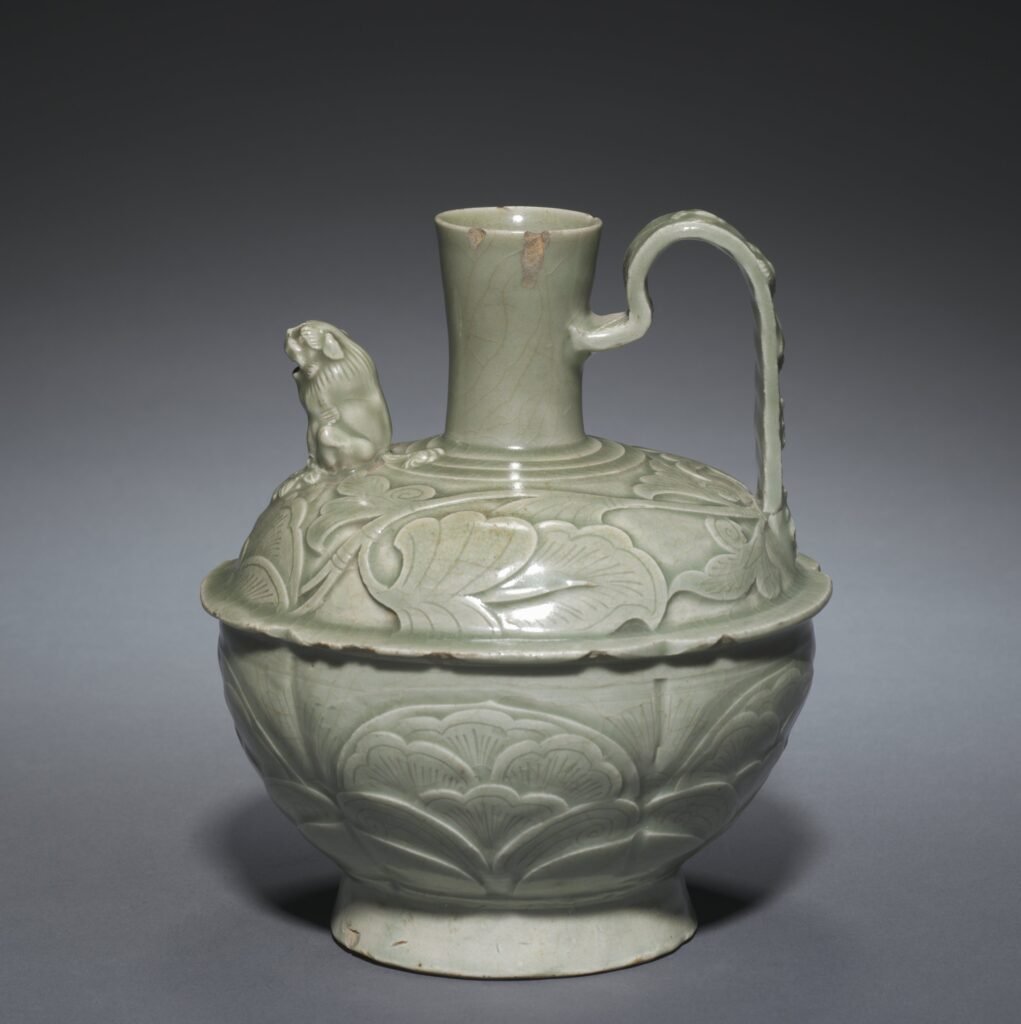
Ru, Guan, Ge, Ding, Jun, Longquan, Yaozhou and Cizhou — what each is, and the single feature that separates it from the others.
Ming porcelain: a buyer’s guide to blue and white, 1368–1644
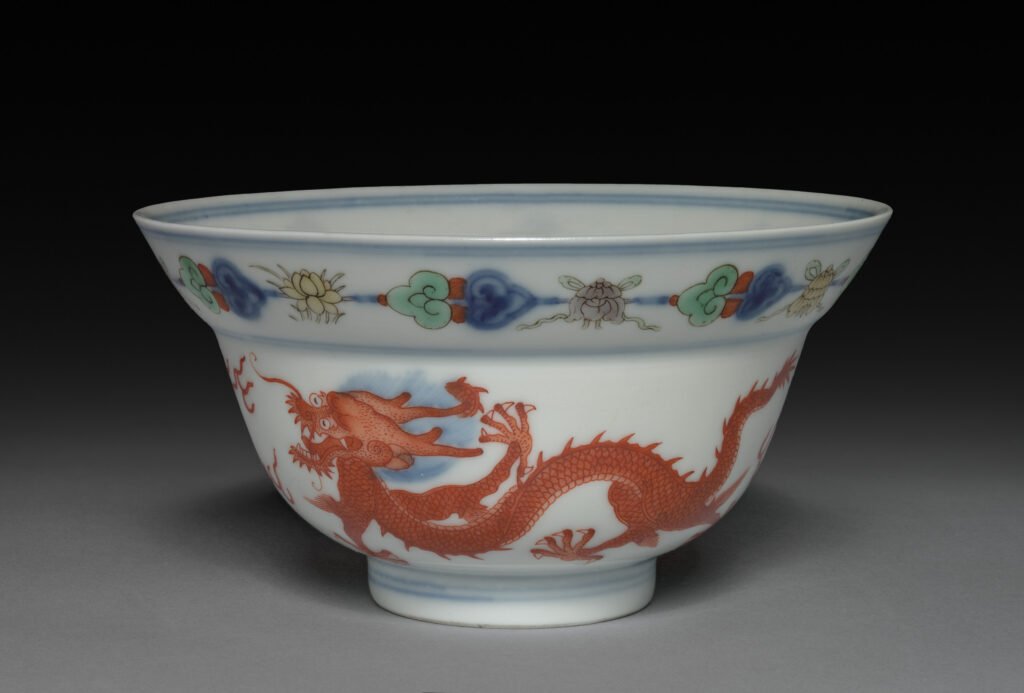
Jingdezhen and the imperial kilns, cobalt as a dating tool, doucai and the chicken cups, kraak and the sea route to Europe.
Qing porcelain: Kangxi to Xuantong, a collector’s guide
Reign by reign, the famille palettes and what actually makes famille rose different, the monochromes, and the year the imperial kilns burned.
Republic-period porcelain, 1912–49
Why Qianlong marks appear on 1930s porcelain, what Hongxian ware is, and the Metropolitan Museum re-dating its own vases by twenty years.
Kraak and Transitional porcelain: the late Ming export century
What “kraak” means, why the private kilns took over after 1620, and what the Witte Leeuw and Hatcher wrecks prove. With a checklist for foot rims, borders, Arita copies and condition.
Beyond China
Collecting Korean ceramics: Goryeo celadon to Joseon white porcelain
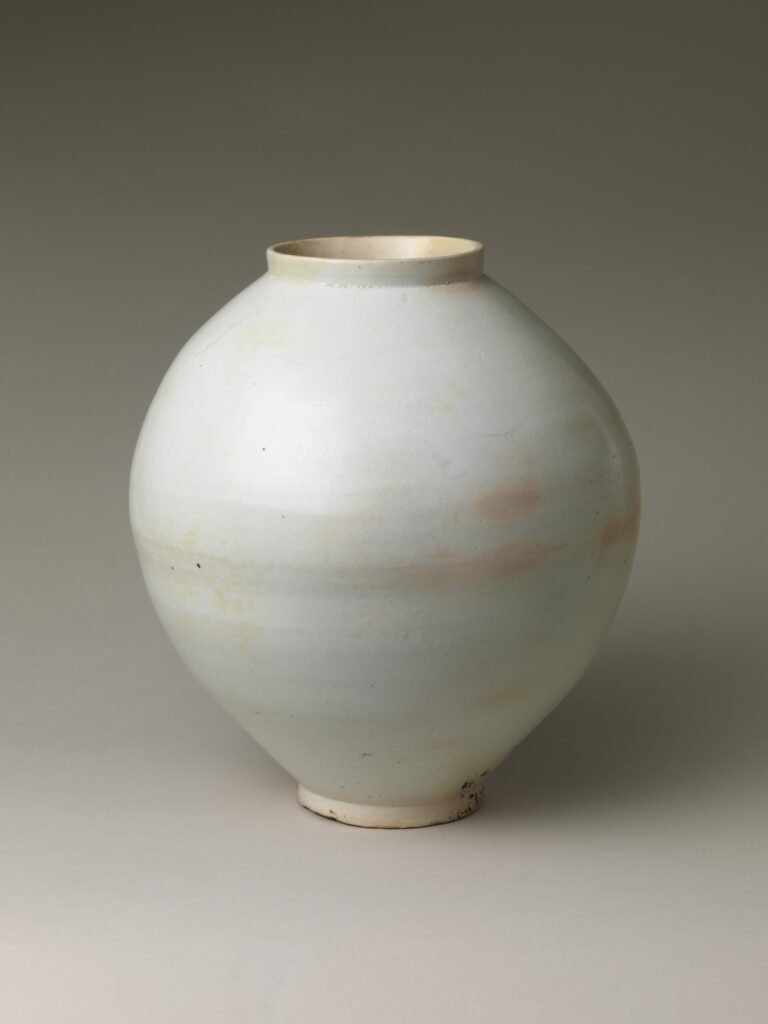
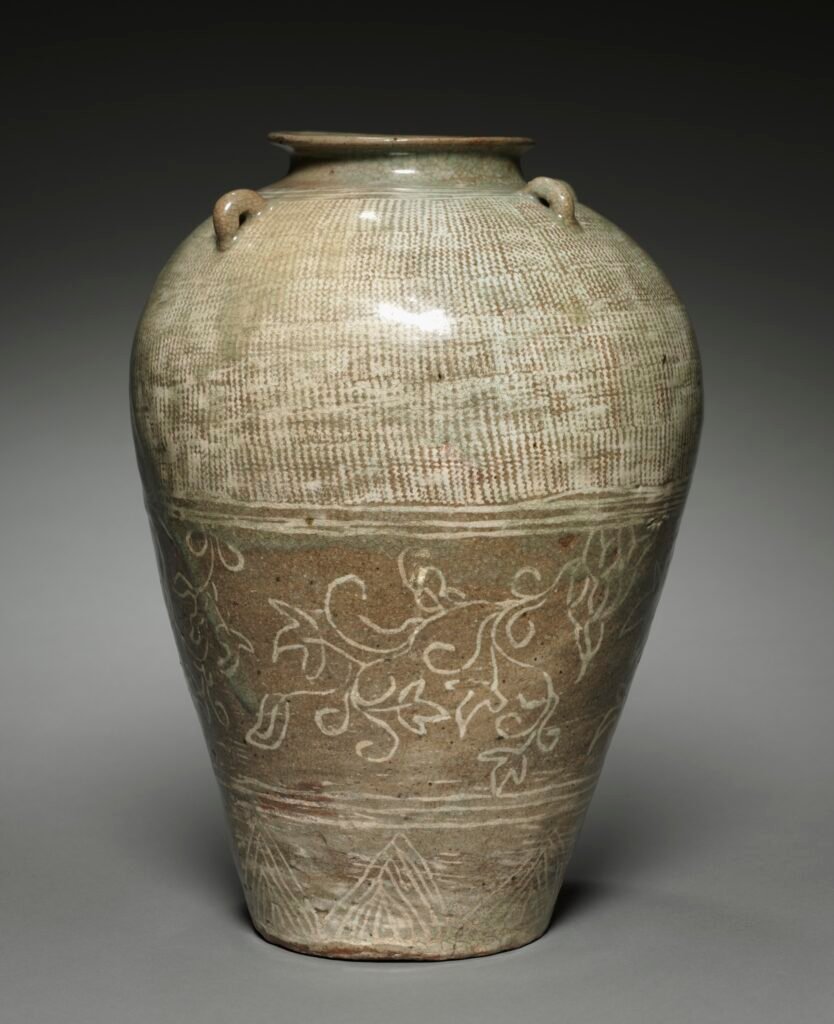
Sanggam inlay, buncheong and its hard end in 1598, the moon jar and its join. The largest genuine gap in the English collecting literature.
Korean porcelain marks: why there are almost none
No reign marks — but court bureau stamps that date a piece to within twenty years, royal kitchen inscriptions, and ritual characters that are not always on the base.
Japanese ceramic marks: what they prove, and what they don’t
Satsuma is earthenware, most of it was decorated in Kyoto, and a V&A jar carries a date mark sixty years wrong.
Bleu de Huế is Chinese porcelain made for the Vietnamese court
Đồ sứ ký kiểu explained: Chinese-made, Vietnamese-commissioned, with Nguyễn reign marks, palace marks and Nôm poems.
Collecting
The Four Treasures of the scholar’s studio
Brush, ink, paper, inkstone — the canonical four, and the rest of the desk. The rarest objects in Chinese ceramics are desk equipment.
Imperial yellow: how to read a yellow-glazed bowl
A soft, low-fired iron glaze on a hard porcelain body, and that is the key to reading it. Tone, foot, interior, mark and condition reign by reign, and which trade rules the museum record does and does not support.
Reference
Glossary of Chinese, Korean and Japanese ceramics
Nearly a hundred terms — bodies, glazes, palettes, kilns, marks, condition and trade vocabulary — defined the way we use them, with reign dates and museum illustrations.
Mark library
A photographed record of the marks on pieces we have handled, published only once each mark is shot to macro standard and tied to its object. Until then, the four marks guides.
How to care for, display and clean antique ceramics
Most damage to old ceramics happens in a sink or on the way to one. Handling, cleaning, display, storage and old repairs, drawn from museum conservation guidance.
How these pages are written
Four rules, and we would rather be held to them publicly.
- Every factual claim is traceable. Sources are listed at the foot of each guide, and they are institutions — the British Museum, the V&A, the Metropolitan Museum, Cleveland, the Smithsonian, the Palace Museum in Beijing, the National Palace Museum in Taipei, the National Museum of Korea — or peer-reviewed scholarship.
- Where museums disagree, we say so rather than pick the tidier answer. Whether Longquan is porcelain or stoneware, whether Jun was court ware, when a moon jar was made: these are open questions and the pages treat them as open.
- Where we cannot source something, we say that too. Several widely repeated claims are named on these pages specifically as things we could not verify. We would rather lose the flourish than print it.
- Judgement is labelled as judgement. Museums describe objects; they rarely publish identification tests or valuations. Where we give practical guidance of that kind, the page says it is ours.
Images throughout are drawn from open-access museum collections — principally the Cleveland Museum of Art (CC0) and the Metropolitan Museum of Art (Open Access) — and are credited with their accession numbers so you can look up the original record yourself.
Something you want to know that is not here?
These guides are written slowly and from objects, so the list grows a few pieces a year rather than a few a week. If there is a subject you want covered, or a piece you would like read, tell us — and valuations are free, with no obligation to sell.
You can also browse the catalogue by ware type — blue and white, celadon, famille rose, monochromes and the rest — or by culture and period.