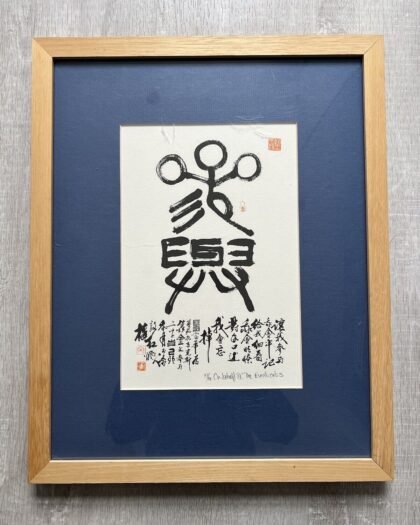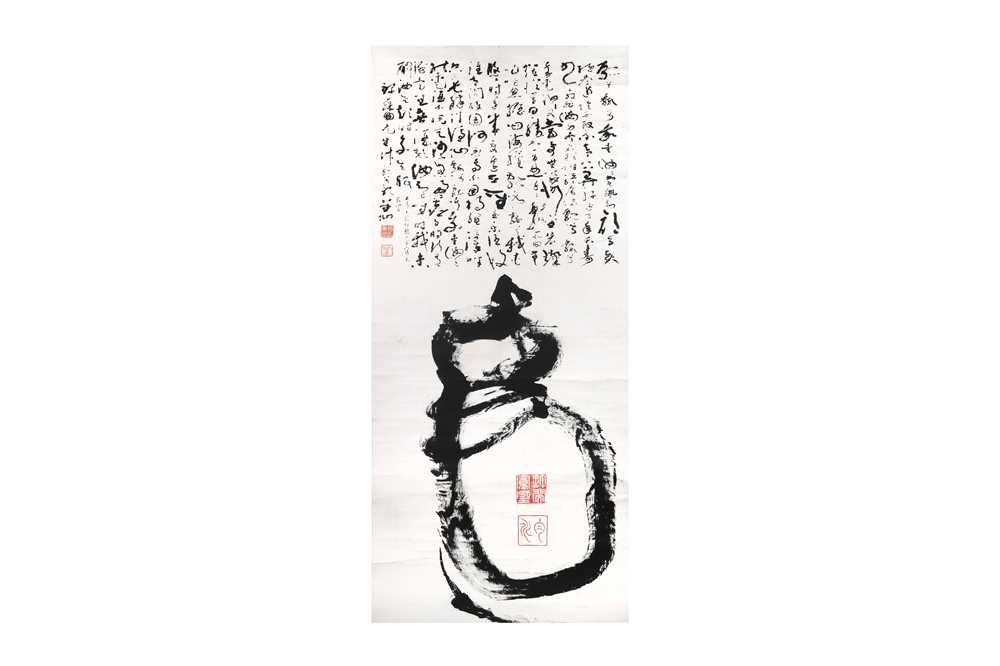
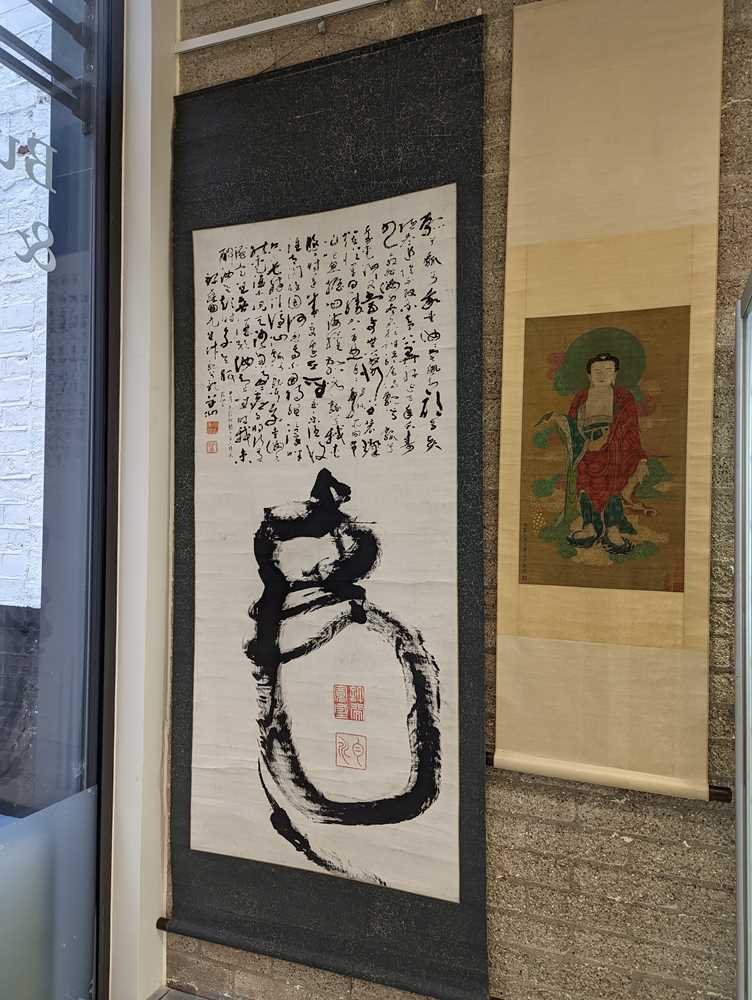
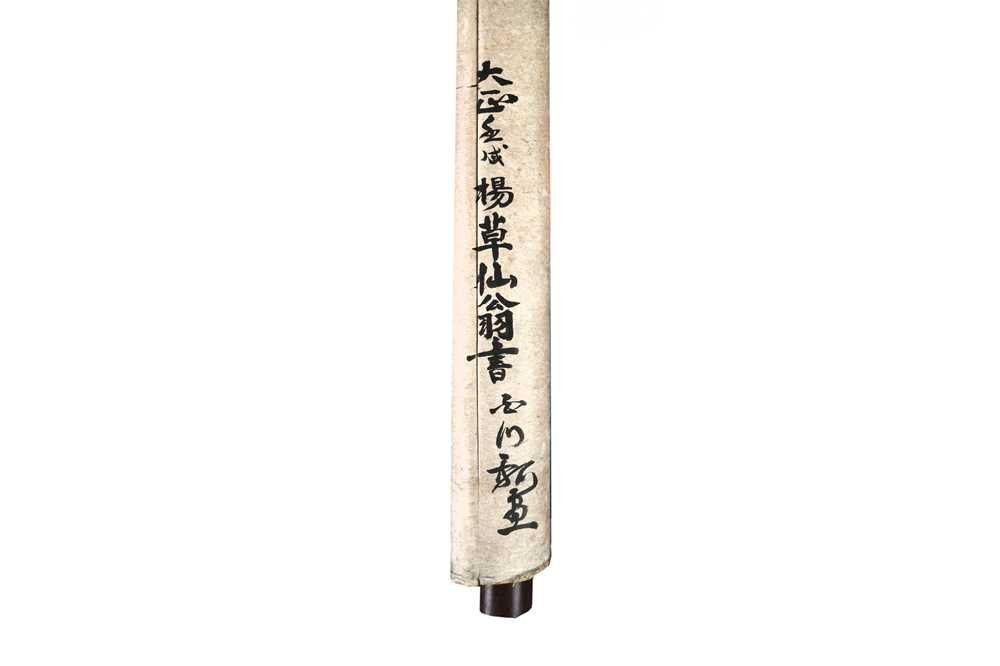
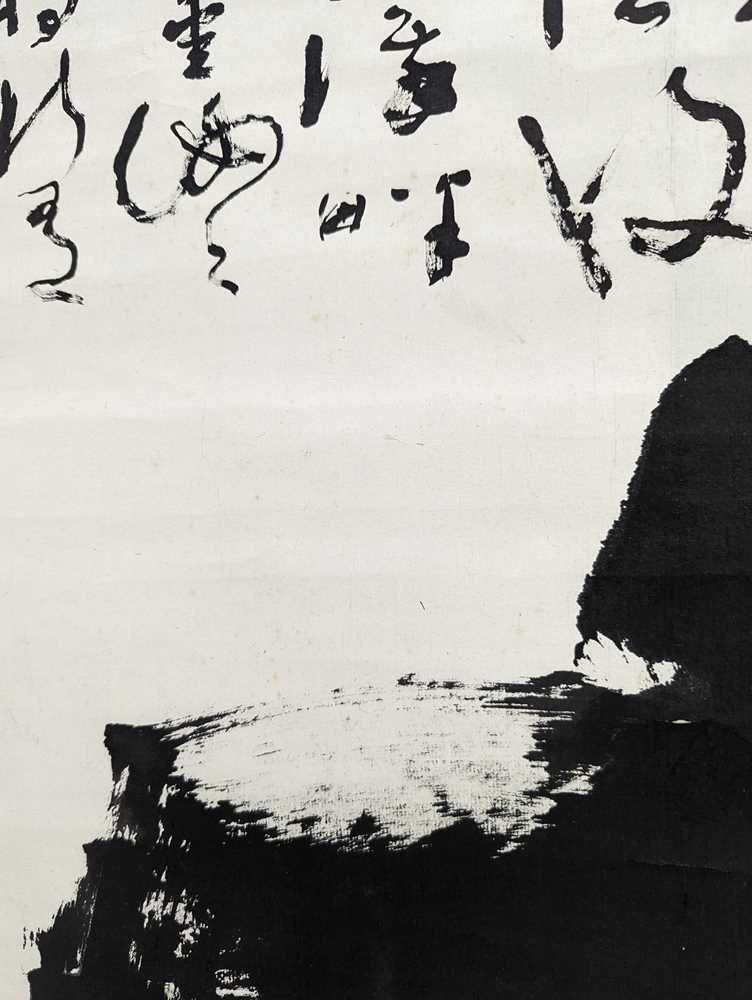
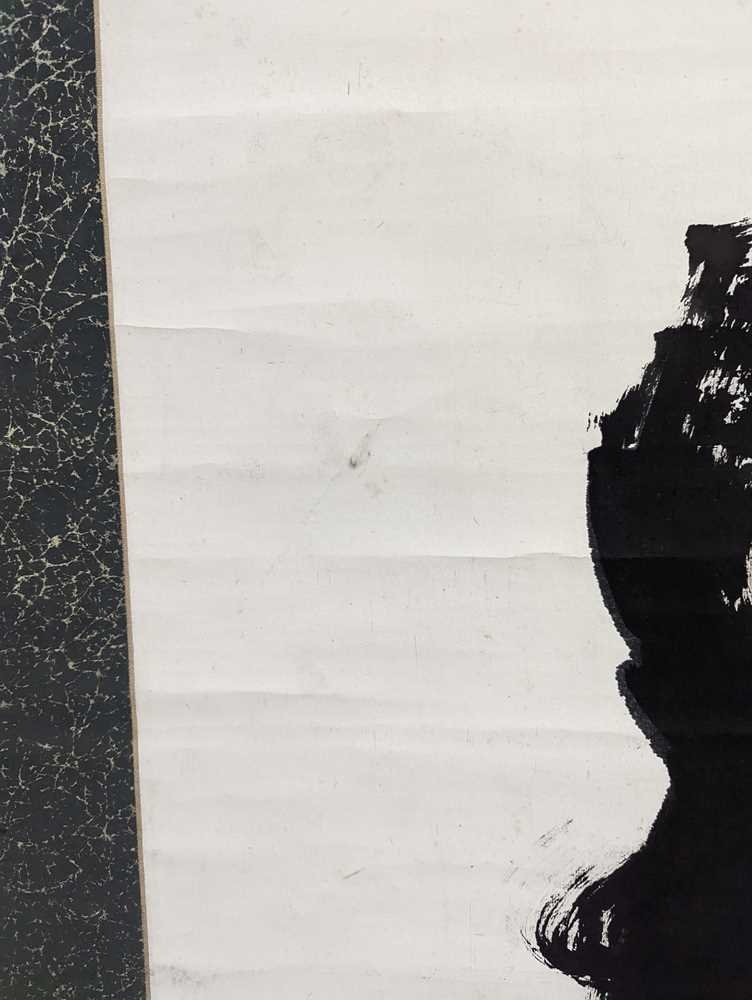
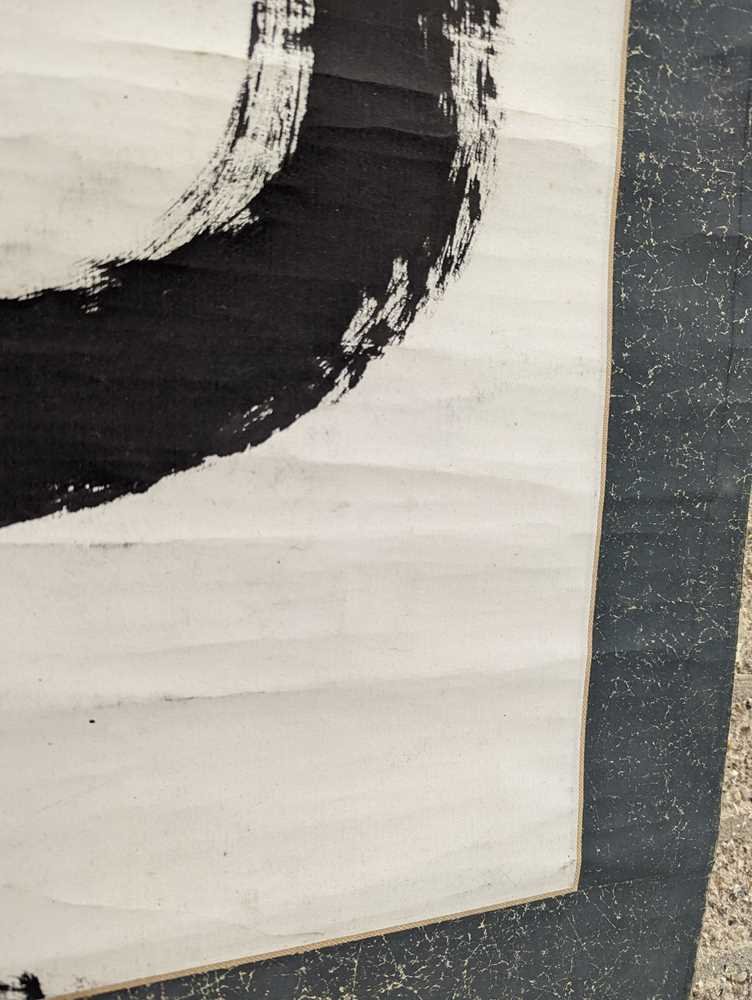
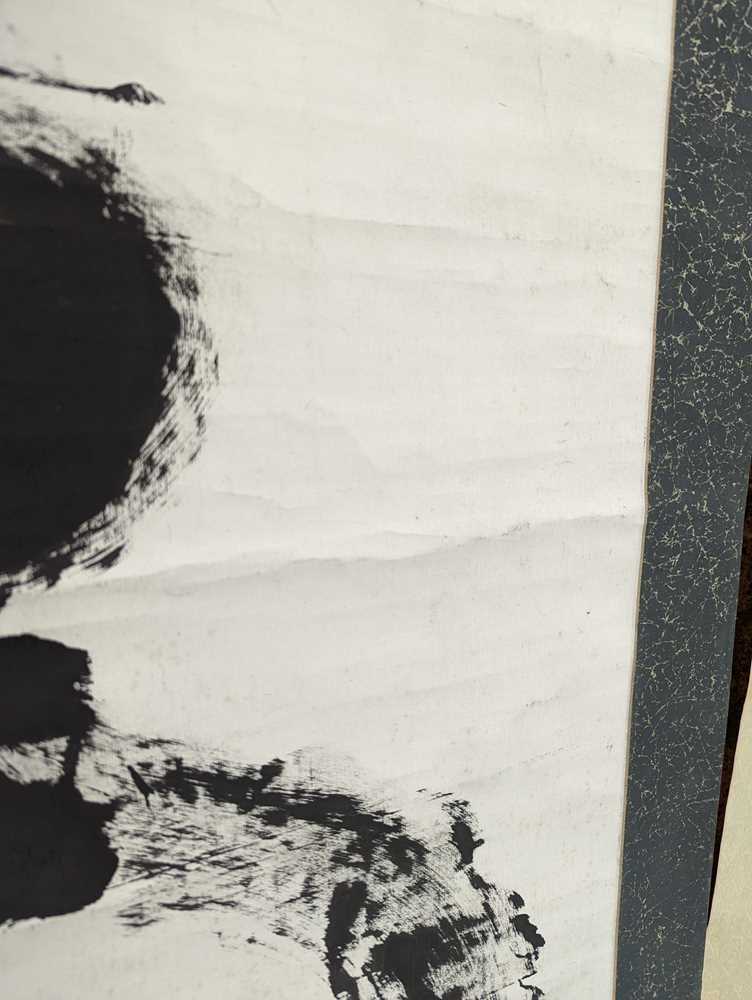
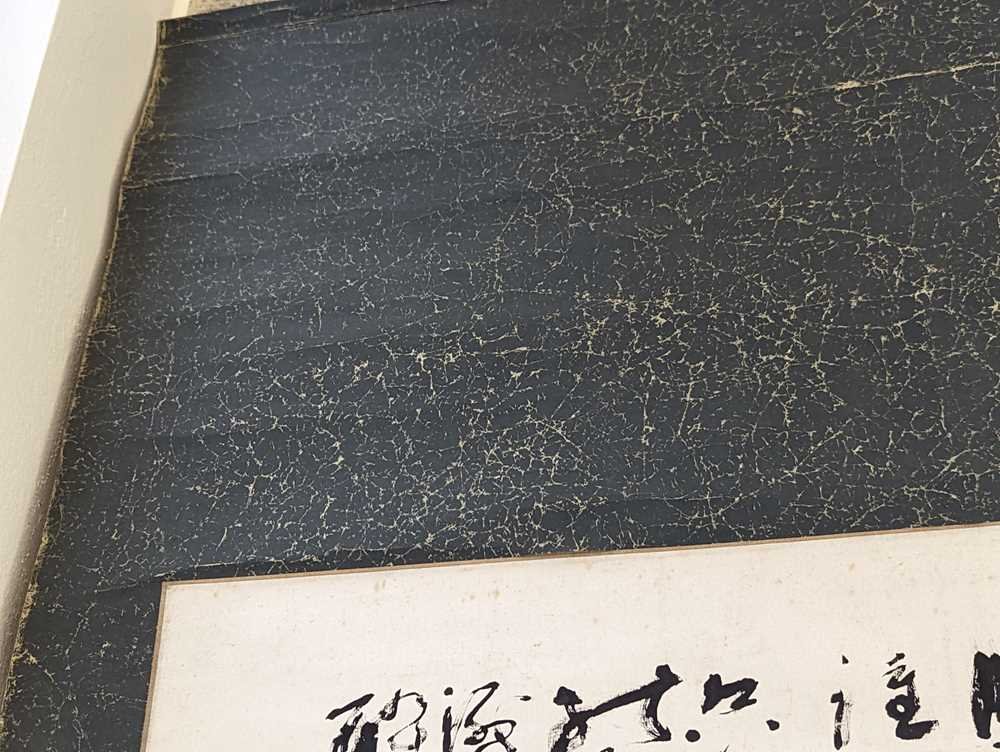
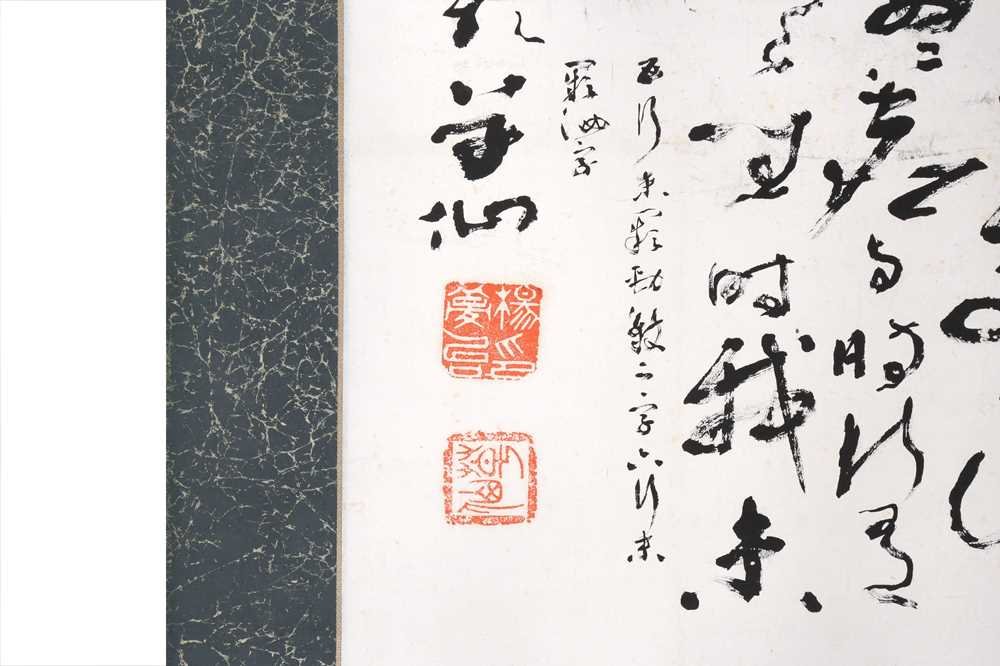
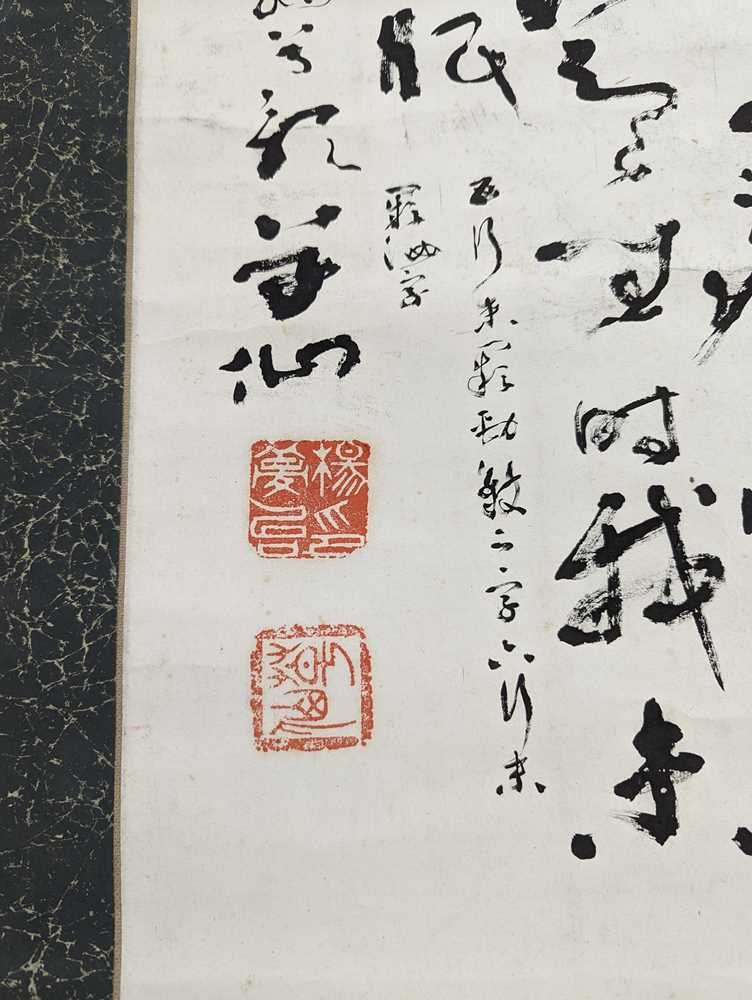
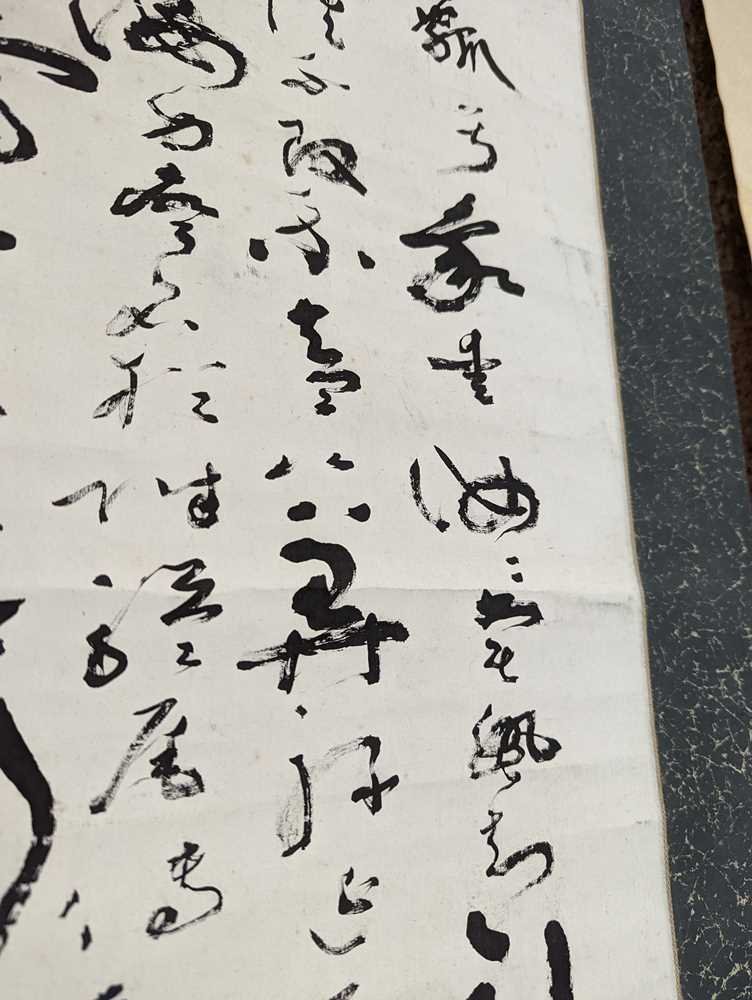
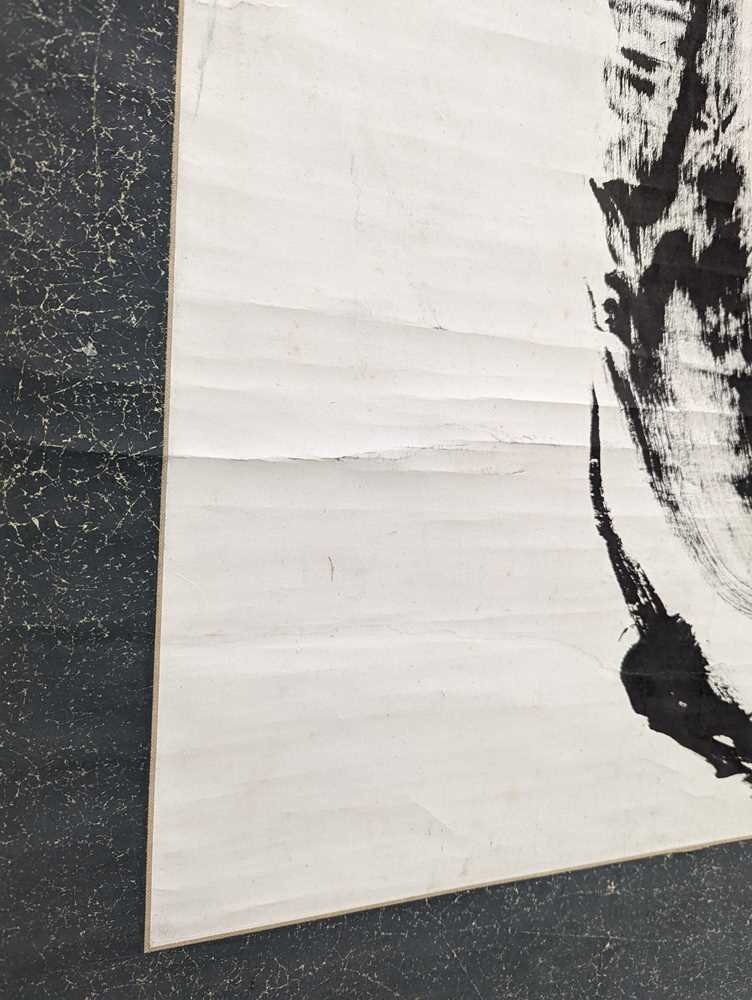
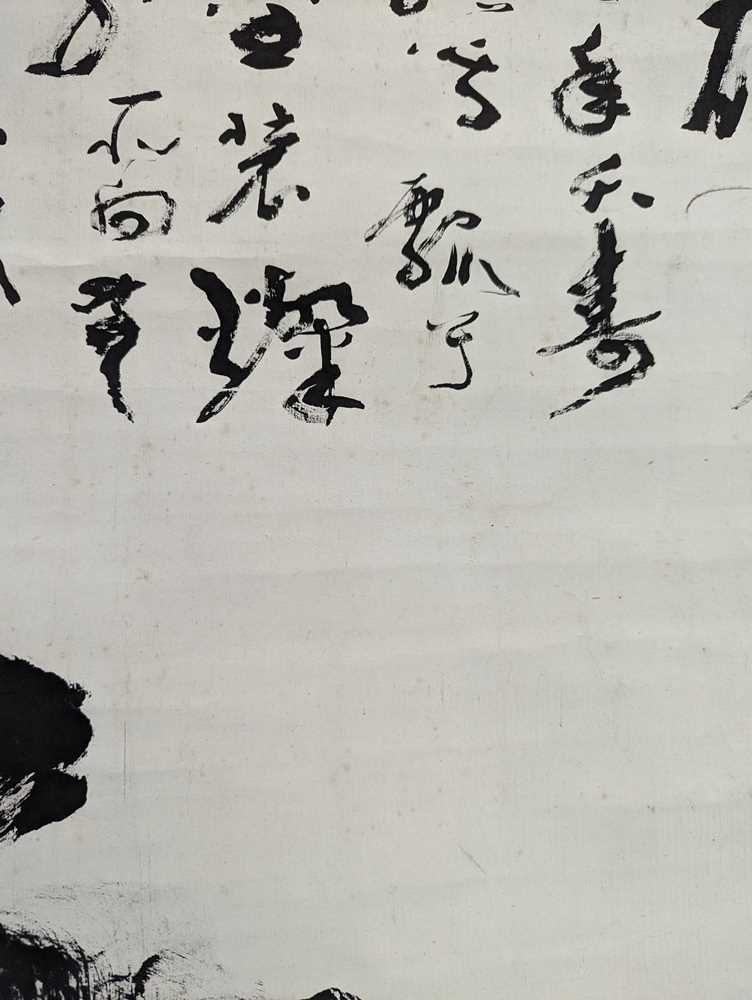
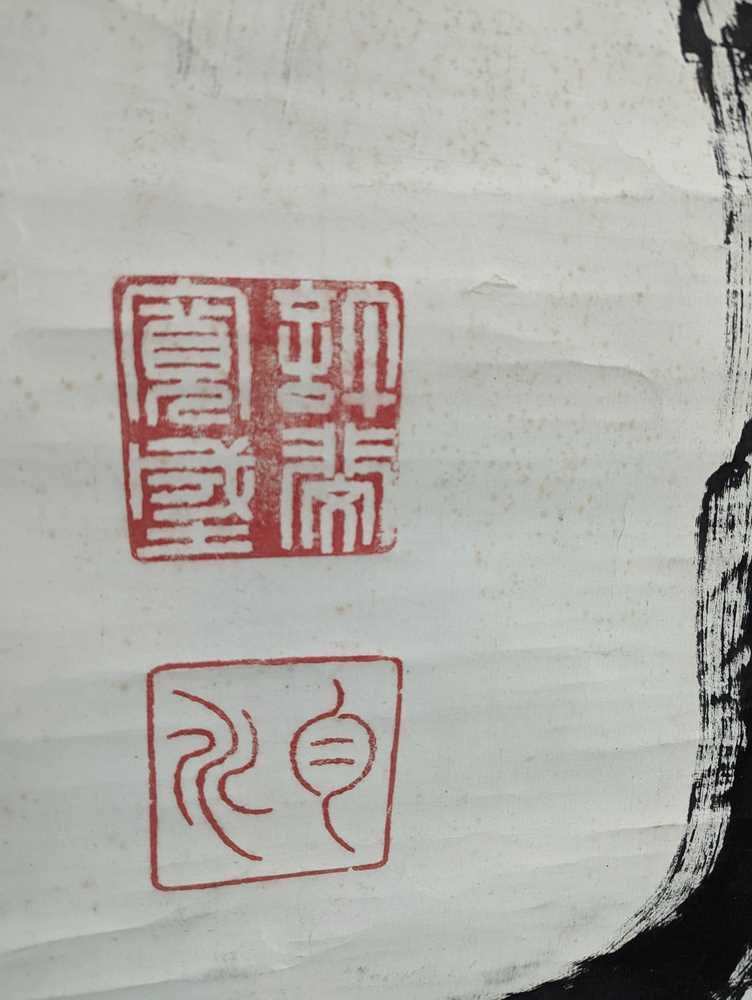
A hanging scroll by Yang Caoxian (1838–1944), ink and colour on paper, showing Bodhidharma — Damo in Chinese, Daruma in Japanese — with running-script calligraphy. Circa 1900.
Bodhidharma is the monk credited with bringing Chan (Zen) Buddhism to China, and by convention he is painted in a handful of strokes: the point of the genre is economy. Yang Caoxian lived across the late Qing, the Republic and into the Second World War, and was known for cursive and running script.
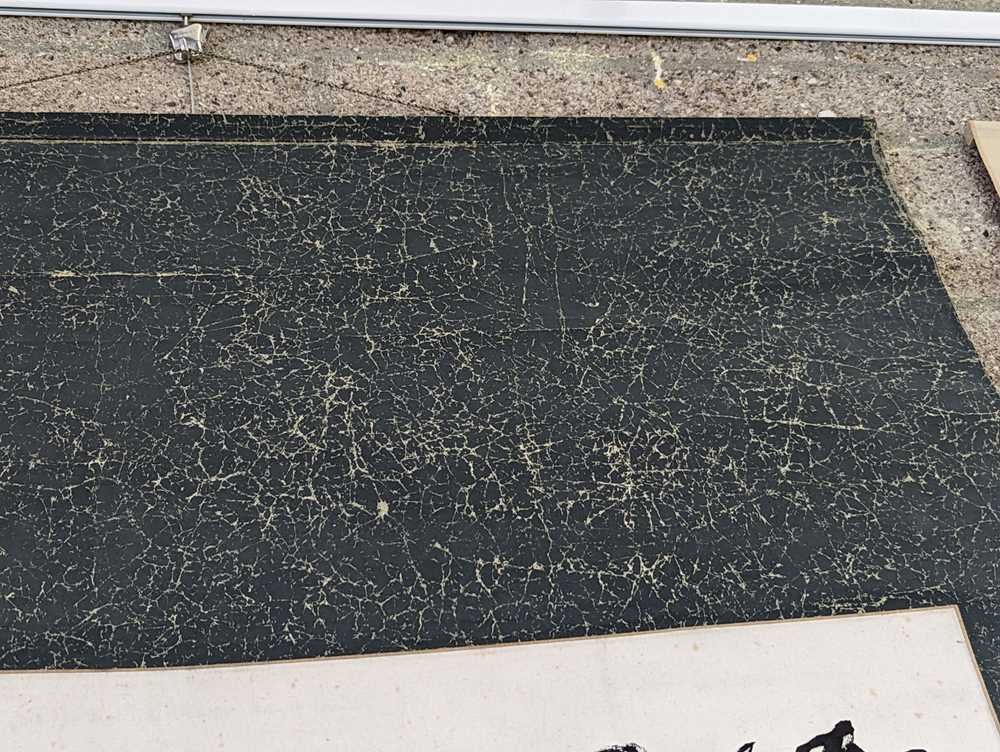
Works on paper are judged differently from ceramics. Foxing, toning, the condition of the mount and whether the scroll has been rebacked all affect value as much as a hairline does on a pot.
Chinese: 楊草仙 菩提達磨像設色紙本 立軸.
Daruma, and the scroll, in context
Damo — Bodhidharma, Daruma in Japanese — is the semi-legendary Indian monk traditionally credited with bringing Chan (Zen) Buddhism to China in the fifth or sixth century. He is one of the most painted and most written-about figures in East Asian art, usually shown as a glowering, bearded patriarch, and his name on a calligraphy scroll signals a Chan subject: the brush as a vehicle for the spirit rather than for the description of things.
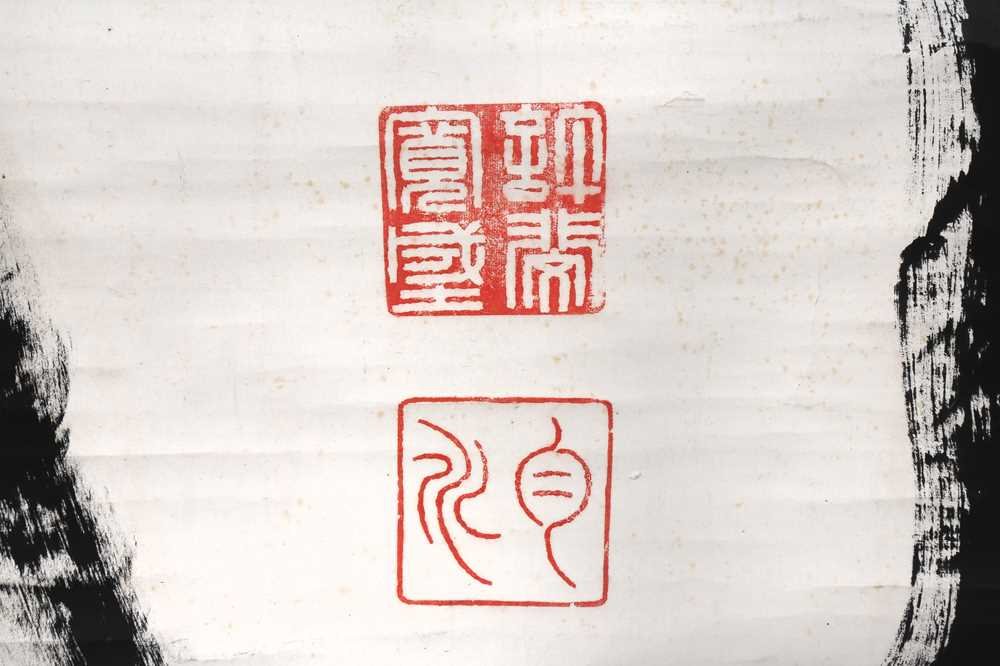
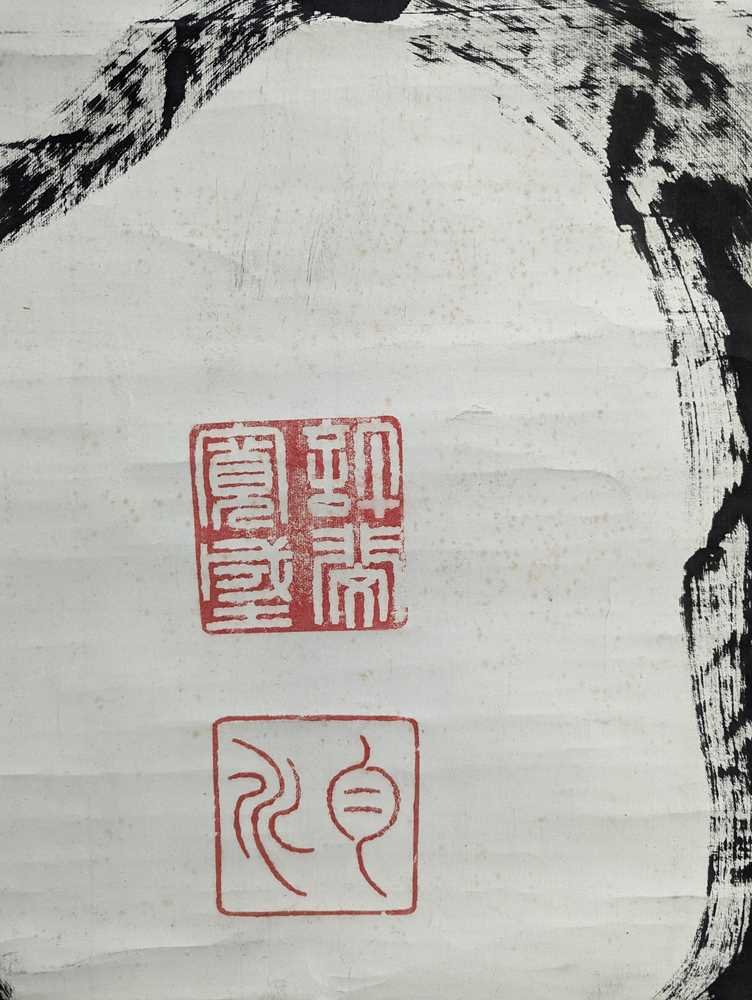
Calligraphy was the highest of the scholar’s arts. The Metropolitan Museum describes the scholar-official class as an elite selected by merit through the examination system, who pursued calligraphy and painting because the study of them “was considered a path to the cultivation of the moral self”. A scroll is judged on the brushwork, the inscription and seals, the paper and the mounting — and its condition is assessed differently from a ceramic’s, for foxing, toning, backing and the state of the mount. This piece is attributed in our records to Yang Caoxian, with the dates 1838–1944 as recorded; we have not independently verified the artist’s biography and say so.
Read more: the scholar’s studio and works on paper.
The object, up close
The finer
details.
Reference XA-0022
A question about this piece? Ask for measurements, close-up photographs or a condition report.
Discuss this piece- Dimensions
- 176 cm high × 78 cm wide
- Period
- Circa 1900
- Mark
- Signed
- Condition
- Not yet formally assessed