Japanese ceramics are marked far more often than Chinese or Korean ones — signatures, studio names, family crests, date marks, export stamps. That abundance is exactly the problem. More marks means more chances to be misled, and the single best object we can show you to prove it sits in the V&A.
Start here: a mark that is sixty years wrong
The V&A holds a Satsuma jar it dates to about 1850. The base carries a gilded mark reading “made in Satsuma in the fifth year of Kansei” — that is, 1793. A red enamel seal-mark sits alongside it.
A museum-held Japanese jar, with a date mark roughly sixty years earlier than the museum’s own dating of the object. Nobody is calling it a fake. It is simply the ordinary Japanese practice of inscribing an admired earlier date, and it tells you everything you need about how much weight a Japanese date mark will bear.
A Japanese date mark is a claim, not evidence. Everything below assumes that.
Satsuma: earthenware, and mostly not from Satsuma
Two corrections here, and both come up almost every week.
It is not porcelain
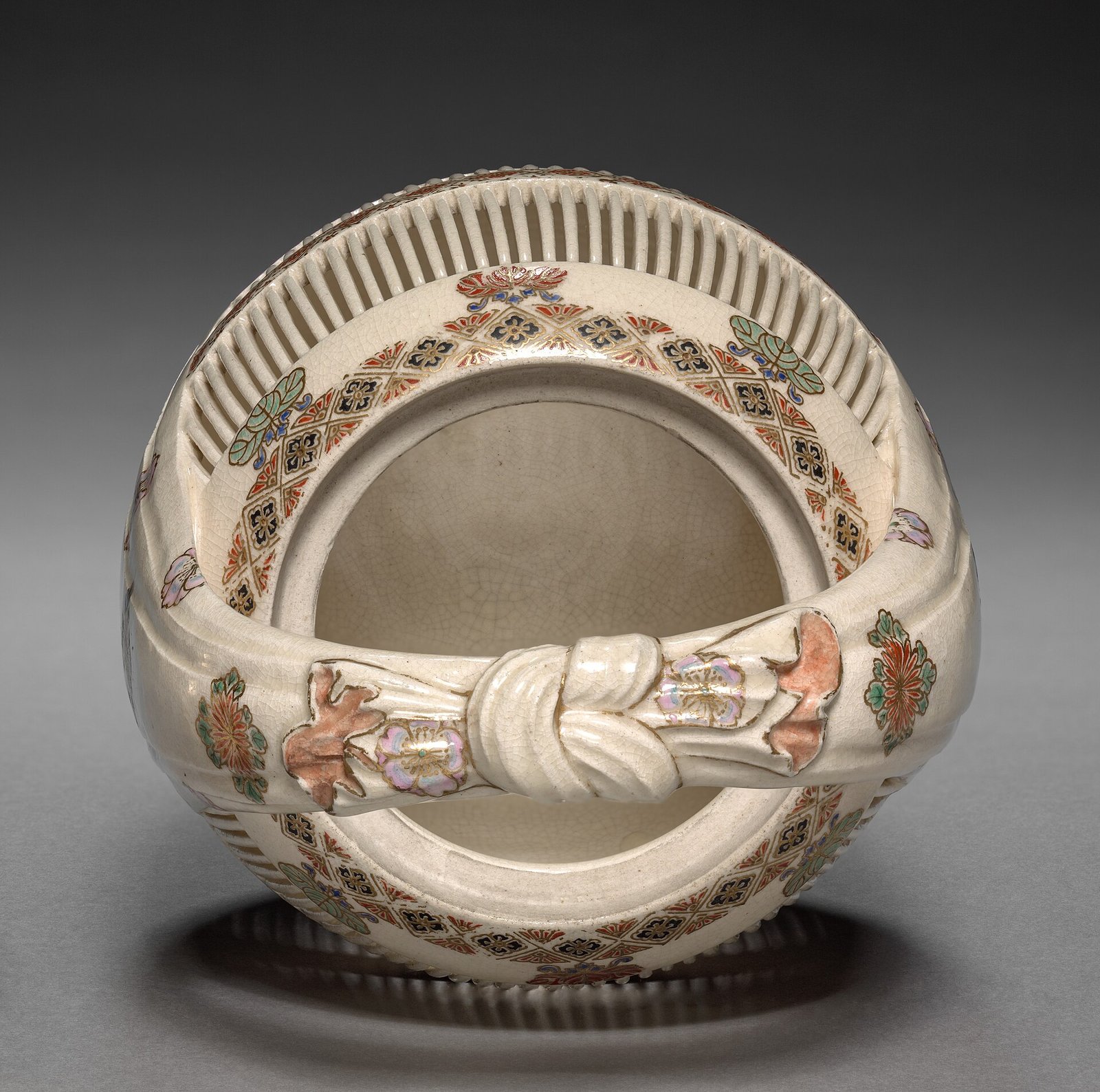
The Metropolitan Museum records the medium of its eighteenth-century Satsuma incense burner as “Satsuma ware, earthenware with clear glaze”. The V&A catalogues its Satsuma jar as earthenware with a crackled cream glaze; Cleveland records its examples simply as “pottery”.
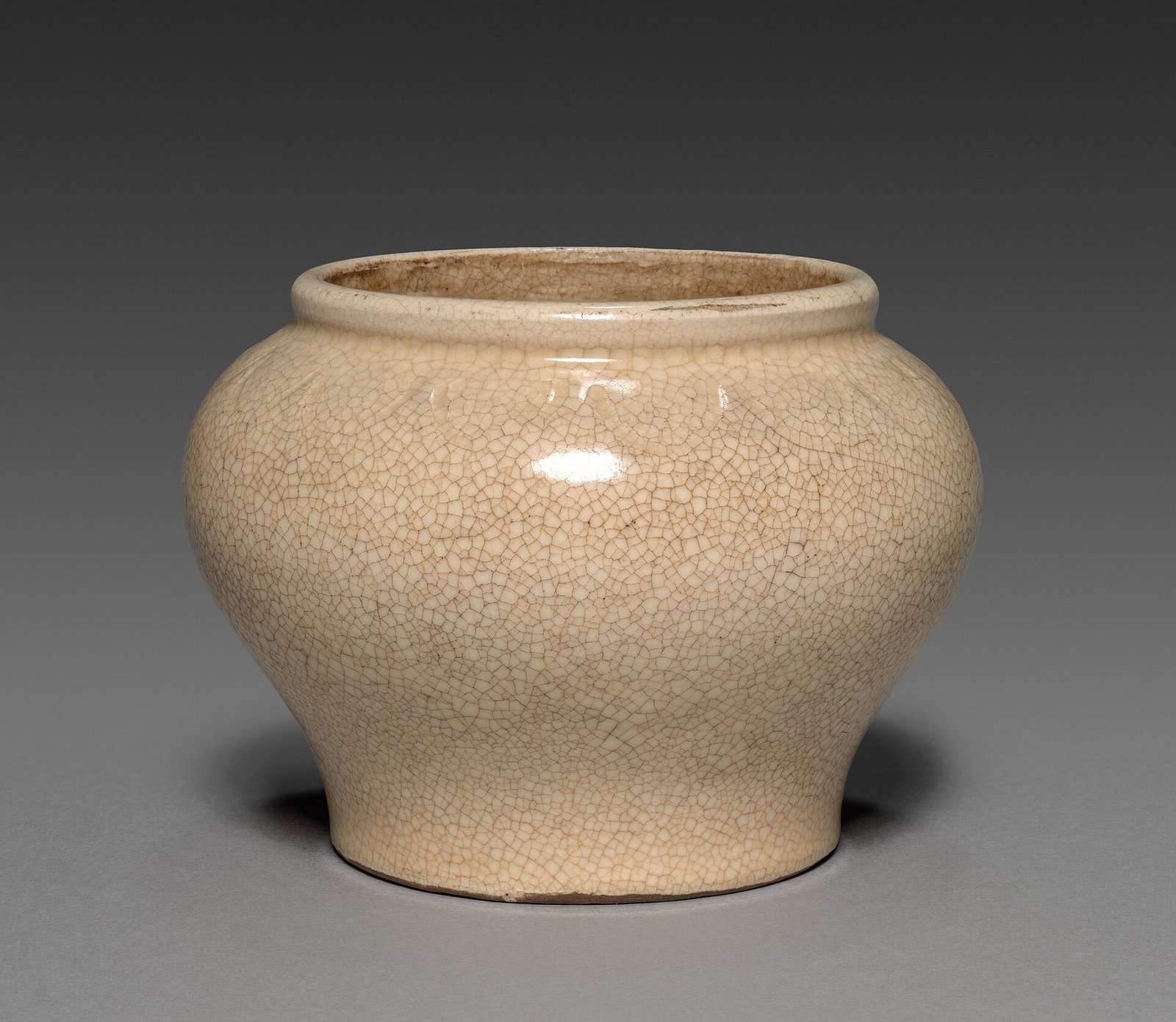
So: Satsuma is not porcelain. That much is unassailable. One honest qualification, because we would rather you heard it from us. Museum cataloguing of Satsuma is not uniform, and that includes within a single museum. The V&A describes one Chin Jukan piece as “pale buff stoneware with a clear crackled glaze”, and several older Metropolitan Museum records for Satsuma wares use the word porcelain — almost certainly legacy cataloguing, but there on the record. So the claim we will stand behind is the material one: Satsuma is a low-fired, opaque, glazed pottery body — catalogued variously as earthenware or stoneware — and it is never true porcelain. If you can hold a thin section to the light and see through it, it is not Satsuma.
The practical consequence is about condition and price. Earthenware chips differently, is more porous, and the crackle in the glaze is intrinsic. Crazing on a Satsuma bowl is not damage.
Most “Satsuma” was decorated hundreds of miles from Satsuma
The kilns were established in Kagoshima, in the old Satsuma province, and the British Museum records that they were founded “by immigrant potters from Yi dynasty Korea” — the same Korean diaspora that founded Japanese porcelain at Arita.
The Western craze, though, has a date and a trigger. The Chin Jukan workshop won great acclaim at the 1873 Vienna International Exhibition, and, in the V&A’s words, “their work started the western craze for ‘Satsuma wares’”. Kyoto answered commercially: the Kinkozan workshop became one of the most successful producers of Kyō-Satsuma — “Kyoto Satsuma” — made in Kyoto, not in Satsuma province at all. Osaka, Yokohama and Tokyo produced the equivalent.
So most of the heavily gilded, densely figured “Satsuma” on the UK market is Meiji export ware decorated in Kyoto, Yokohama or Tokyo. That is not a criticism — the best of it is superb — but it is not a Kagoshima product, and pricing it as one is a mistake in both directions.
The contrast is easiest to see between two museum objects: the Met’s eighteenth-century incense burner, plain, moulded, no enamels and no gilding; and the Kinkozan pieces of 1905–10, dark grounds, gold chrysanthemums, painted panels. Same name, different centuries, different places, different trade.
What we will not tell you: the Nippon date chain
Every Japanese marks guide on the internet carries some version of this: the McKinley Tariff Act of 1890 required country-of-origin marking; “Nippon” was acceptable from 1891 to 1921; “Made in Japan” was required from 1921; “Occupied Japan” ran 1947 to 1952. Dealers date stock by it every day.
We could not source a single link in that chain. Not the statute, not a Treasury Decision, not a US Customs ruling, not a museum page. Every result was a commercial antiques site citing another commercial antiques site.
The one adjacent fact we can verify is that the Allied occupation of Japan ran 1945 to 1952 (US Department of State, Office of the Historian) — which bounds when “Occupied Japan” could have been used, but says nothing about whether it was ever required.
We are not saying the chain is wrong. It may well be broadly right. We are saying that a guide whose selling point is correcting other people’s errors cannot itself repeat a four-part dating rule it has never seen the authority for. If you need to rely on these dates for a valuation, the primary texts to obtain are the Tariff Act of 1890 §6 (26 Stat. 567), the Tariff Act of 1922 §304, and the relevant Treasury Decisions. Until we have read them, they are not going on this page as fact.
The same applies to the Shimazu family crest — the cross-in-circle said to appear on genuine Satsuma. It is repeated universally, it is very probably true, and it appears in no museum record we could find. We mention it as trade knowledge, not as evidence.
The marks that are properly documented
- Workshop and studio signatures. Real, common, and recorded by museums — the V&A notes “Kanzan sei” in overglaze red on the base of a Kyoto vase of about 1875. Studio names (Kinkozan, Chin Jukan, Kanzan) are the most useful marks on Meiji export ware.
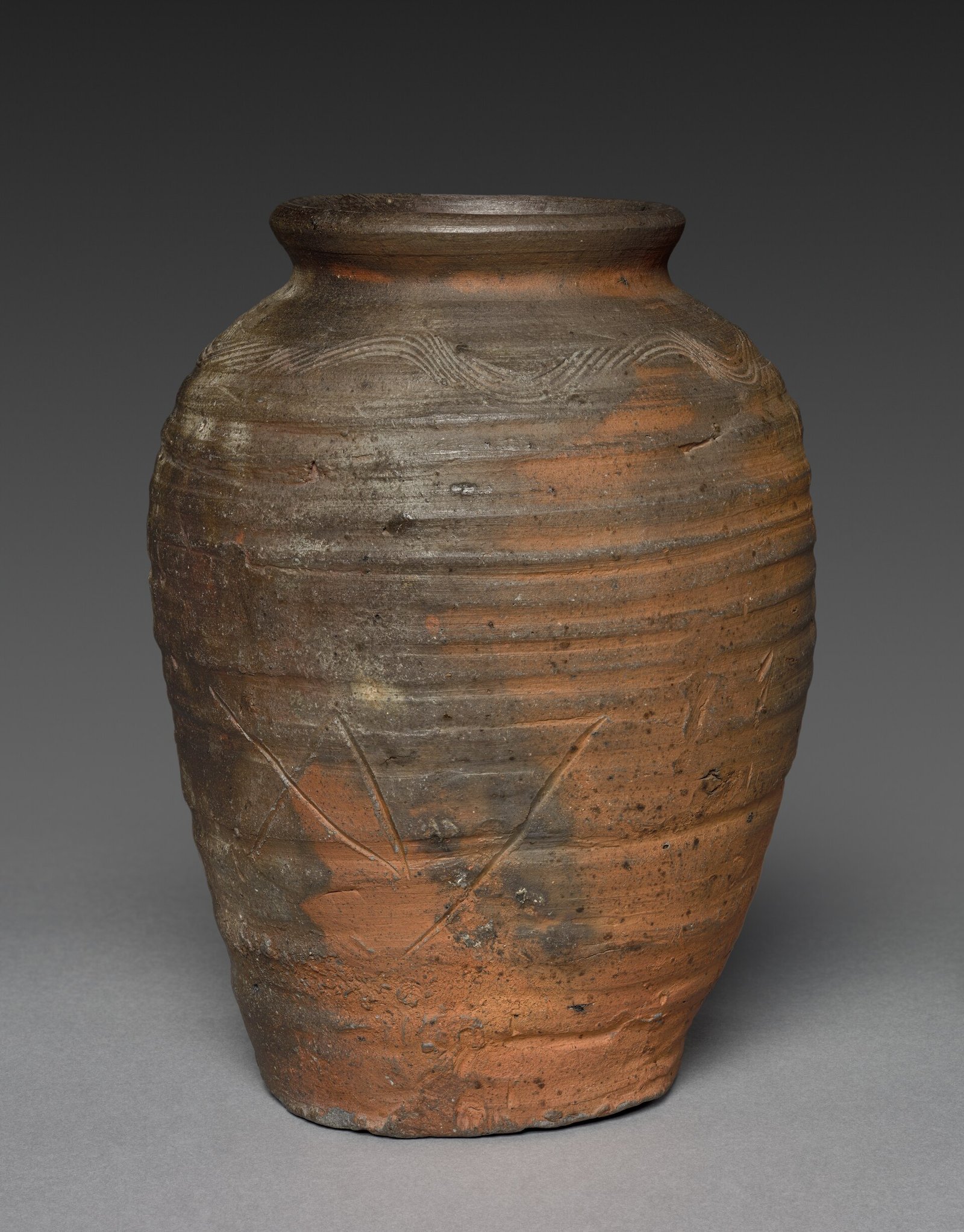
- Incised potter’s marks on early wares. Cleveland records a Bizen storage jar of the late 1400s–early 1500s with an incised potter’s mark — a genuinely early, genuinely documented example.
- Date marks by era name, as on the V&A jar above. Read them as the maker’s claim about lineage, then date the object on its own evidence.
The wares a UK buyer actually meets
| Ware | Dates | What it is |
|---|---|---|
| Arita / Imari | early 1600s onward | Japan’s first porcelain. Korean potters taken to Hizen after the 1590s invasions found porcelain clay at Arita. “Imari” is the port it shipped from, not a kiln. The Dutch carried it to Europe from Deshima from the 1650s. |
| Kakiemon | enamelling from the 1640s; Kakiemon-style wares from the 1660s–70s | Overglaze enamelled style, motifs from Japanese painting, in a palette of red, yellow, green, blue and black on a milky white ground. |
| Nabeshima | from the mid-1600s | A separate kiln producing “exclusively for the shogunal family, feudal lords, and the nobility”. Never a commercial ware. |
| Kutani | 1640s onward | Read this one carefully. Named after a village in Kaga province and long believed made there — but excavation and scientific study show Kutani-style porcelain was made at kilns in Arita. The V&A states it directly: “The term Kutani is misleading, for it is the name of a village in Ishikawa Prefecture…hundreds of kilometres away from Arita.” The Smithsonian concurs, adding that scholars still disagree how much, if any, was made at Kutani itself. |
| Seto | Kamakura period onward | Set the standard for fine glazed pottery so thoroughly that setomono, “Seto things”, became the ordinary Japanese word for ceramics. |
| Bizen | from the Heian–Kamakura period (12th–13th c.) | Unglazed high-fired stoneware from Imbe, Okayama, with natural wood-ash glaze. The Smithsonian notes that between 1100 and 1600 more than eighty regional Japanese kilns made unglazed stoneware of this kind (record for Shigaraki jar F1982.29). |
| Raku | from the late 1500s | Hand-moulded, not thrown; rough clay under an opaque glaze, a Kyoto tea-ceremony ware; the Met traces the Raku family lineage back to the time of Sen no Rikyū. |
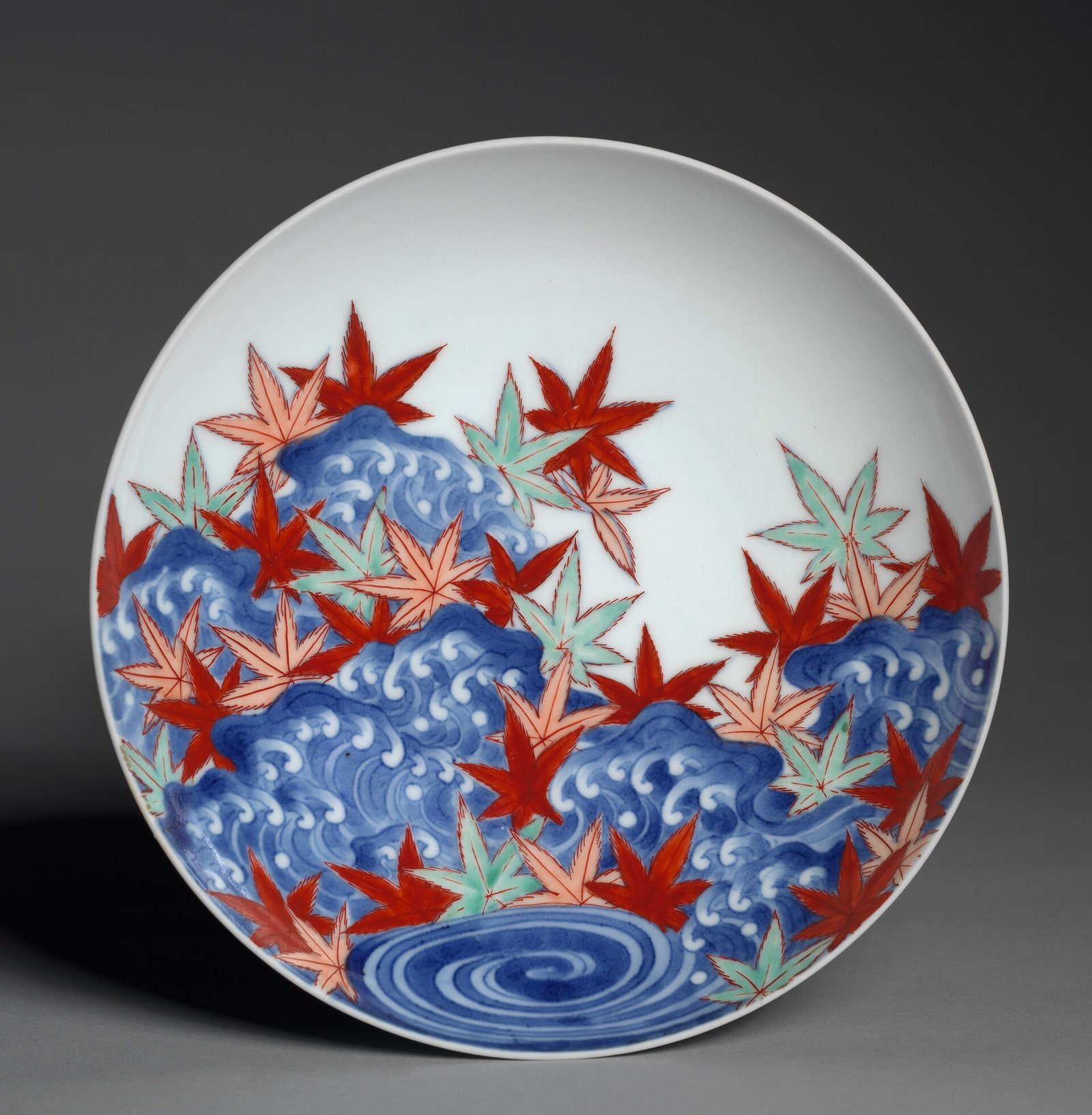
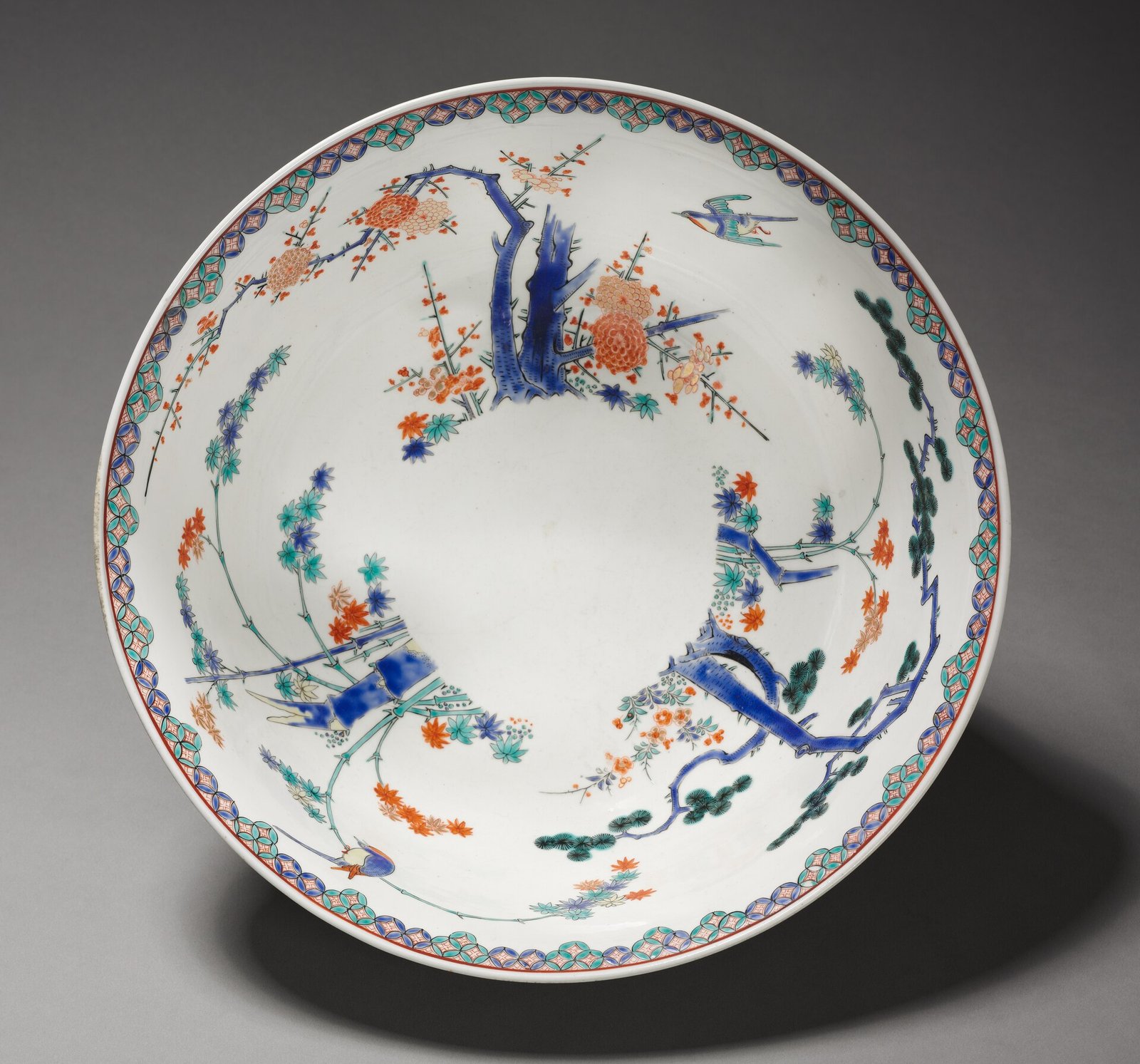
The Kutani entry deserves a moment. It is the Japanese counterpart of the Chinese reign-mark problem: an entire named category, confidently attributed for generations, relocated by archaeology. If you are told a piece is “Ko-Kutani”, the honest position is that its place of manufacture is contested at the institutional level.
Japanese words applied to Chinese and Korean objects
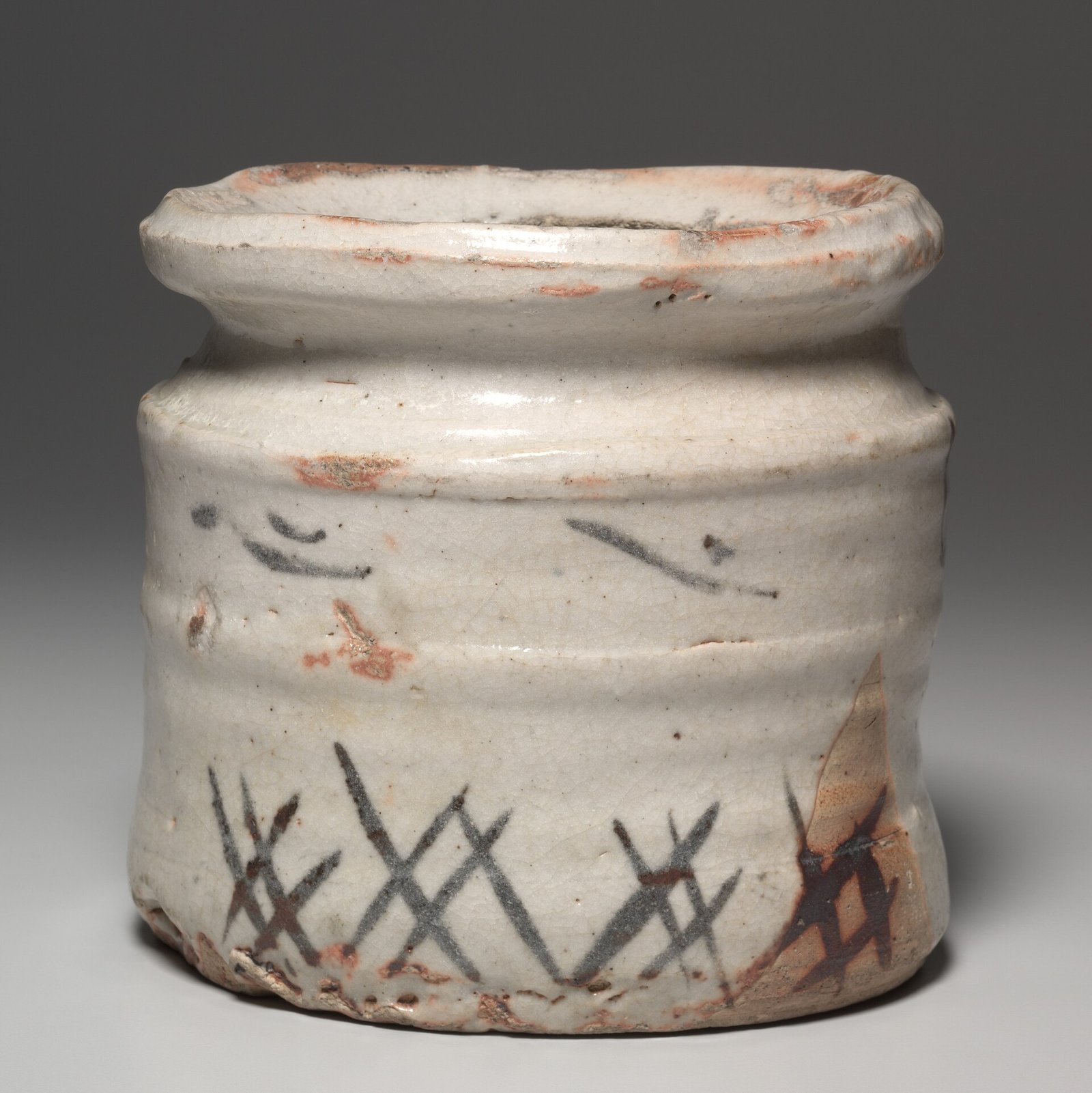
Two you will meet constantly in catalogues.
Mizusashi. Cleveland defines it exactly: mizusashi are “jars used to hold water for the preparation of tea at tea gatherings”, supplying the kama, the iron kettle in which the water is heated. It is one of the display utensils a host selects for a particular gathering — which is why a Korean or Chinese jar can be a mizusashi. Sen no Rikyū’s wabi aesthetic “celebrates austerity, spontaneity, and apparent artlessness”, and tea masters raised Korean vessels to parity with ancient Chinese treasures. A Joseon jar described as “used as a mizusashi” is describing a documented Japanese practice, not a sales flourish.
Kinuta. The Japanese collectors’ term under which Longquan mallet-form vases are catalogued in the trade. Note that it is trade and auction vocabulary: few museum catalogues use it; the Ashmolean does, translating it as “mallet”. We do not print a translation we cannot source.
What to actually do with a Japanese mark
- Photograph it and the object together. A mark divorced from the pot it sits on is worthless.
- Treat era dates as claims. The V&A jar above is the proof.
- Prefer studio names to date marks. Kinkozan, Chin Jukan, Kanzan and the rest are documented workshops with known periods and known quality.
- Do not date Meiji export ware by the export stamp alone until someone shows you the statute.
If you have a Satsuma piece and want an honest opinion on whether it is Kagoshima or Kyō-Satsuma, send photographs of the piece and the base: our valuations are free. See also our Satsuma pages and our journal note on why Satsuma is earthenware, not porcelain.
Sources
- The Metropolitan Museum of Art, Satsuma incense burner 19.14.2a–c
- V&A, Satsuma jar C.57-1969
- V&A, Kinkozan incense burner C.258-1910
- V&A, Chin Jukan incense burner 292&A-1877
- British Museum, Satsuma ware term record
- The Metropolitan Museum of Art, Edo-Period Japanese Porcelain
- The Metropolitan Museum of Art, The Japanese Tea Ceremony
- Smithsonian NMAA, Kutani-style dish F1967.15
- Cleveland Museum of Art, Shino mizusashi 1972.9.a
- US Department of State, Office of the Historian, on the occupation of Japan
Written by James Treacher. The Nippon / Made in Japan / Occupied Japan dating chain and the Shimazu crest are deliberately not asserted here: we could not obtain the primary sources.