If you have a Chinese, Korean, Japanese or Vietnamese ceramic and want to know what it is and what it is worth, send me photographs and I will tell you — free, with the reasoning, not just a number. No obligation to sell, and no fee whether or not you do.
I am James Treacher, a dealer in Asian ceramics based in Surrey. I handle objects from the Song dynasty to the Republic period, and I buy across Surrey, Sussex, Kent and London. What follows is exactly what I look at, so you know what you are getting.
What you get
- An identification — what the object is, where it was made and roughly when, and how confident I am. If the honest answer is “I would need to handle it”, I will say so.
- A view on value — and which value: what it would fetch at auction, what a dealer would pay, and what it would cost to replace are three different numbers, often far apart, and you should know which one you are looking at.
- The reasoning — what the foot, the glaze, the painting and the mark are telling me. A figure without the reasoning is not worth much to you, because you cannot check it.
- An honest “not much” when that is the answer. Most things people are told are Ming are not, and I would rather tell you now than waste your time.
What to send
Five photographs do most of the work. Daylight, a plain background, and no flash.
- The whole object, square on.
- A three-quarter view.
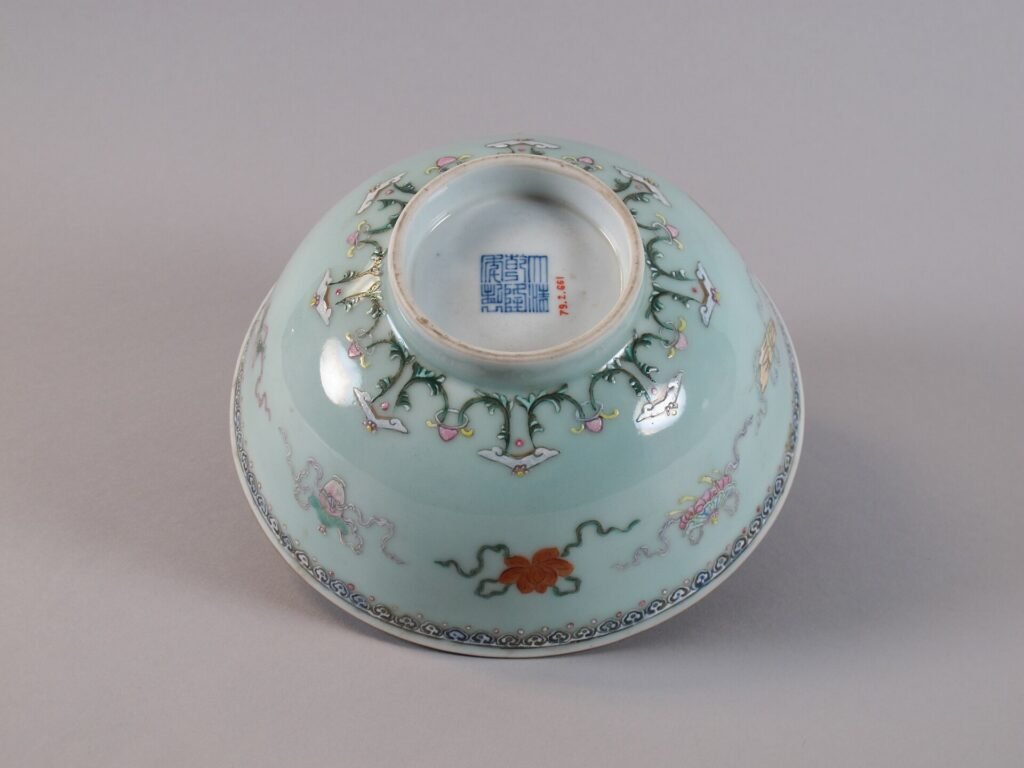
- The base, straight on, with any mark legible — this is the single most useful photograph, and the one most people leave out.
- The foot rim close up, so the colour of the exposed body shows.
- Any damage, lit to show it, not to hide it. A hairline, a chip, a repair: I need to see them, and finding out later helps nobody.
Add a tape measure in one shot for scale, and anything you know about where the piece came from — an old label, a receipt, a family story. Provenance moves value more than most owners realise. Our guide to reading the base shows what a well-photographed underside looks like.
What happens next
I reply by email after reviewing your enquiry./mark>. If I need another angle I will ask. If the piece merits it and you are within reach, I will suggest a viewing — handling an object is still the only way to judge one properly.
Insurance, probate and family pieces
If you need a written valuation for insurance or probate rather than an opinion, say so on the form. That is a different piece of work, done to a different standard, and I will tell you what it involves and what it costs before starting.
If you would rather sell
I buy. If your piece is something I would want, I will make an offer — and the offer is a dealer’s price, which I will explain in the same email as the valuation so you can see the difference. See selling to us for how that works.
What I will not do
- Give you a confident number from one photograph of the front. Nobody can, and anyone who does is selling you something.
- Tell you a piece is period because a mark says so. The mark is the weakest evidence on the pot — our guide to reign marks explains why.
- Charge you, or make the valuation conditional on selling to me.
Send it to me
Common questions
How much is my Chinese vase worth?
It depends on what it is, how good an example it is, its condition, and whether it has a history — in roughly that order, with the mark last. I have written up exactly what a dealer looks at, in order.
Is an online valuation reliable?
For identification and a realistic range, yes, if the photographs are good and the person looking has handled a lot of the material. For a precise figure, or for anything at the top of the market, a viewing is better. I will tell you which yours needs.
Do you value Japanese and Korean pieces too?
Yes — Japanese ceramics including Satsuma and Imari, and Korean Joseon porcelain are both part of what I deal in. Vietnamese Bleu de Huế too.
Can you come to me?
For the right piece or a whole collection, yes, across Surrey, Sussex, Kent and London. Say so on the form.