Your vase has a Qianlong mark. Qianlong reigned 1736 to 1795. The vase was made in 1935.
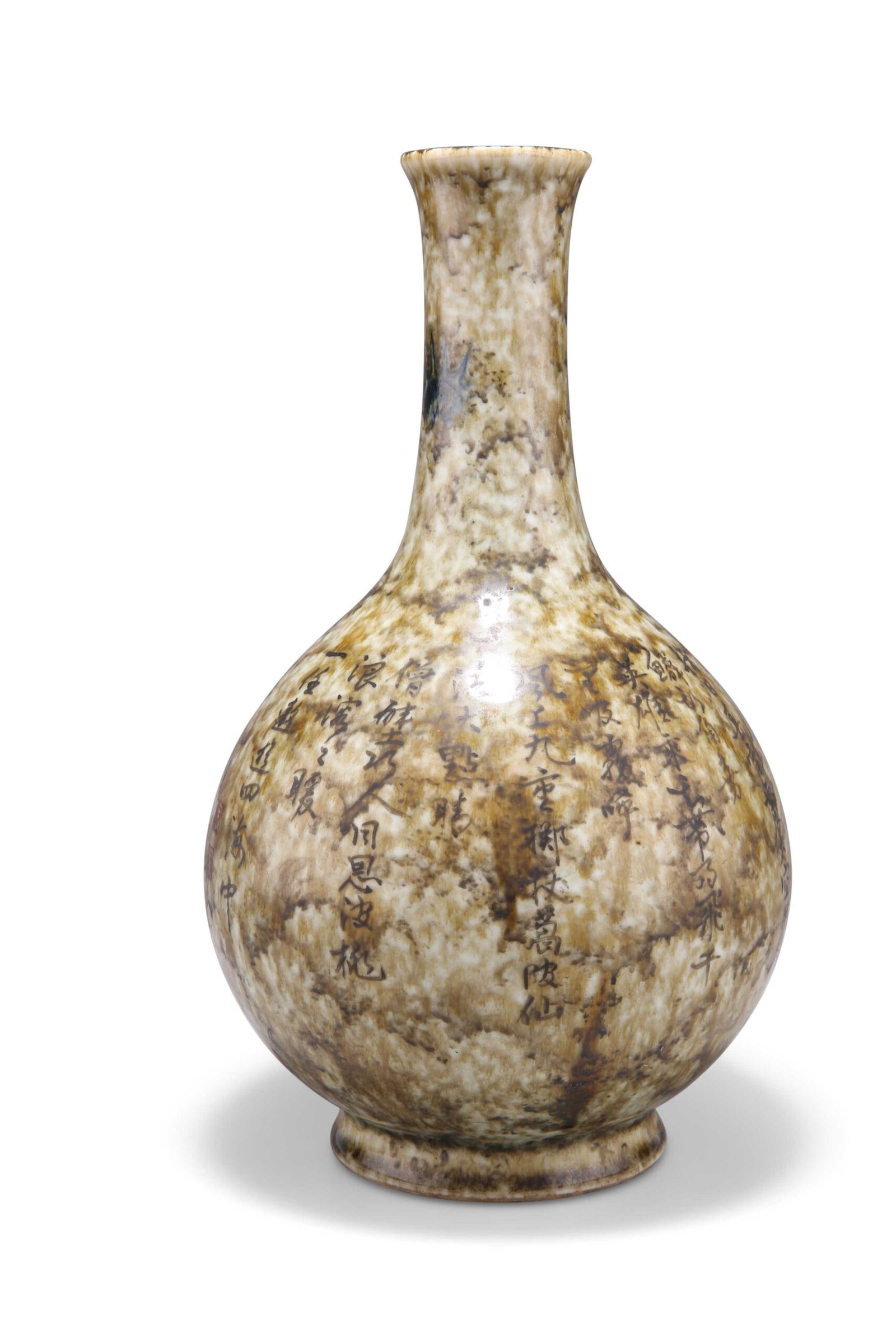
This is one of the commonest situations in the British antiques trade, it is not a scandal, and — importantly — it does not automatically mean the vase is worthless. Republic-period porcelain is a real collecting category with a rising market, and some of it is very good indeed. But you have to know what you are holding.
What the Republic period is
1912 to 1949: from the abdication of Puyi, the Xuantong emperor, to the founding of the People’s Republic. Museums treat it as a formal period designation, not a market label — the Metropolitan Museum uses “Republic period (1912–49)” in its own period field.
And the British Museum, tellingly, runs its Jingdezhen enamel-ware case labels straight through the divide: “Qing to Republican period, AD 1720–1949”. The institutional framing is continuity, not rupture. The dynasty ended; the kilns did not.
The good stuff: Hongxian
Yuan Shikai became president of the Republic in 1912, accepted the throne as emperor in December 1915, and was dead by June 1916 — a reign of about six months. Under his patronage, the Met records, “some ceramics of surprisingly fine quality were produced at Jingdezhen”, marked with his reign title Hongxian 洪憲.
The Met’s 1989 verdict on one pair of its Hongxian-marked vases (68.4.1–2, the pair it has since re-dated to the 1930s–40s): they “stand as proof of a degree of excellence in ceramic manufacture that is generally unexpected in wares of this period”. Some carry a second mark, 居仁堂 Jurentang, “the Hall where Benevolence Resides” — the name of the house where Yuan Shikai lived and worked.
So a genuine Hongxian-marked piece is a six-month window of high-quality imperial-style production. That is a legitimately interesting thing to own.
And immediately, the catch
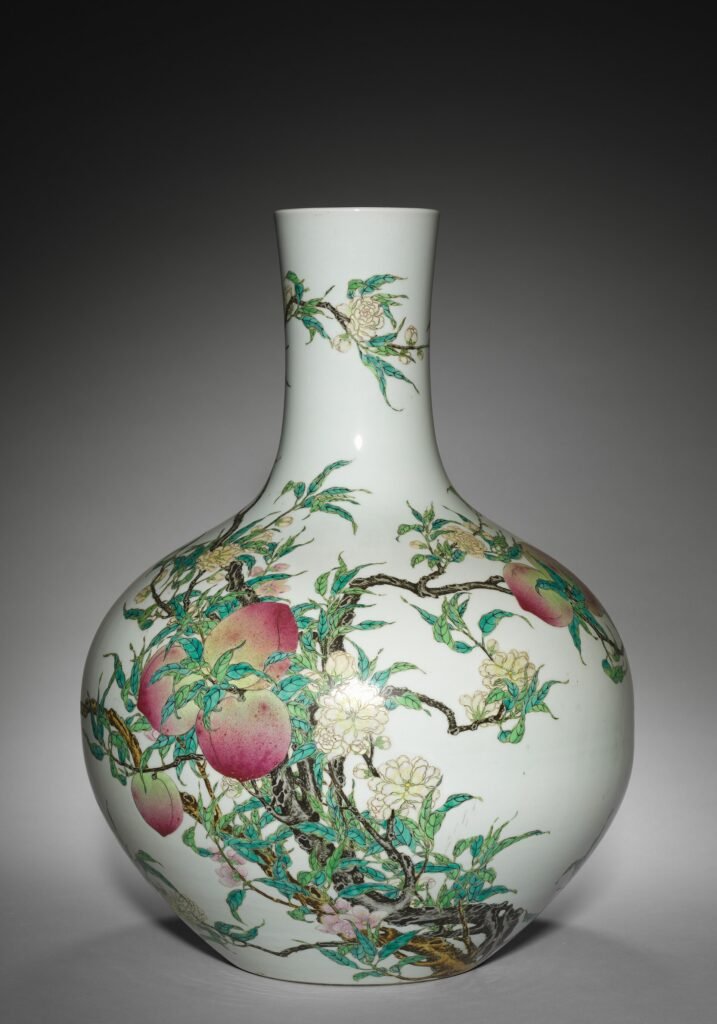
The Metropolitan Museum owns two sets of Hongxian-marked vases. One pair, accession 25.152.1–2, is catalogued as “Hongxian mark and period (1915–16)”. The other, accession 68.4.1, the museum’s own 1989 handbook also called Hongxian mark and period.
The Met now dates 68.4.1 to the 1930s–40s.
A mark naming a reign of under three months, applied retrospectively within a generation, and accepted as period by one of the world’s great museums for decades. If you want a single fact to explain why marks are the weakest evidence on a pot, that is it. It is also not a scandal: the British Museum notes that Chinese ceramics “are constantly being redated and reattributed”, and this is that process working.
Why your 1930s vase says Qianlong
Because Jingdezhen was making extremely good reproductions, openly, and always had been. The Met records the decisive example:
Good reproductions of earlier wares were certainly produced. A vase made at Jingdezhen in the 1930s, faithfully copying a Qianlong piece that had been published just a few years before, sits with the original in the Percival David Foundation of Chinese Art in London.
Suzanne G. Valenstein, A Handbook of Chinese Ceramics, The Metropolitan Museum of Art
Read that carefully. A 1930s Jingdezhen copy, copying a recently published Qianlong piece of a Qianlong piece, good enough to sit beside the original in one of the world’s finest collections of Chinese ceramics.
This is not a modern fraud wave. The British Museum records that potters “in the late Ming, Qing and Republican periods made copies of Ding wares at Jingdezhen…and in other southern kilns”, and the Met notes the practice continued under the People’s Republic from 1949. It is a continuous tradition running from the late Ming to the present, and much of it was homage rather than deception — the Met’s handbook notes that apocryphal reign marks were often “a kind of ‘salute’ to ceramics of an earlier time”, though it also says plainly that some were meant to deceive. See our guide to reign marks.
How to tell, honestly
There is no museum-published checklist for identifying Republic-period porcelain, and we will not invent one. What we can give you are the sourced facts that let you reason:
- The body changed. The Met records that porcelain body composition “was changed again in the nineteenth/twentieth century”. A twentieth-century Jingdezhen body is not eighteenth-century material, whatever the mark says.
- The imperial kilns had burned. Imperial kiln activity halted in 1855 when Taiping forces took Jingdezhen and burned the factories — and the Met is explicit that it is not certain whether they were ever rebuilt. Most twentieth-century production came from commercial kilns.
- Quality had already collapsed before 1912. Of Daoguang wares the Met writes of “an obvious deterioration in the fabric of the porcelain and a totally lackluster approach to the decoration”. The nineteenth century, not the Republic, is where the fall happens.
- Republic quality is bimodal. Hongxian and the better studio work are genuinely fine. The bulk is not. Unlike the eighteenth century, the period average tells you very little about the individual object.
The practical upshot: judge the object, then read the mark. Potting, glaze quality, the confidence of the painting, the fit of foot to form. A Republic piece that is well potted and beautifully painted is worth more than a period piece that is neither.
Why it is worth buying
Three reasons we take the period seriously.
The best of it is properly good. The Met’s own language — “surprisingly fine”, “excellence…generally unexpected” — is not faint praise from a museum catalogue.
It is honestly priced. Nobody is pretending a Republic vase is Qianlong at Republic money. You are buying the object rather than the attribution, which is a healthier way to collect.
Attributions move upward as well as down. Twentieth-century Chinese ceramics have been steadily reassessed, and named Republic-period painters — the Jingdezhen studio artists — are now collected in their own right. This is one of the few areas in Chinese ceramics where scholarship is still actively expanding rather than consolidating.
What we do with it
Where we believe a piece is Republic period wearing an earlier mark, the listing says so — in the description, in the structured mark field, and in the price. We would rather sell you a good Republic vase described as a good Republic vase than a doubtful Qianlong.
See what we hold in Republic-period ceramics, and our Qing porcelain guide for what came immediately before.
Sources
- Suzanne G. Valenstein, A Handbook of Chinese Ceramics, The Metropolitan Museum of Art
- The Metropolitan Museum of Art, vase 68.4.1 — re-dated to the 1930s–40s
- The Metropolitan Museum of Art, Hongxian vases 25.152.1–2
- British Museum, Room 95 Chinese ceramics gallery guide
- British Museum, authority record for the Xuantong emperor
Written by James Treacher.