Third-party validation is the hardest thing for a dealer to manufacture and the easiest for a buyer to check. These are the pieces in the collection with a publication, exhibition or documented ownership record, and the record is quoted exactly as it stands.
What counts, and what it is worth
Provenance is a chain, and every link is a different kind of evidence. An exhibition catalogue entry places an object in a named institution on a named date, under the eye of people who would have said so if they doubted it. A publication plate does the same in print, and lets a buyer compare the photograph with the pot in hand. A dealer’s paper label, still on the base, is weaker but still real: it names a business and a stock number that can be traced. An inscribed tomobako records what a Japanese owner or tea master thought the piece was and when. None of these proves an attribution on its own. Together with the object, they narrow the room for doubt, and they are the reason two otherwise identical bowls can sell for very different prices.
Celadon glazed jar, Song dynasty
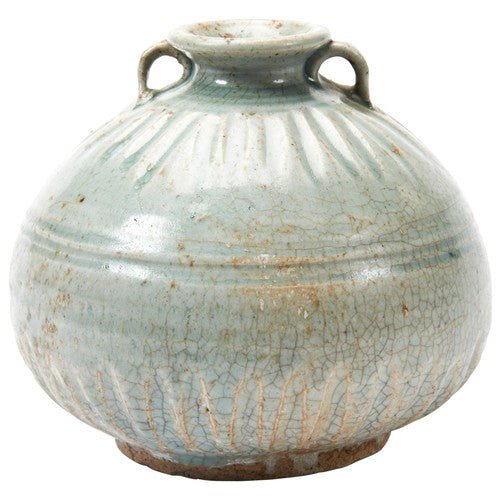
Formerly in the collection of G. R. A. Murray. Exhibited at the National Gallery of South Africa, Cape Town, in the Chinese Exhibition of 1953, catalogue number 115. See the piece.
Korean moon jar, 18th century Joseon
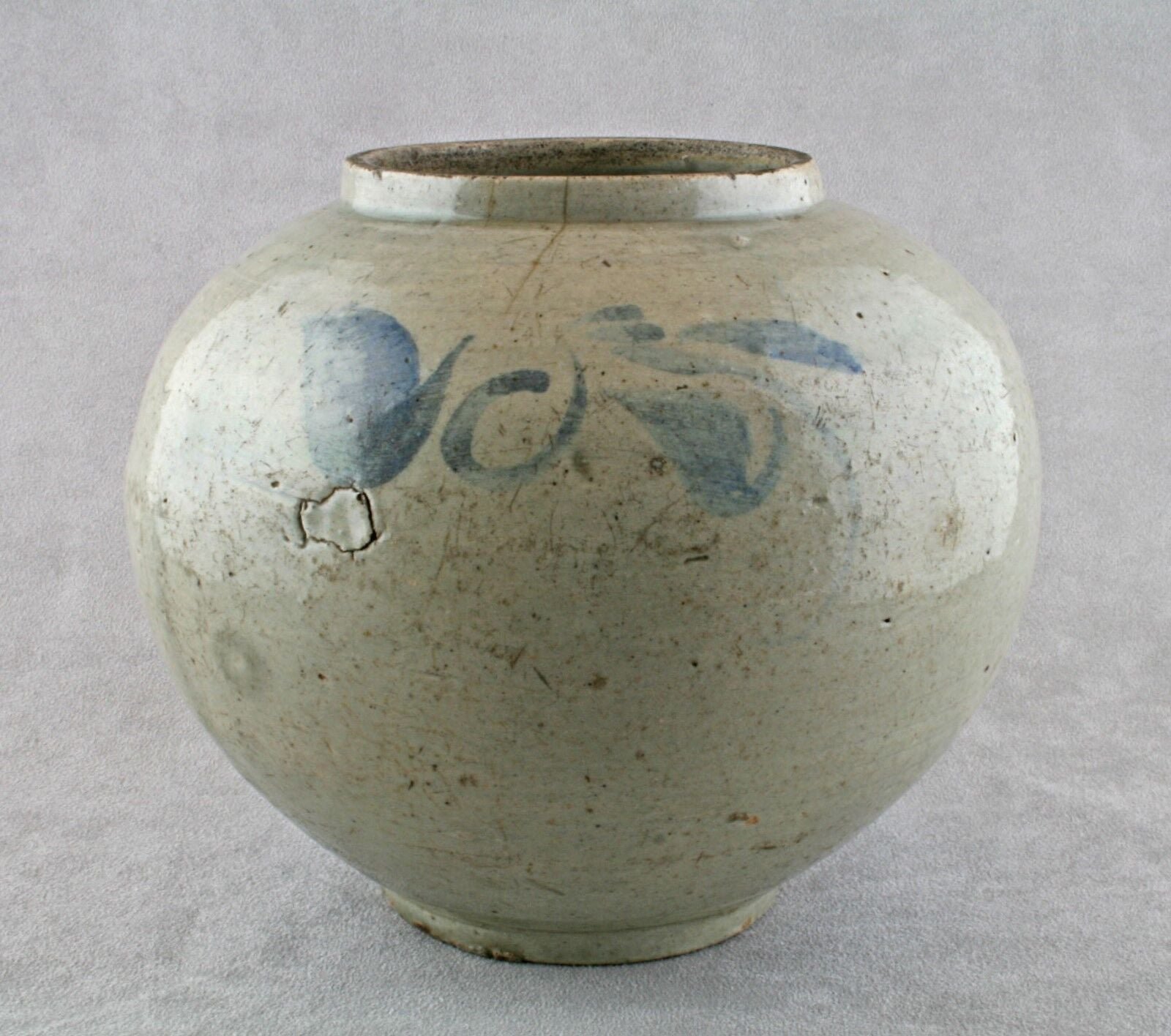
Illustrated in Chadogu — The Art of Tea, plate 51. A Joseon jar adopted in Japan as a mizusashi, the fresh-water jar of the tea ceremony, which is how a Korean pot came to be published in a Japanese tea book. See the piece.
Famille rose dragon bottle vase
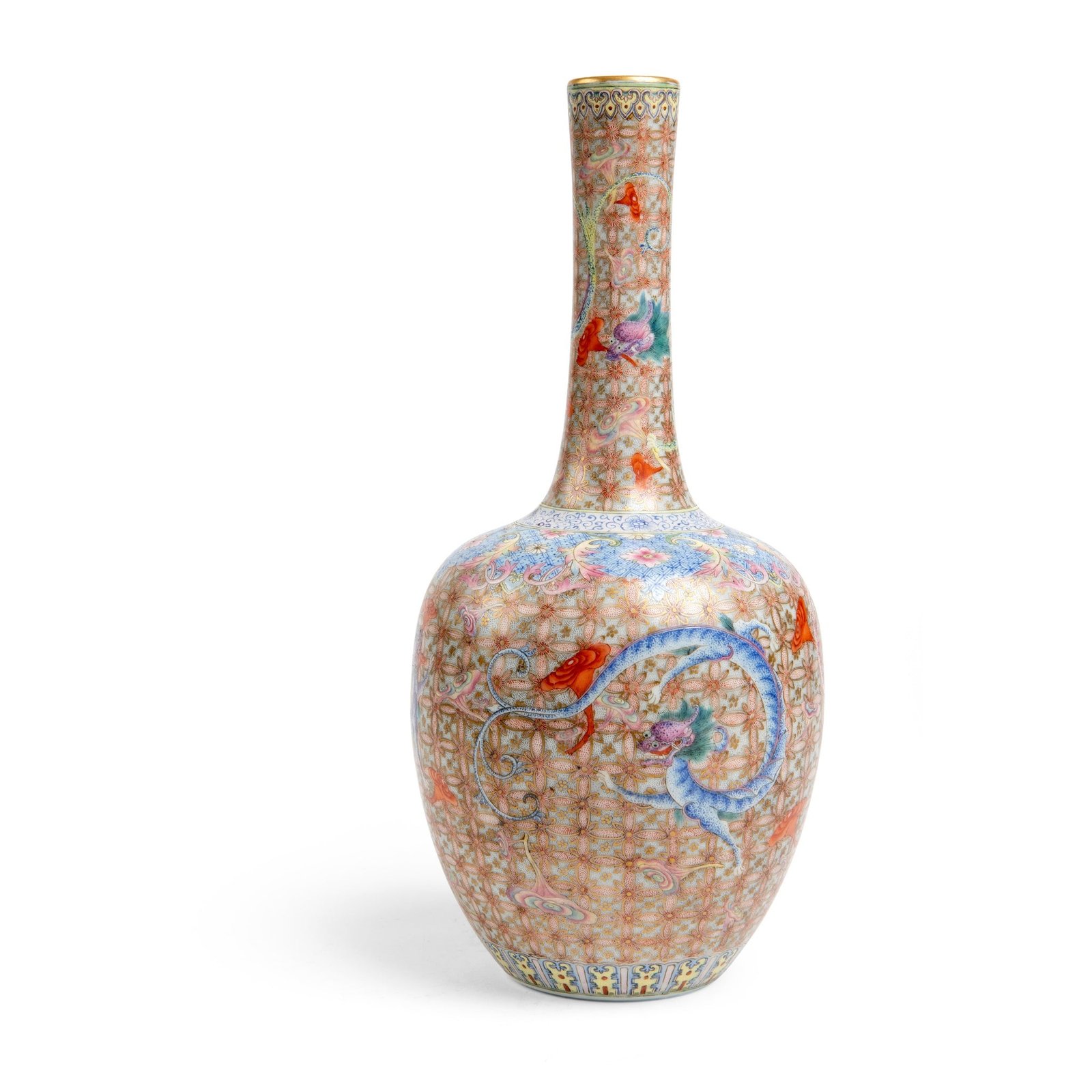
Private English collection, acquired from an antique shop in Singapore in the 1980s, with the dealer’s circular paper label, “Wain Antiques, No. 5”, still attached to the base. See the piece.
Korean iron-painted dragon moon jar
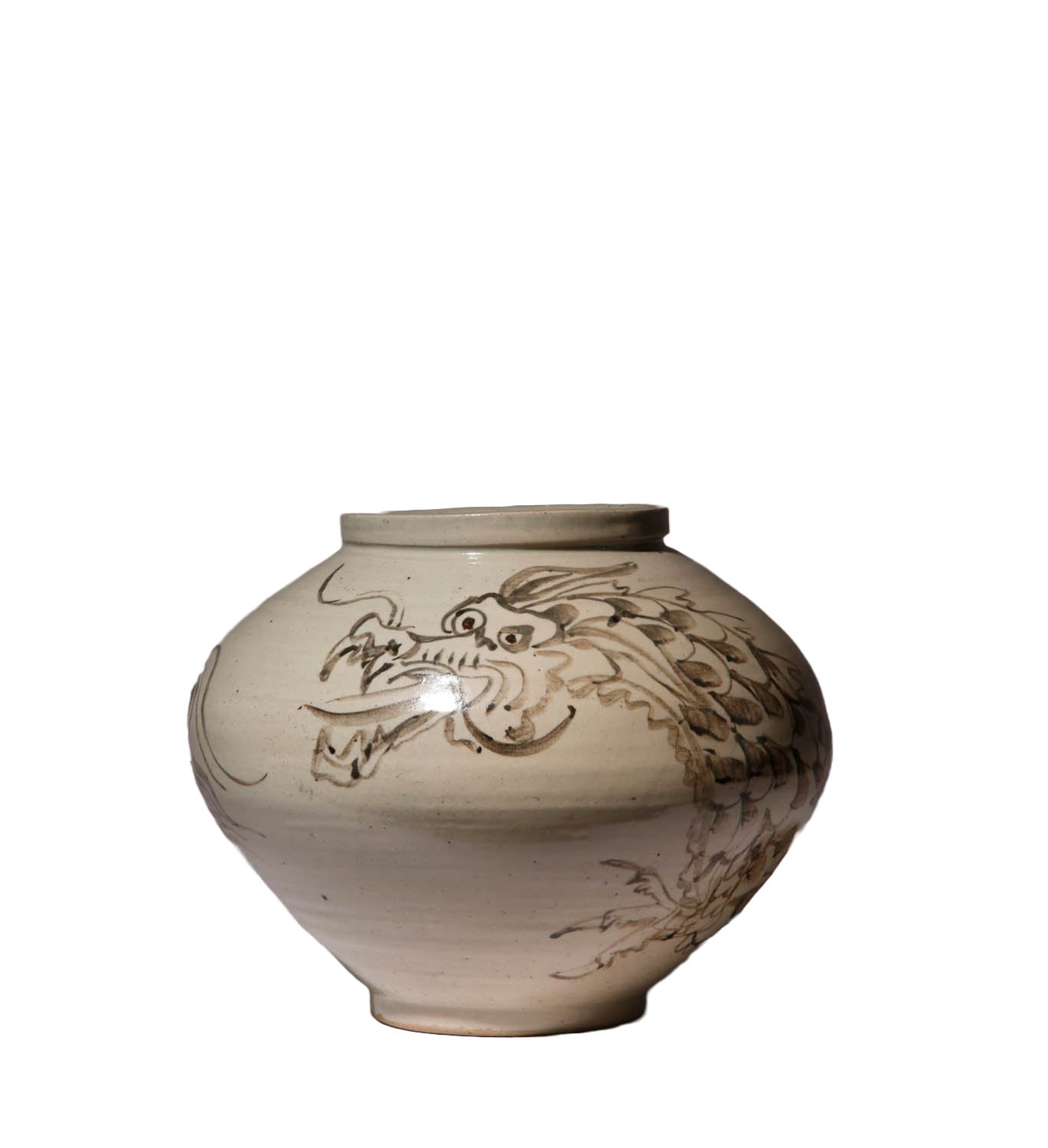
Accompanied by an inscribed tomobako, the fitted wooden box in which a Japanese owner kept it. The inscription has not yet been translated; when it has, the reading will be added to the listing. See the piece.
How records are kept
Where a piece has a record, it is stated in the Catalogue table on its page in the same words as here, and the label, box or catalogue is photographed and stays with the object. When a piece sells it keeps its page in the archive, so the record is still there for the next owner to cite. If you own something that came from me and later find a reference to it — an old sale catalogue, a photograph, a letter — tell me, and it will be added.