Bleu de Huế is Vietnamese, and it was made in China. Both halves of that sentence are true, and holding them together is the whole subject.
What it actually is
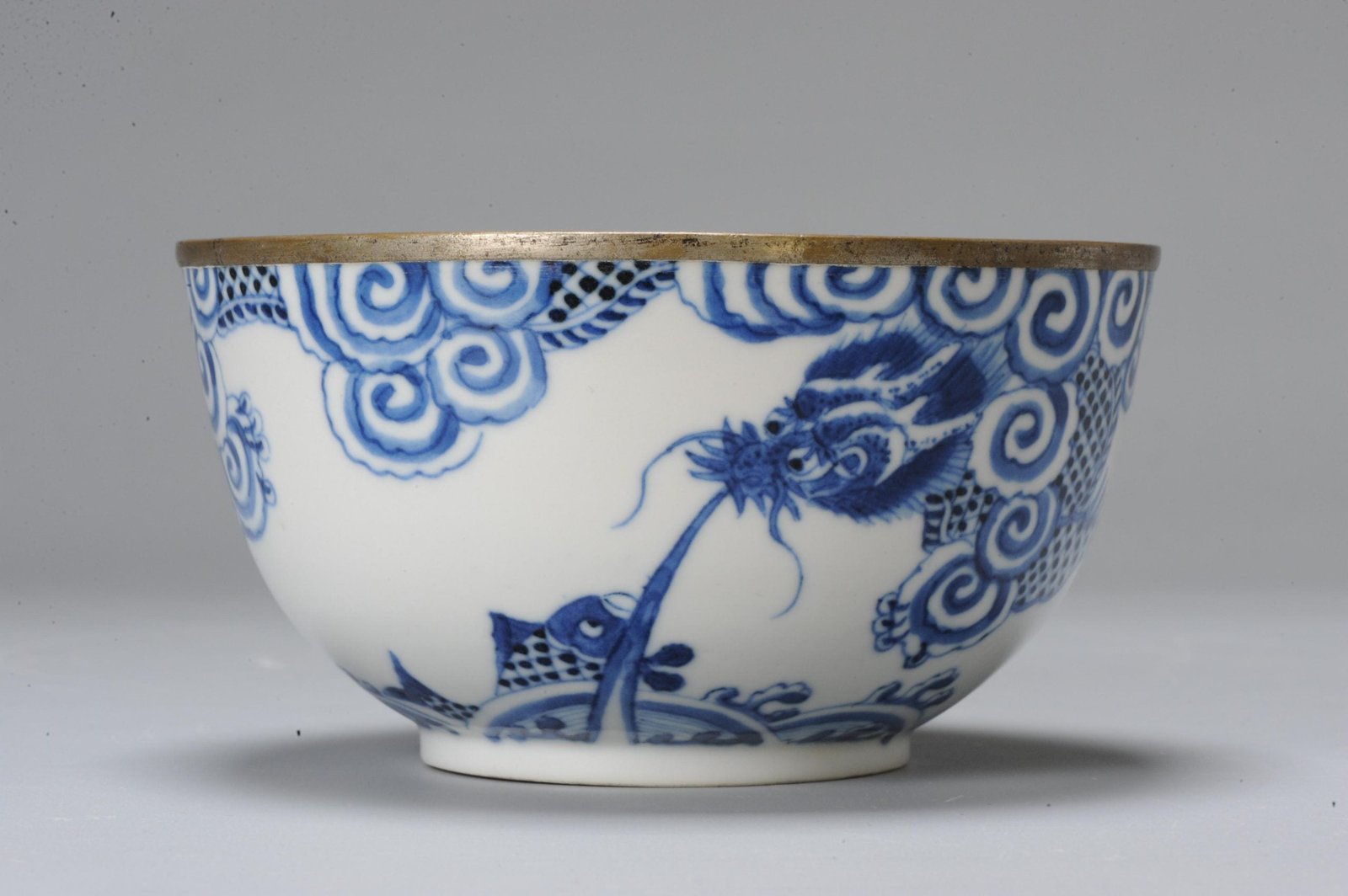
The Vietnamese name is đồ sứ ký kiểu — “commissioned patterned porcelains”. From the later seventeenth century to the early twentieth, Vietnamese courts sent diplomatic envoys to China, and those envoys also went to Chinese kilns to commission high-quality porcelain to Vietnamese specification, bringing it home for court use.
The definitive account is Trần Đức Anh Sơn’s peer-reviewed study (East Asian Studies, Sogang University, vol. 37 no. 1, 2018), which puts it exactly: these porcelains, “though made in China”, carry “Vietnamese criteria” — Vietnamese reign titles, decoration shaped by Vietnamese taste, and poems written in the Vietnamese Nôm script or by Vietnamese authors.
So it is not Vietnamese-manufactured porcelain. It is Chinese porcelain made to Vietnamese order, which is a different and in some ways more interesting thing: a body of export ware whose customer specified the design, the inscriptions and the marks.
One precision: the scholarship says “ceramic kilns in China”. It does not say Jingdezhen. We have seen Jingdezhen asserted confidently in the trade and could not source it, so we say Chinese kilns.
The marks — where it gets genuinely useful
This is where Bleu de Huế separates itself from ordinary Chinese blue and white, because the marks are Vietnamese and there is nothing else quite like them.
- Palace marks of the Nội phủ thị… type. The Museum of Fine Arts, Boston records a Lê–Trịnh period dish marked Nội phủ thị trung, which it describes as the mark of the interior residence of the Central Palace, made for the palace of the Trịnh lord (probably Trịnh Doanh, r. 1740–67), and another marked Nội phủ thị đoài, the mark of the interior residence of the Western Palace, made for the favourite concubine of Trịnh Sâm (r. 1767–82). These name a destination within the palace complex — closer in spirit to Chinese hall marks than to reign marks.
- Nguyễn dynasty reign marks — Minh Mạng niên chế, Thiệu Trị niên chế, Tự Đức, Khải Định. Vietnamese reign names on Chinese-made porcelain.
- Poetic inscriptions in chữ Hán and chữ Nôm. The presence of Nôm — the Vietnamese demotic script — is decisive, because no ordinary Chinese export ware carries it.
- Symbol marks, such as the double fish mark the MFA records on the base of a nineteenth-century Nguyễn dynasty Bleu de Huế dish.
- Marks run from one to sixteen characters — a far wider range than the Chinese six-character convention.
The practical test for a buyer: if the inscription is in Nôm, or names a Nguyễn reign, or names a Vietnamese palace, it is đồ sứ ký kiểu regardless of where the clay was dug.
An honest complication
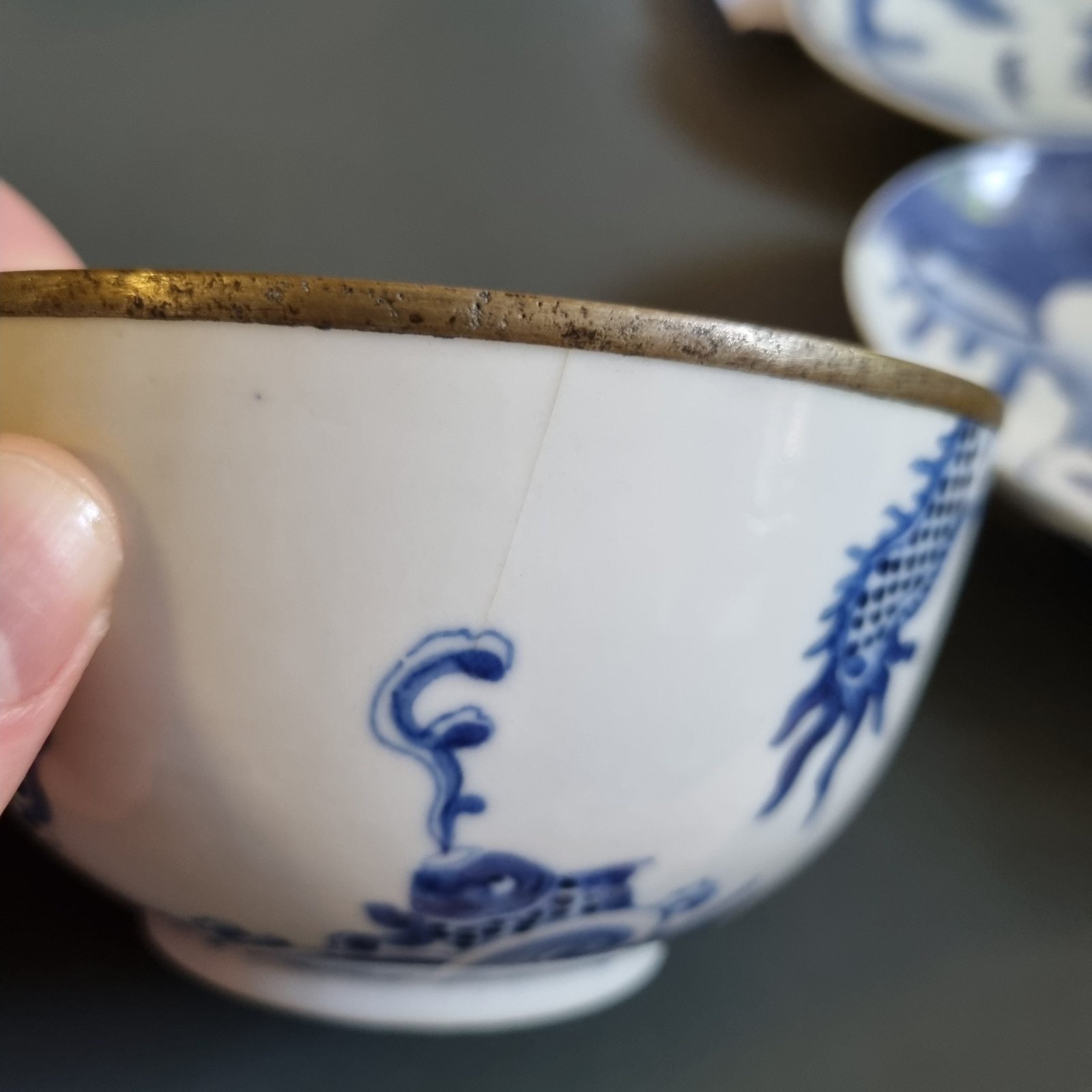
The museums themselves hedge on manufacture, and you should know that before you buy on a confident label. The MFA catalogues one Lê–Trịnh dish (1740–67) with object place recorded as “China or Vietnam”, and another Nội phủ dish with object place “China”; another is “Vietnamese, Nguyen dynasty” with the medium given as “Bleu de Hue porcelain with underglaze cobalt blue decoration”.
So the honest position is this: the scholarship is clear that đồ sứ ký kiểu as a category was ordered from Chinese kilns; individual pieces, particularly later and lesser ones, are not always cleanly attributable, and even a good museum can give “China or Vietnam” for one dish and “China” for the next. Anyone selling you certainty on a specific bowl is going beyond what the institutions will say.
Where it sits in Vietnamese ceramics
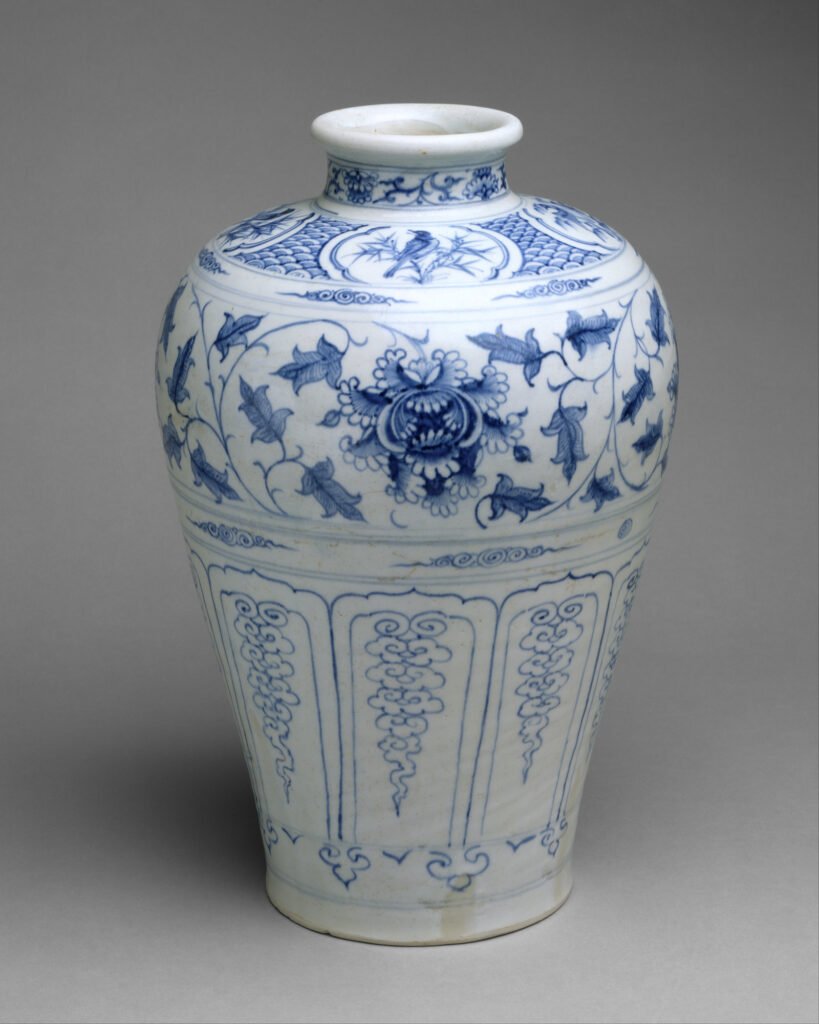
Vietnam has a much longer ceramic history than the Bleu de Huế story suggests. The Smithsonian records that the earliest high-fired stoneware made in Southeast Asia came from kilns in northern Vietnam in the second and third centuries CE, and that Vietnamese ceramics “have been traded across Southeast Asia and to West Asia and Japan since the fourteenth century”.
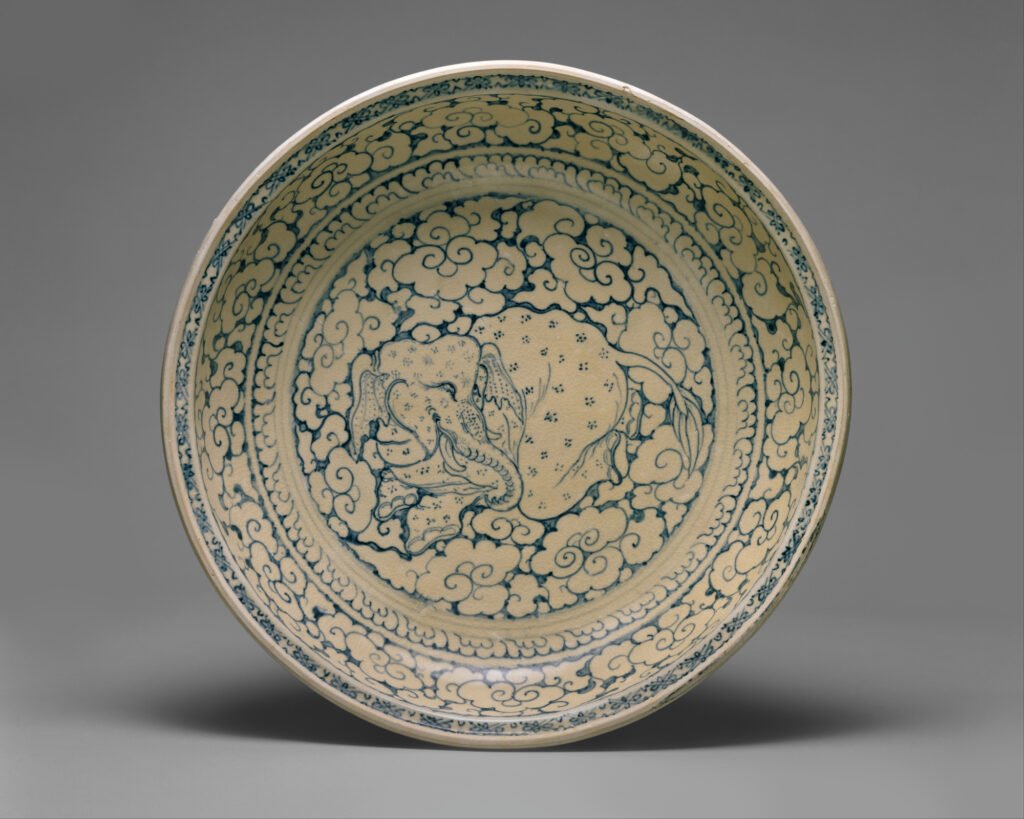
The high point of Vietnamese manufacture is Chu Đậu ware of the fifteenth and sixteenth centuries, from Hải Dương province — blue and white of real quality, exported widely. The British Museum dates its Chu Đậu dish 2002,1011.1 to 1430–1480, and the type is distinctive for its chocolate-brown slip base.
The famous witness is a bottle in the Topkapı Sarayı Museum in Istanbul, inscribed as made at Nam Sách and dated 1450 (the Smithsonian confirms the date and the place; the potter’s surname Bùi and the era reading rest on the specialist literature rather than a museum record). (The full personal name often attached to it is a modern attribution rather than a reading of the inscription, so we give only what the inscription is reported to say.)
And the scale of the export trade was confirmed spectacularly by a wreck: the Cu Lao Cham / Hoi An ship, excavated off central Vietnam between 1997 and 2000 (the Smithsonian’s record says 1997–99), yielded some 240,000 pieces and fragments, overwhelmingly fifteenth-century Vietnamese ceramics.
Why this is under-collected
Vietnamese ceramics are one of the genuinely uncontested corners of the Asian art market. Museums hold and publish the material; there is very little practical collecting literature; and the field carries none of the fake-saturation that dogs Chinese porcelain.
Bleu de Huế in particular has an unusual property for a collector: the marks mean something. A Nội phủ thị trung mark names a real destination in a real palace. A Nôm poem is Vietnamese-authored. Compared with the Chinese reign mark — which, as our marks guide sets out, is usually retrospective — this is a body of material where the inscription is doing honest work.
What we hold
Our own Bleu de Huế bowl is, by some distance, the most-visited object we have ever listed. That is not an accident: the demand for this material is real and the supply of informed description is not. See Vietnamese ceramics and blue and white.
If you have a piece with a Vietnamese inscription and want it read, send photographs of the object and the base — valuations are free, and inscriptions are exactly the sort of thing worth a second pair of eyes.
Sources
- Trần Đức Anh Sơn, “Đồ sứ ký kiểu: The Chinese Porcelains Made for the Vietnamese Courts from the 17th Century to the Early 20th Century”, East Asian Studies 37:1 (2018)
- Trần Đức Anh Sơn, via the Vietnam National Museum of History
- Museum of Fine Arts, Boston, Bleu de Hue dish 2018.2161.1
- Smithsonian National Museum of Asian Art, Vietnam’s Ceramics: Depth and Diversity
- British Museum, Chu Đậu dish 2002,1011.1
- Smithsonian NMAA, Chu Đậu wine cup from the Hoi An wreck, F2005.6
Written by James Treacher.