Checked 1 September 2026. Rates, thresholds and listings change. This is a summary of published government sources with links so you can check them yourself — it is not legal, tax or customs advice, and we are not qualified to give any. For anything with money or a prosecution attached, use the primary sources linked below or take professional advice.
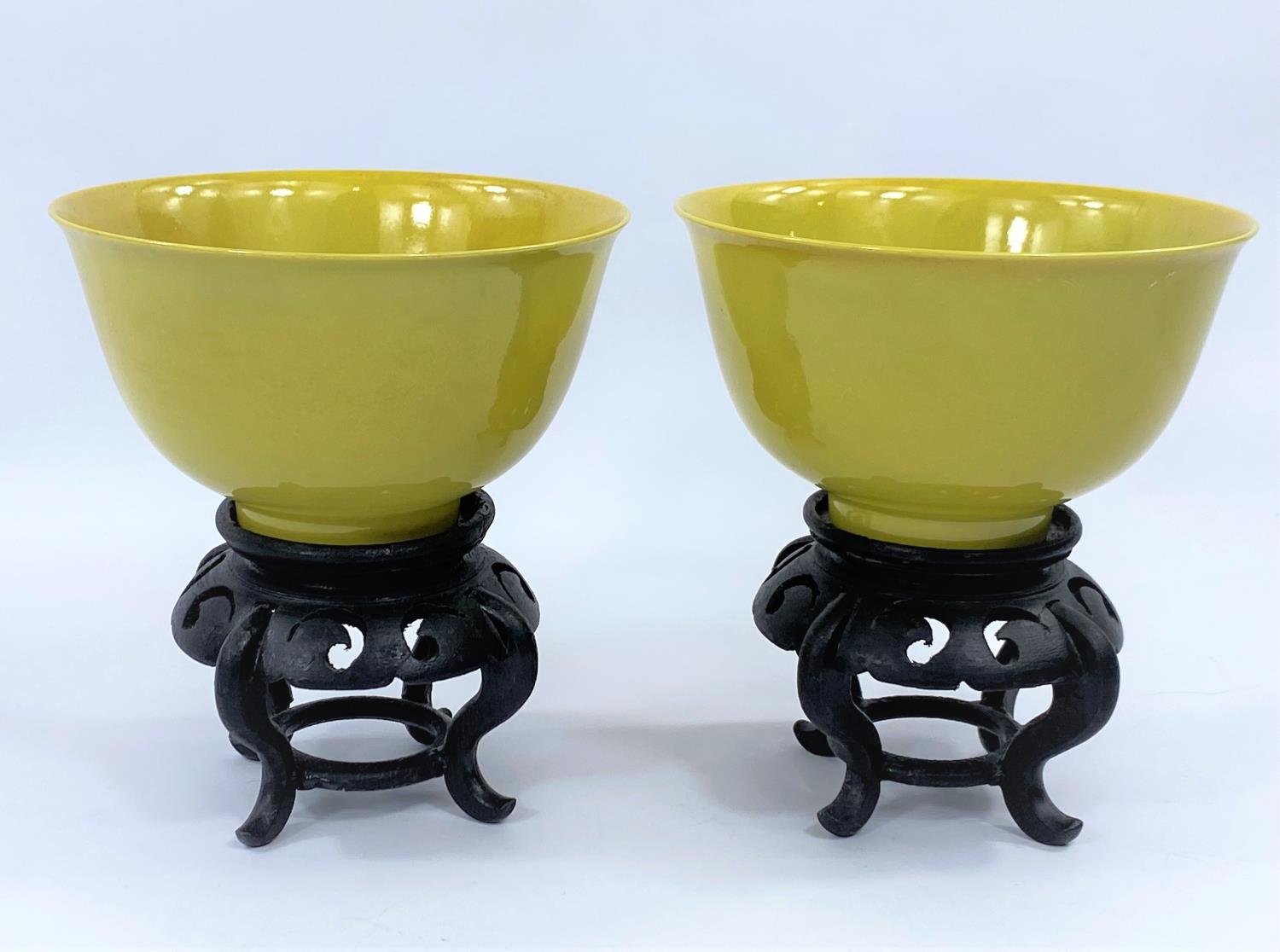
About a third of the people who look at our catalogue are outside the UK, and the questions are always the same three: what will I pay in tax, will the hardwood stand be a problem, and can I even export it. Here is what the government actually publishes.
Import VAT: the effective 5% rate
The UK standard rate of VAT is 20%. But works of art, antiques and collectors’ items imported into the UK receive “an effective VAT rate of 5 per cent” through a reduced valuation at importation. The legal basis is section 21 of the VAT Act 1994.
The mechanism is arithmetic rather than a special rate. Per HMRC guidance on valuing goods for import VAT: take the duty value plus additional costs, multiply by 25%, then apply the standard 20% rate to that reduced figure. Twenty per cent of a quarter is five per cent of the whole.
One thing to watch: a great many dealer guides still cite “VAT Notice 702”. That notice has been withdrawn. If a source you are reading rests on it, the source is out of date.
Note also that this is an import rate achieved by valuation. It says nothing about VAT on a subsequent sale within the UK, where the margin scheme or the standard rate may apply instead. That is a separate question and a good reason to ask before assuming.
What counts as an antique for customs
Commodity heading 9706: “Antiques of an age exceeding 100 years”. It subdivides by age:
| Code | Covers |
|---|---|
| 9706 10 00 | Of an age exceeding 250 years |
| 9706 90 00 | Other — i.e. roughly 100 to 250 years old |
So a nineteenth-century bowl sits in 9706 90 00; a Kangxi piece of the 1690s is over 250 years old and would fall under 9706 10 00. Note the trap: an antique between 100 and 250 years old is 9706 90 00, not 9706 10 00 — the subheadings are not interchangeable. Third-country duty on 9706 90 00 90 is 0.00% per the UK Integrated Online Tariff, with VAT measures present at 5%, 0% and 20% depending on the case.
Classification is the importer’s or agent’s legal responsibility, not the seller’s. If a shipment is large enough for it to matter, HMRC offers a legally binding decision on a commodity code.
CITES: the hardwood stand is the real risk
This catches more Asian antiques buyers than anything else, because the controlled material is usually not the object — it is the stand underneath it.
The UK operates CITES Annexes A to D under retained Regulation (EC) No 338/97, with permits issued by APHA. GOV.UK states that moving a listed specimen without a valid permit risks “a prison sentence of up to 7 years, an unlimited fine, or both” — and that you need the counterpart permit from the other country’s authority too. A UK permit alone is not enough.
| Material | Listing |
|---|---|
| Rosewood — Dalbergia spp. (includes huanghuali, generally identified as Dalbergia odorifera) | Annex B, annotation #15 |
| Zitan — generally identified as Pterocarpus santalinus | Annex B, annotation #7: logs, wood-chips, powder and extracts only — a finished carved stand is outside the listing |
| Elephant ivory | Annex A (the elephant populations of Botswana, Namibia, South Africa and Zimbabwe are Annex B) — and see the Ivory Act below |
| Rhinoceros horn | You “cannot sell an unworked specimen of rhino horn within Great Britain, no matter when you acquired it” |
The 10 kg rule — the most useful fact here
Annotation #15 to the Dalbergia listing exempts, among other things, “finished products to a maximum weight of wood of the listed species of up to 10 kg per shipment”.
Two scope points a Dalbergia-only summary would hide: annotation #15 also governs Guibourtia species (bubinga), and its exemptions additionally cover finished musical instruments, parts and accessories, with separate carve-outs for Dalbergia cochinchinensis and for Mexican-origin Dalbergia.
In plain terms: a carved hardwood stand under a bowl, in a shipment containing 10 kg or less of the wood of each listed species, falls outside the controls. Above 10 kg of any one species, permits are required. The retained regulation’s notes on interpretation say the limit is assessed against each annotated species separately, not the total weight of the shipment, and that different species are not added together. For a single object with its stand this almost always means no permit is needed — but the exemption is per species per shipment, so a consignment of several stands of the same wood can cross the line.
“Hongmu”, incidentally, is not a CITES term at all. It is a Chinese national timber-standard category spanning several genera, and it has no CITES status of its own.
Worked specimens and the pre-1947 rule
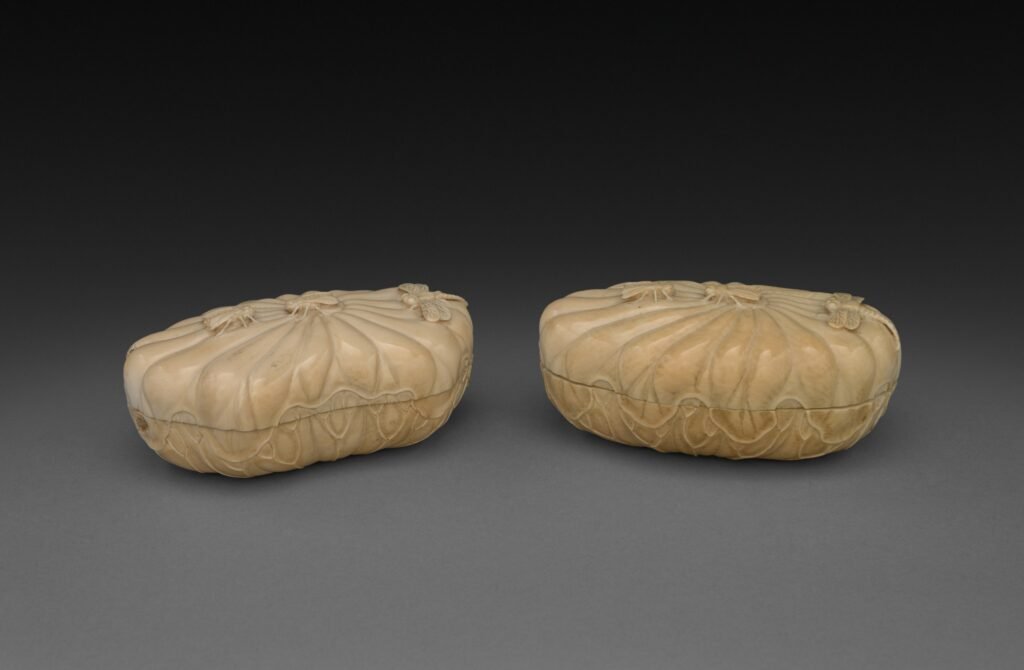
An item is a worked specimen only if all four apply: significantly altered from its raw natural state; worked before 3 March 1947; not reworked to change its purpose since; and clearly identifiable as jewellery, adornment, art, a utility item or a musical instrument. “Worked specimens must be in the same condition as they were in 1947.” Worked specimens do not need an Article 10 certificate; items that do not qualify do. Source: GOV.UK, published 22 May 2025.
The Ivory Act — and the 2025 change most guides have missed
The Ivory Act 2018 came into force for elephant ivory on 6 June 2022. “Dealing” means buying, selling, hiring out, offering, advertising, displaying for sale, importing or exporting, or arranging such transactions. The penalties are often quoted loosely, so to be precise: civil monetary penalties are capped at £250,000 (Schedule 1), while on conviction on indictment the penalty is up to five years’ imprisonment and/or an unlimited fine (section 12). The £250,000 figure is not the maximum criminal fine.
The exemptions (GOV.UK, updated 24 July 2026) each have hard thresholds:
- Registration, £20: pre-3 March 1947 items with less than 10% ivory by volume, where all the ivory is integral; musical instruments made before 1975 with under 20% ivory; portrait miniatures made before 1918 with a surface area no greater than 320 cm²; sales between qualifying museums.
- Exemption certificate, £250: items made before 1918 of “outstandingly high artistic, cultural or historic value”.
And the recent change. The Ivory Act 2018 (Meaning of “Ivory” and Miscellaneous Amendments) Regulations 2025 (SI 2025/9) extended the definition of “ivory” to common hippopotamus, killer whale, narwhal and sperm whale. DEFRA confirms those protections came into force on 28 January 2025. Walrus was named in an earlier announcement but is not among the four in the 2025 regulations.
For Asian antiques this bites on ivory brush holders, wrist rests, netsuke, okimono and inlay — see the scholar’s studio, where ivory is a common holder material.
Exporting from the UK, after Brexit
The change that catches dealers: “You need a UK export licence to export objects of cultural interest from Great Britain to any destination outside the UK” — the EU included. Before 2021 a UK licence covered exports from the UK to EU states and an EU licence covered exports beyond the EU; since 1 January 2021 a UK licence is needed for every destination.
The system sits under the Export of Objects of Cultural Interest (Control) Order 2003 and is administered by Arts Council England. We are deliberately not printing the age and value thresholds: the 50-year age test is in the 2003 Order itself, but the value thresholds are set out in Arts Council England’s guidance and we cannot confirm which edition is current; publishing a stale threshold would be actively harmful. Check ACE’s current guidance.
On the customs side, goods sent from Great Britain to the EU are exports and remain zero-rated with evidence of movement; purchases from EU sellers are imports rather than acquisitions, and customs declarations are now required. Northern Ireland has separate rules.
Chinese cultural property law — should a UK buyer care?
Yes, and here is the sourced chain rather than an opinion. China’s Law on Cultural Relics Protection, in effect from 1 March 2025, vests state ownership in relics remaining underground or in Chinese waters (Article 5), prohibits export of state-owned and valuable relics (Article 77), and asserts a right of repatriation for relics lost through theft or illegal export that is “not subject to the statute of limitations” (Article 81).
Meanwhile the UK is a party to the 1970 UNESCO Convention, and the Dealing in Cultural Objects (Offences) Act 2003 provides that it is “immaterial whether—(a) the removal or excavation was done in the United Kingdom or elsewhere, (b) the offence is committed under the law of a part of the United Kingdom or under the law of any other country or territory”.
Put together: provenance documentation matters, and it matters more each year. We are not going to opine on any particular object — but you should expect a serious dealer to tell you where a piece came from, and to keep the paperwork.
The widely quoted rule that Chinese relics made before 1911 cannot be exported, with 1911–1949 items restricted, comes from administrative measures we could not obtain from a primary Chinese government source. We do not print those dates.
How we ship
Fragile ceramics go by specialist packer and insured carrier, with export documentation prepared for the destination. If a piece has a stand, we tell you what the stand is made of. If we do not know, we say we do not know rather than guess — which on CITES material is the only responsible answer. See shipping and handling for what we actually undertake.
Related: shipwreck cargo porcelain, where a separate and often-overlooked reporting duty applies.