Reference
The mark library will be a photographed record of every mark on every piece that passes through our hands: the base shot, a macro of the mark itself, the characters transcribed and translated, the script identified, and a link to the object it came from. An entry is only published once the mark has been photographed to that standard and tied to a piece we have held. Nothing here is drawn from a reference book or another dealer’s photograph.
That is a slow way to build a library, and it is deliberate. Reign marks are the most copied, most misread and most over-trusted feature of Chinese porcelain, and the only mark images worth anything are ones you can check against the pot they sit on. The first entries are being photographed now; until they are published, the guides below cover the ground.
What an entry will show
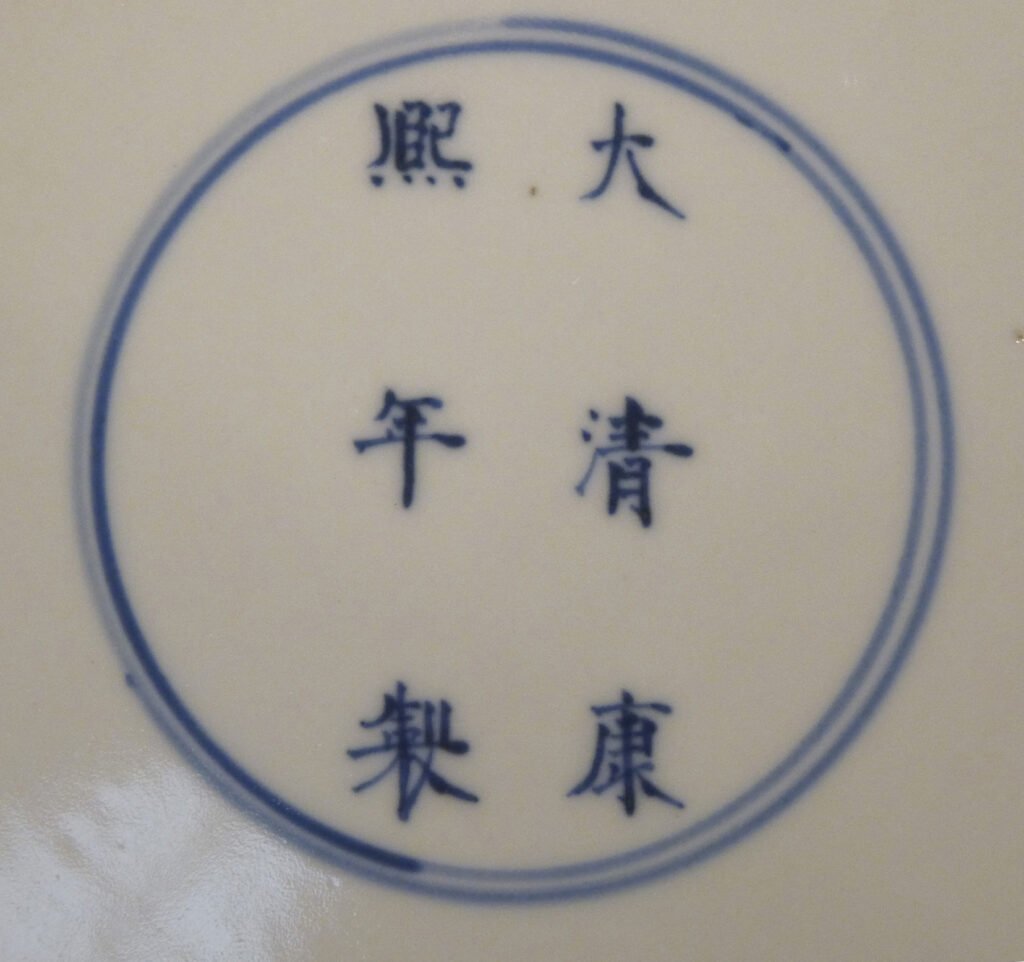
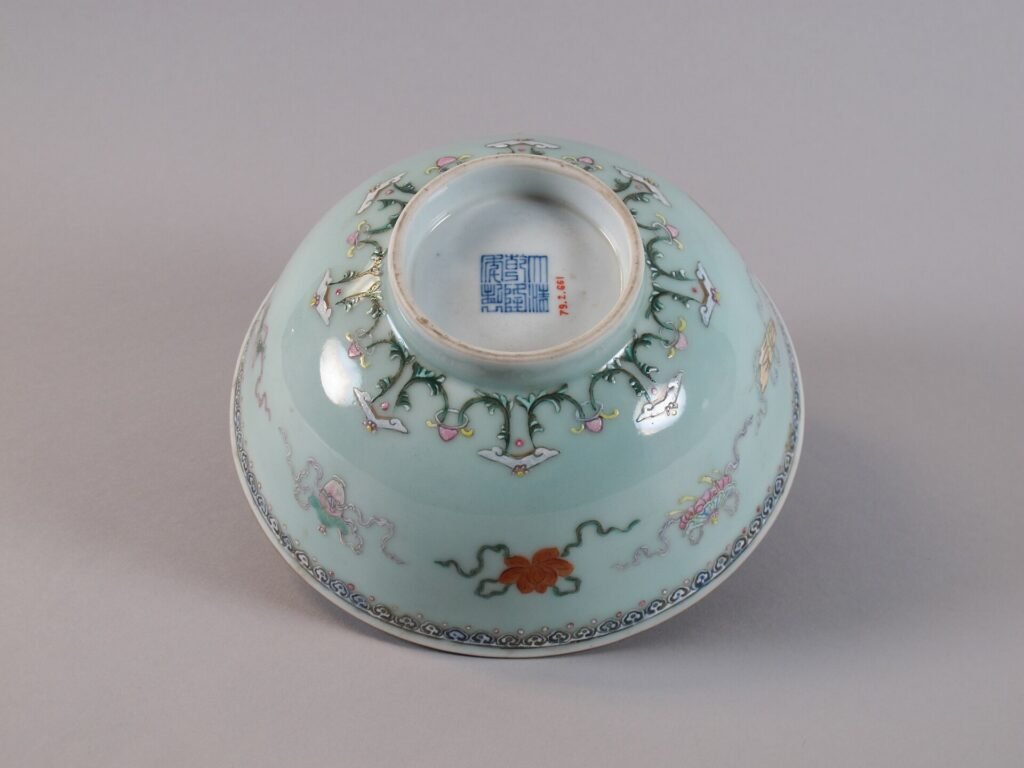
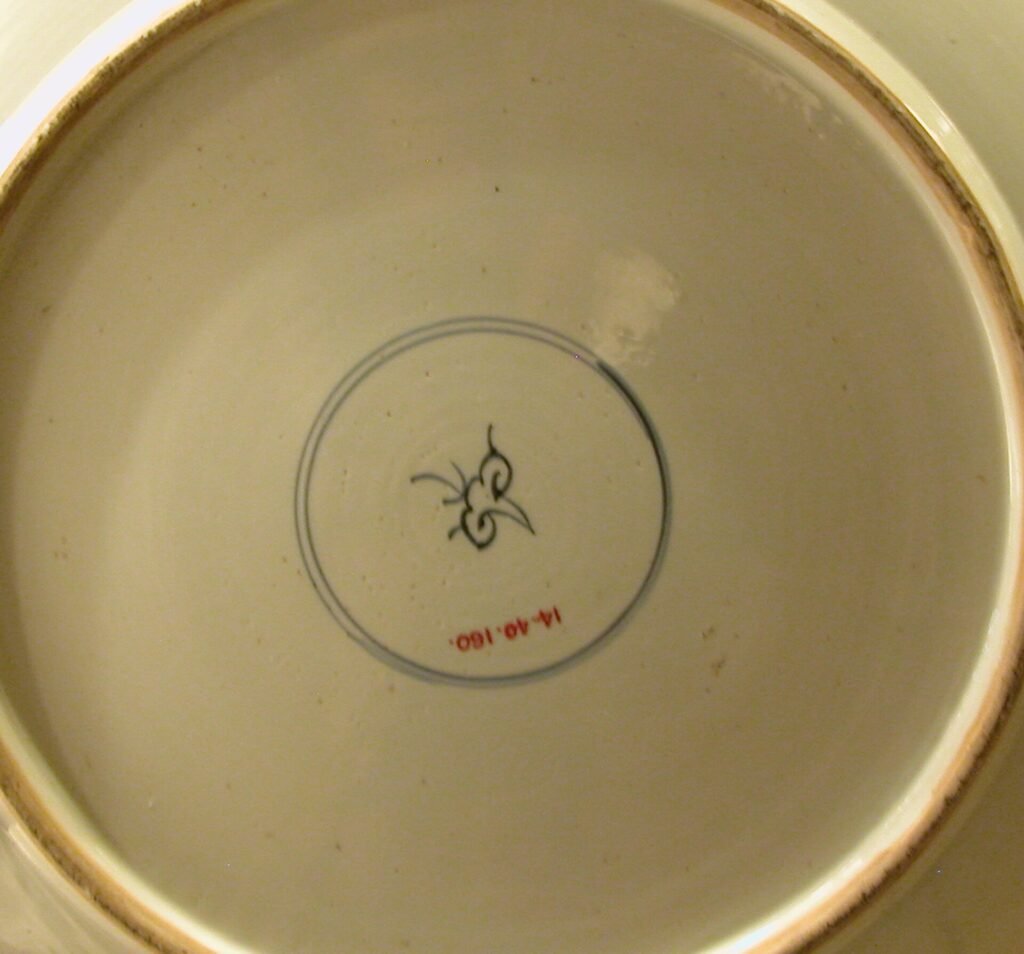
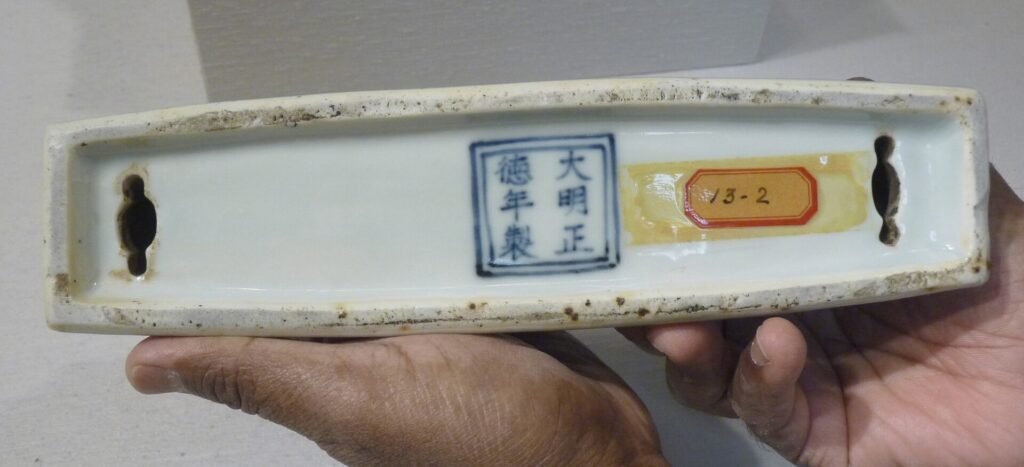
Each entry will pair a base photograph with a macro of the mark, shot square-on in daylight, so that the script, the brush and the glaze over the cobalt can be read together. The Metropolitan Museum’s open-access base photographs below show the standard, and the range: the same double ring can hold a reign mark, a symbol or a foreign script.
Start with the guides
Reign marks: mark and period, or apocryphal
What a six- and four-character mark says, how regular and seal script differ, why a Kangxi mark on a Kangxi pot is the exception, and why the mark is the last thing to consult rather than the first.
Reading the base
The foot ring, the glaze stop, spur marks, kiln grit and the colour of the exposed body, illustrated from museum base photographs. The base tells you whether to believe the mark.
Korean marks
Why Korean porcelain is so rarely marked, what the Joseon court kilns did instead, and the few inscriptions you will actually meet.
Japanese marks
Kiln, workshop and artist marks on Arita, Satsuma, Kutani and Meiji export wares, and the difference between a maker’s mark and a shop’s.
The marks on our own pieces
Every piece in the collection records its mark in the Catalogue table on its page: the characters, the script, a transliteration and translation, and our reading of it. Where a mark is present but not yet photographed at macro scale, the listing says so. For a quick key to the reign names and their dates, see the glossary.
If you have a marked piece you would like read, send a photograph of the base through the valuation page; a clear, square-on shot of the mark in daylight is all we need to begin.