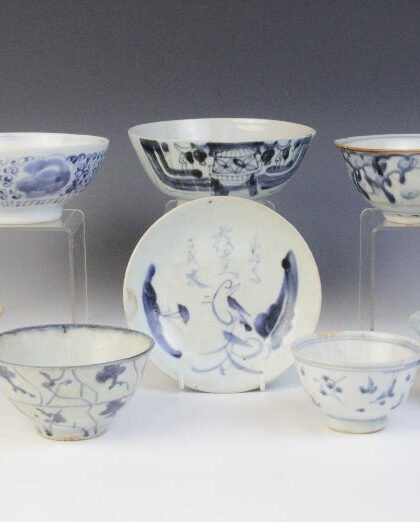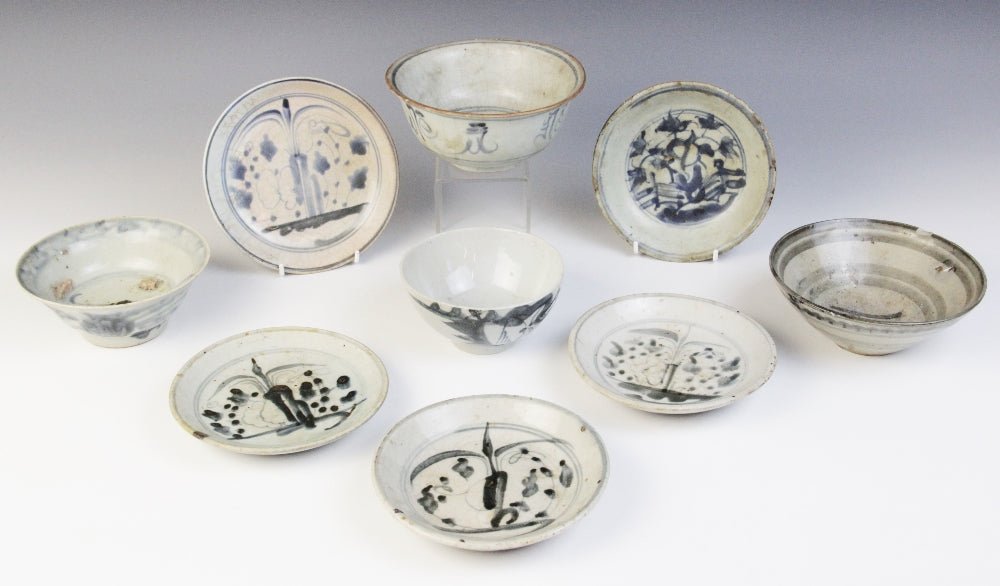
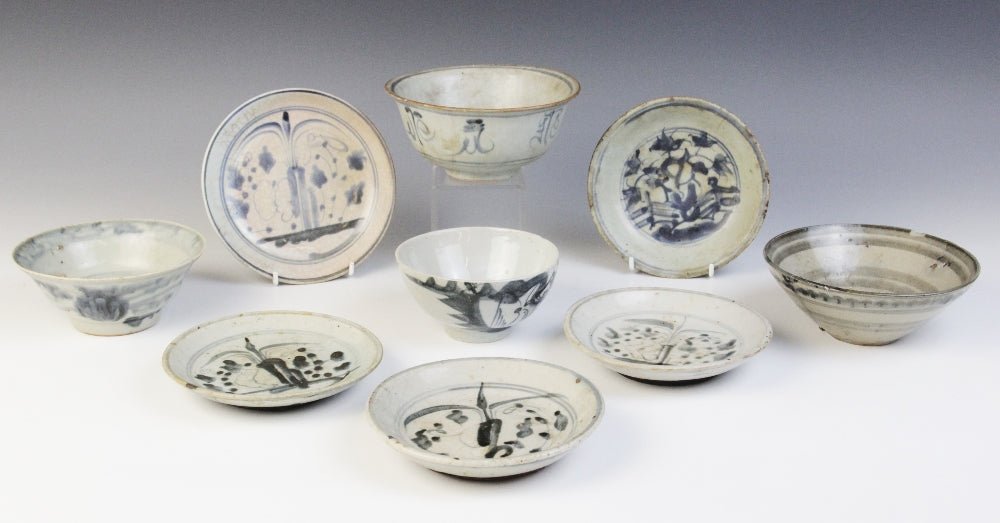
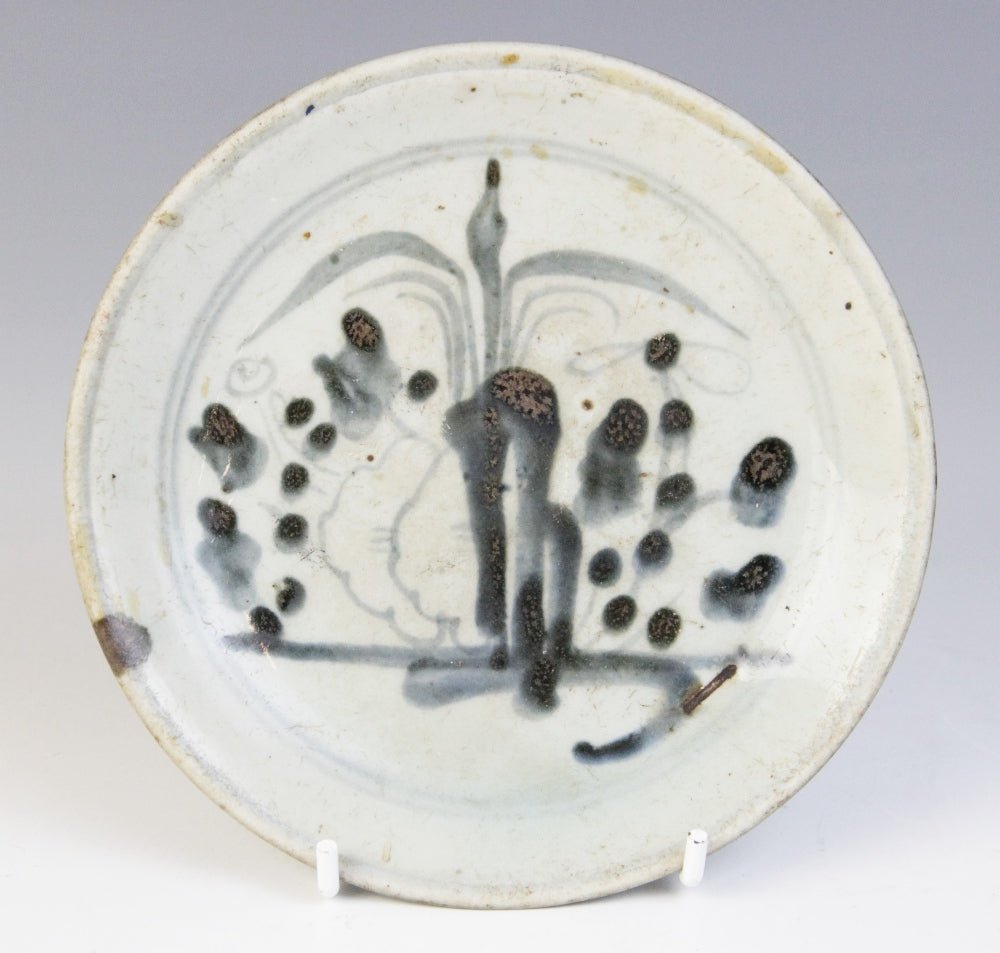
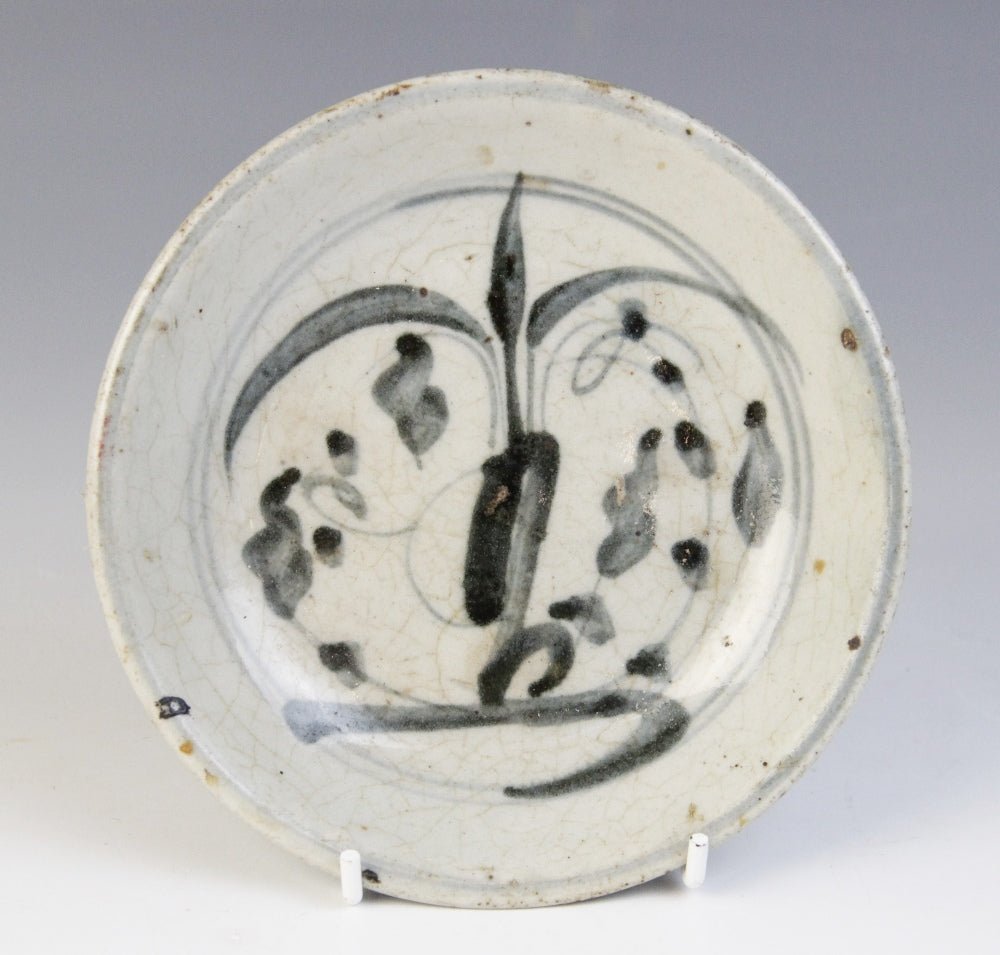
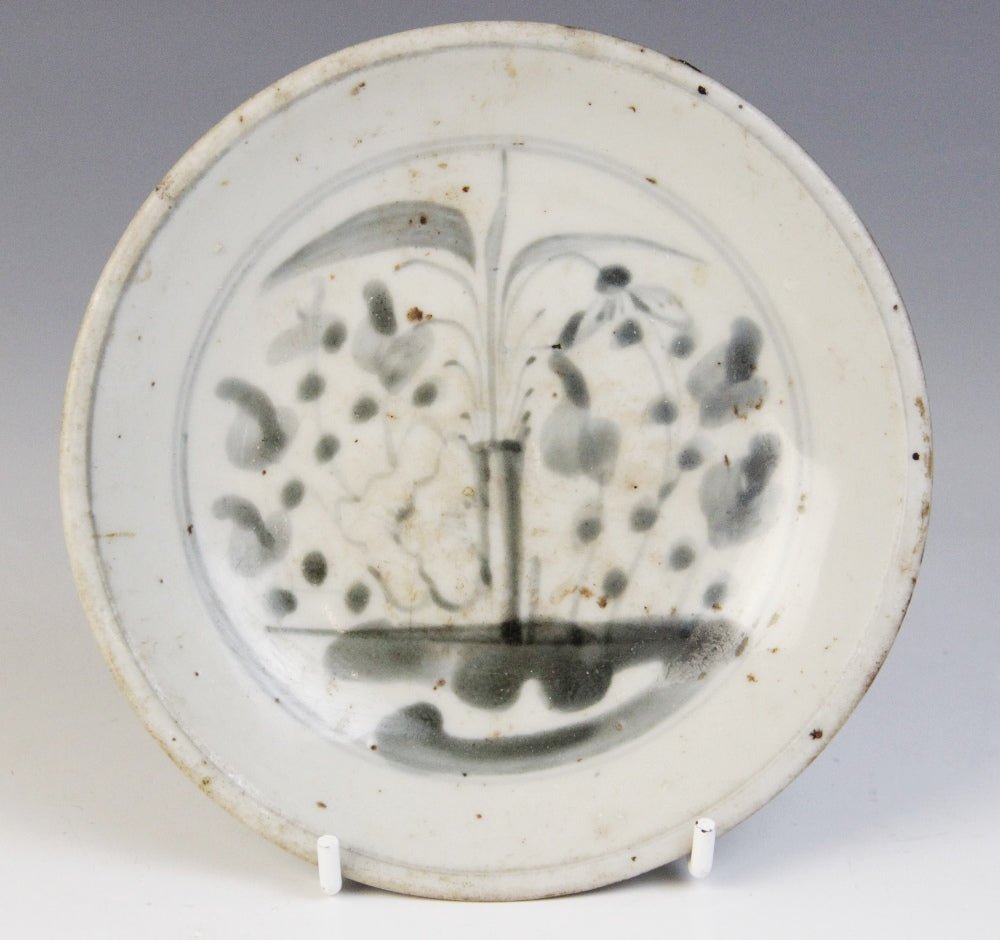
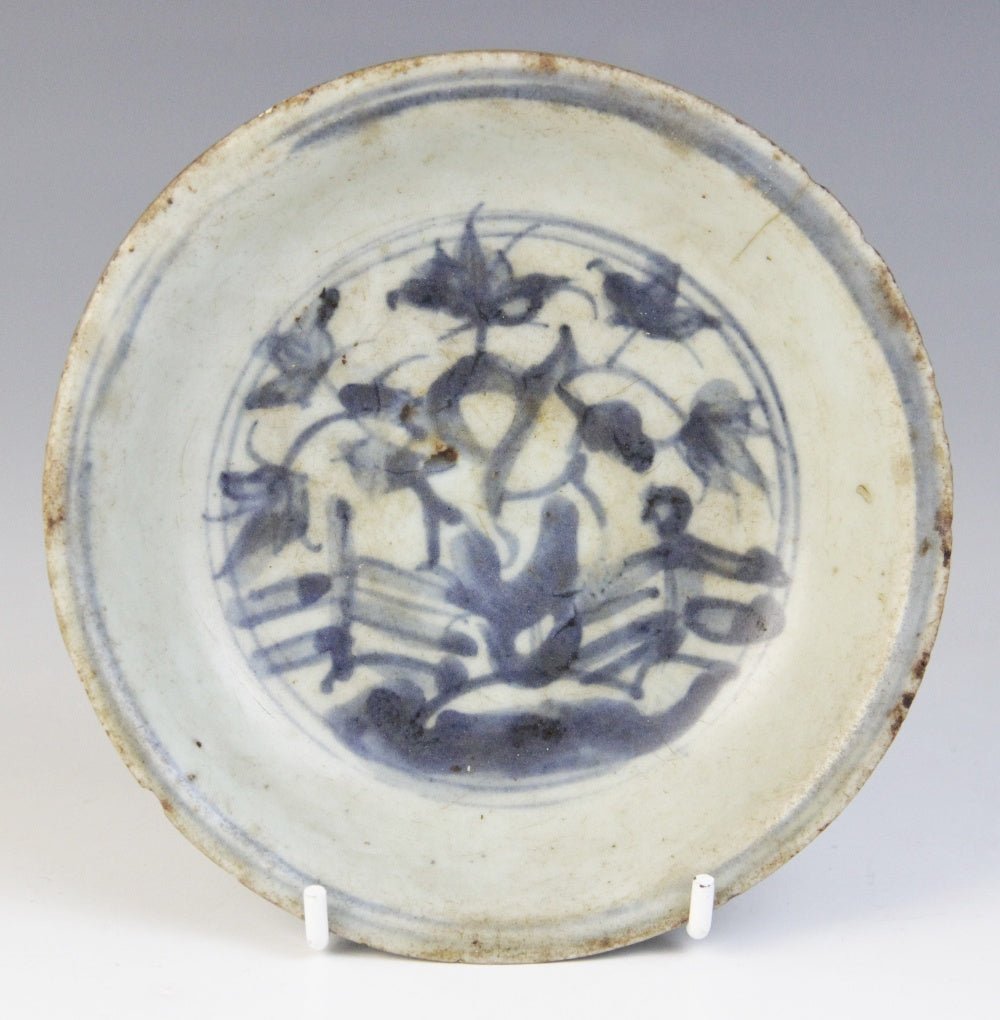
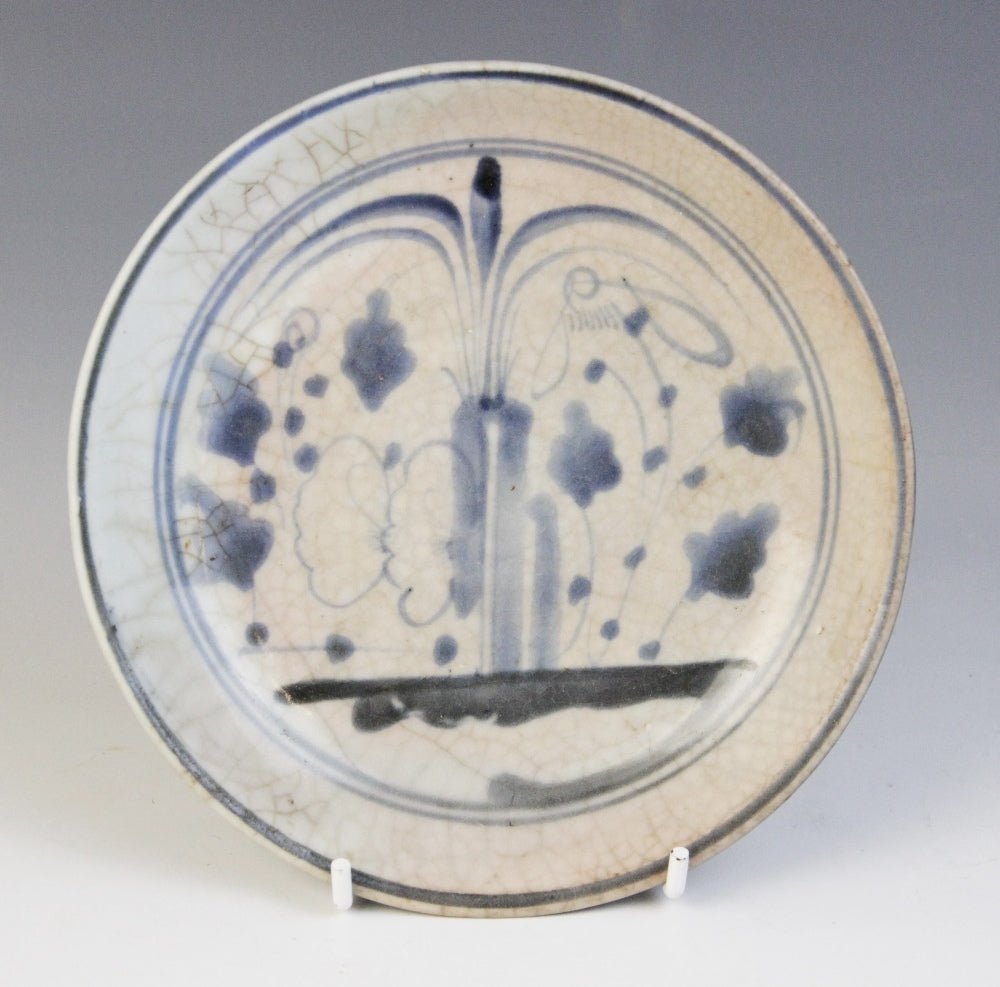
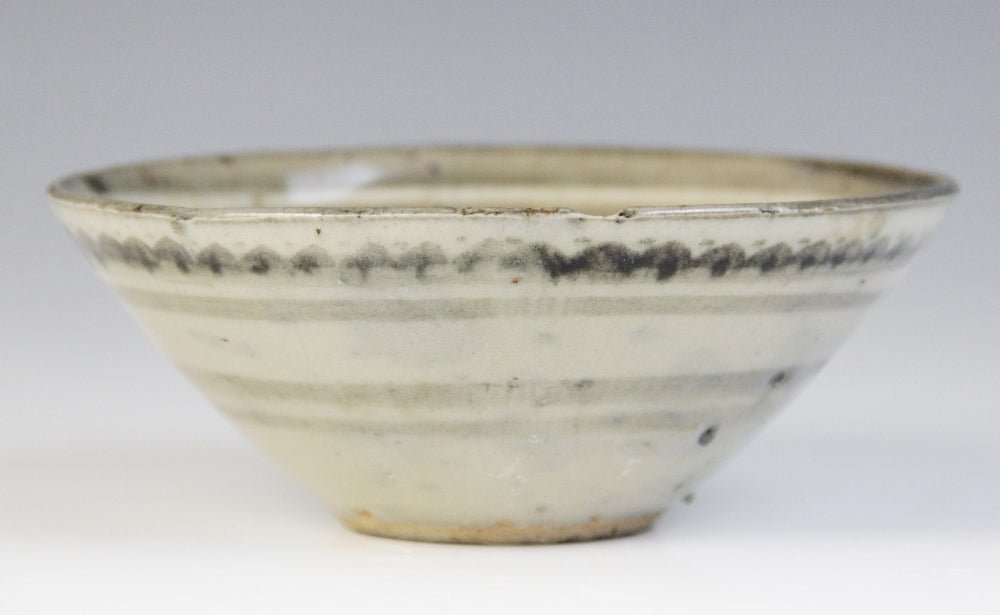
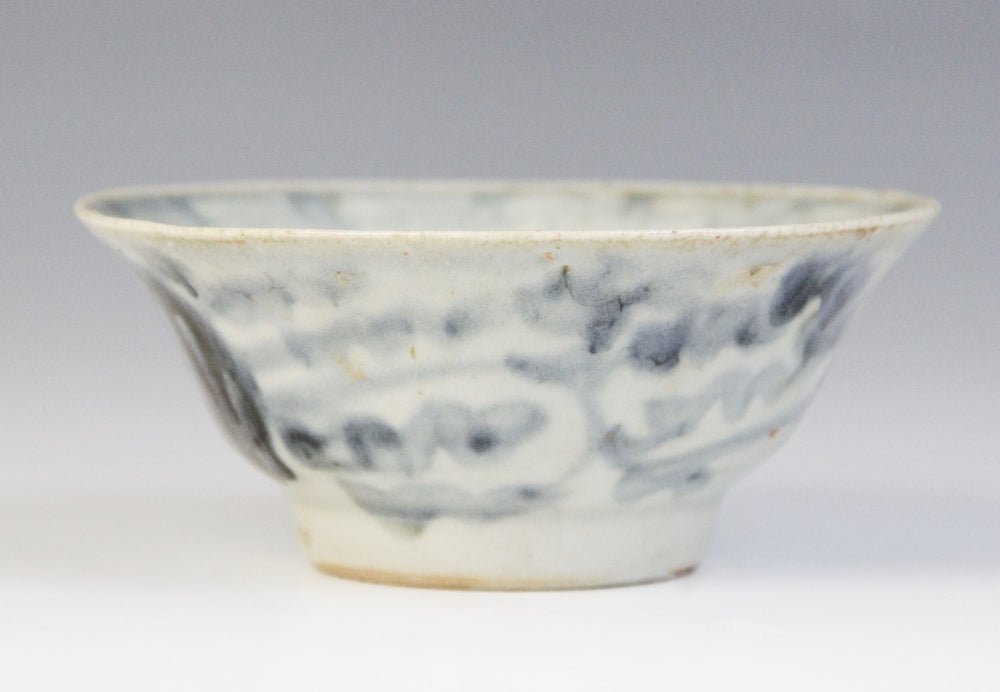
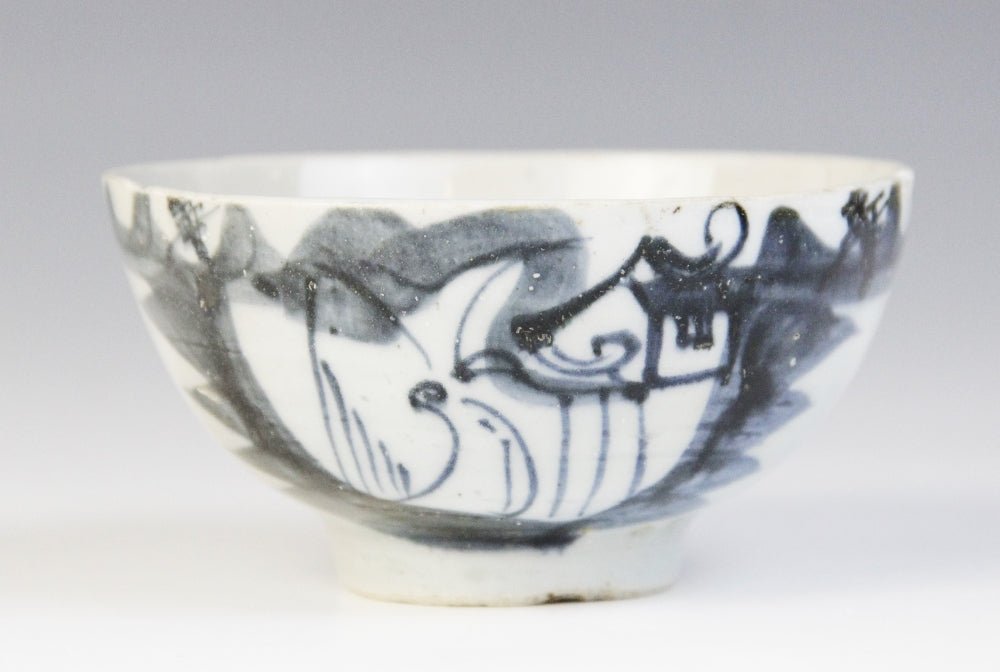
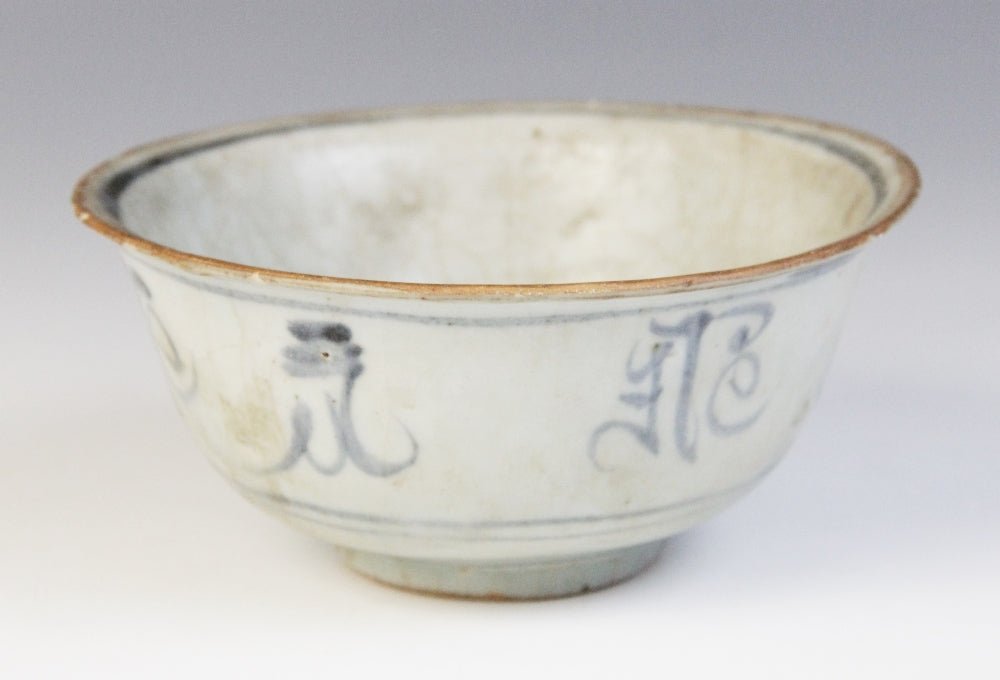
A larger group of cargo porcelain, Ming dynasty and later, including a bowl made for the Islamic market, five assorted saucer dishes and three further bowls.
Export porcelain made for Islamic buyers is a distinct and under-collected strand: forms adapted to different table practice, and decoration that avoids figural imagery in favour of dense floral and geometric schemes. Cargo groups like this one are the cheapest way to handle real Ming porcelain, and the best way to learn what sea-worn glaze looks like before you meet it on something expensive.
Shipwreck cargo porcelain in context
Chinese ceramics travelled by sea, not the Silk Road, because ships could carry what camels could not: a single ninth-century wreck off Belitung held some 70,000 pieces. From the Ming onward, Jingdezhen and the Fujian kilns shipped blue and white in vast quantities to Southeast Asia and, from the sixteenth century, to Europe, and the wrecks of that trade — the Witte Leeuw of 1613, the Vung Tau cargo of about 1690, the Ca Mau cargo of about 1725, the Nanking Cargo of 1752, the Tek Sing of 1822 — have put recovered porcelain on the market in tens of thousands.
Sea burial has a signature. The V&A records of recovered pieces that overglaze enamel is lost while underglaze cobalt survives — which is why almost all shipwreck porcelain is blue and white — and that calcareous encrustation adheres to the body. The wreck this group came from is not identified in the records held; identifying it would materially change what the group is worth, and we say so rather than guess. Buyers should also know that wreck material brought into the UK from outside its waters must be reported to the Receiver of Wreck.
Read more: shipwreck cargo porcelain: the cargoes, the sea-wear, and the part dealers skip.
The object, up close
The finer
details.
Reference XA-0015
A question about this piece? Ask for measurements, close-up photographs or a condition report.
Discuss this piece- Dimensions
- Islamic market bowl 14.5 cm diameter; five saucer dishes, largest 14 cm; three further bowls
- Period
- Ming dynasty and later
- Mark
- Unmarked
- Condition
- Good, minor faults
- Provenance
- Shipwreck cargo