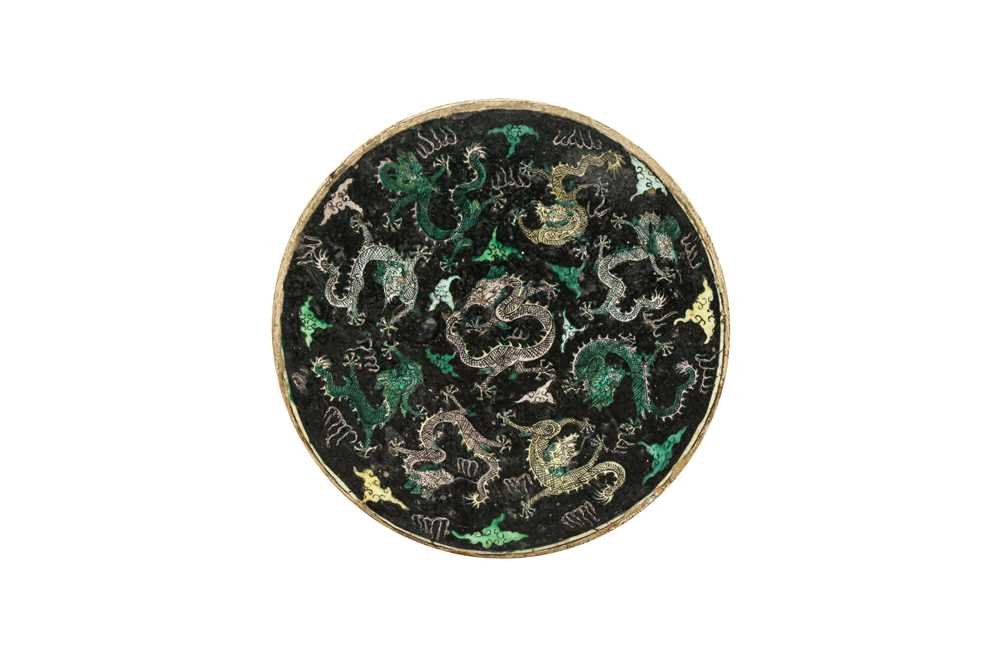
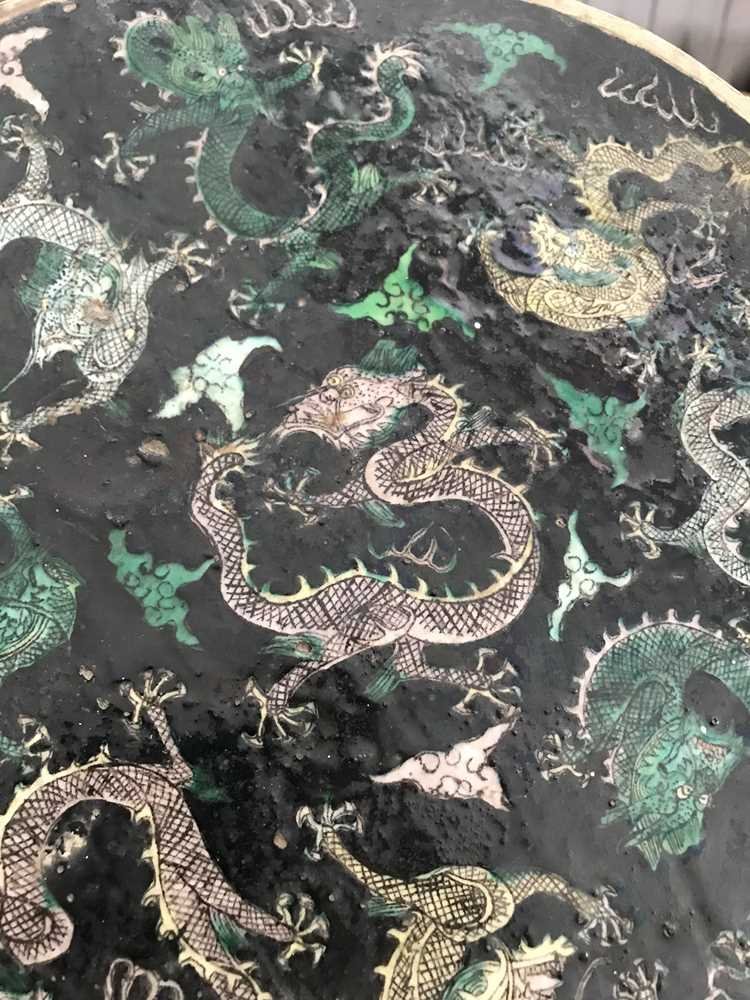
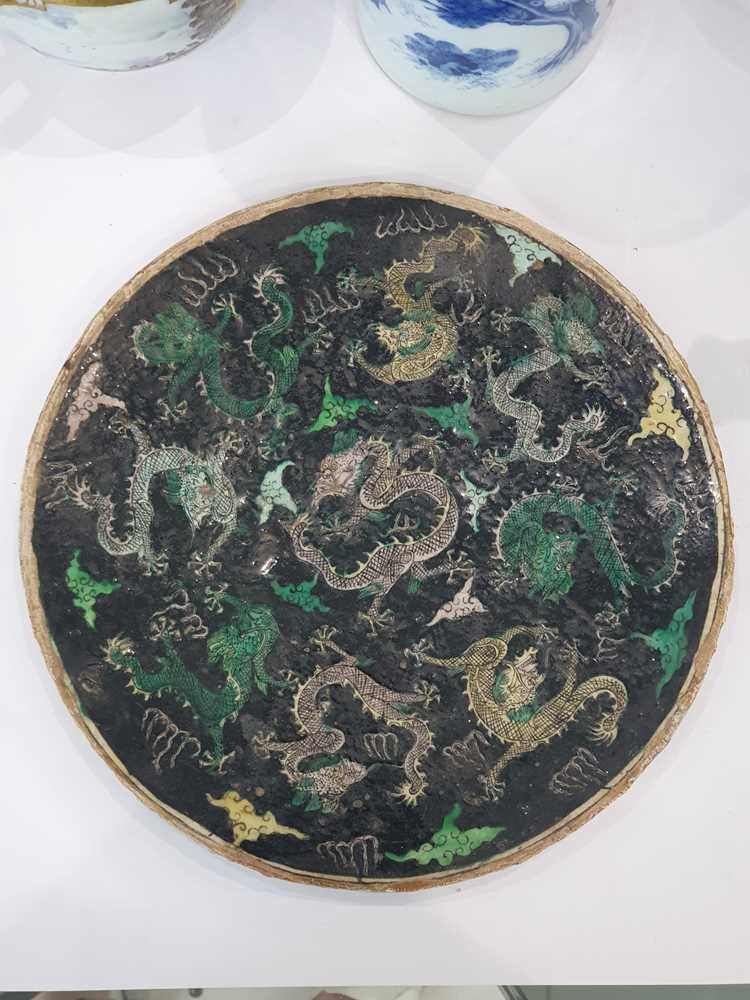
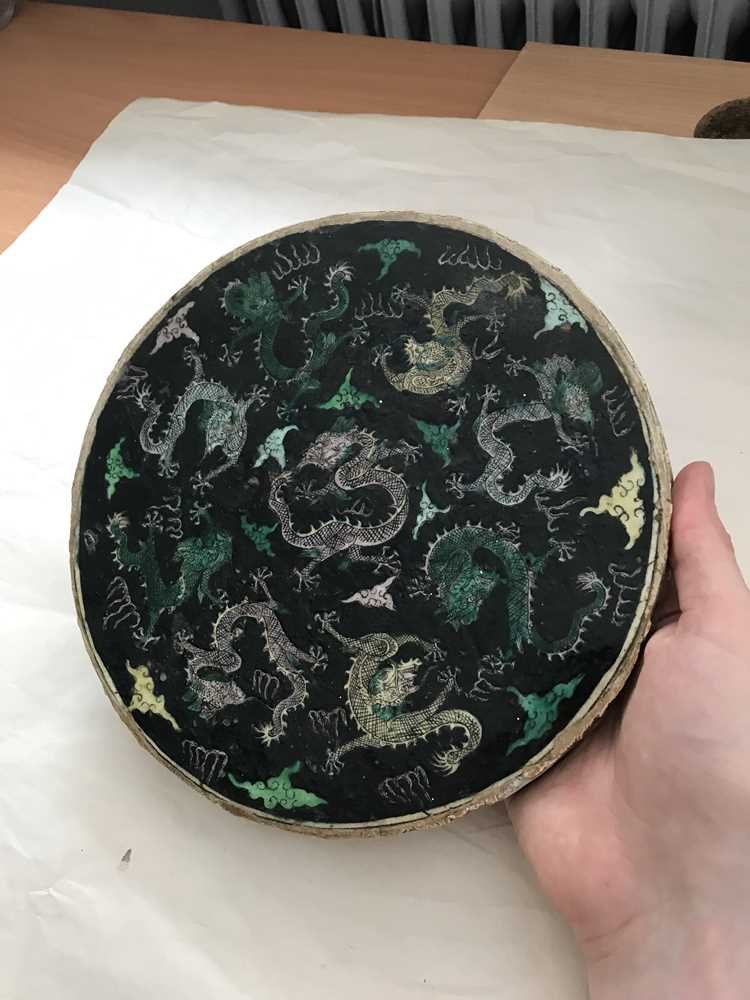
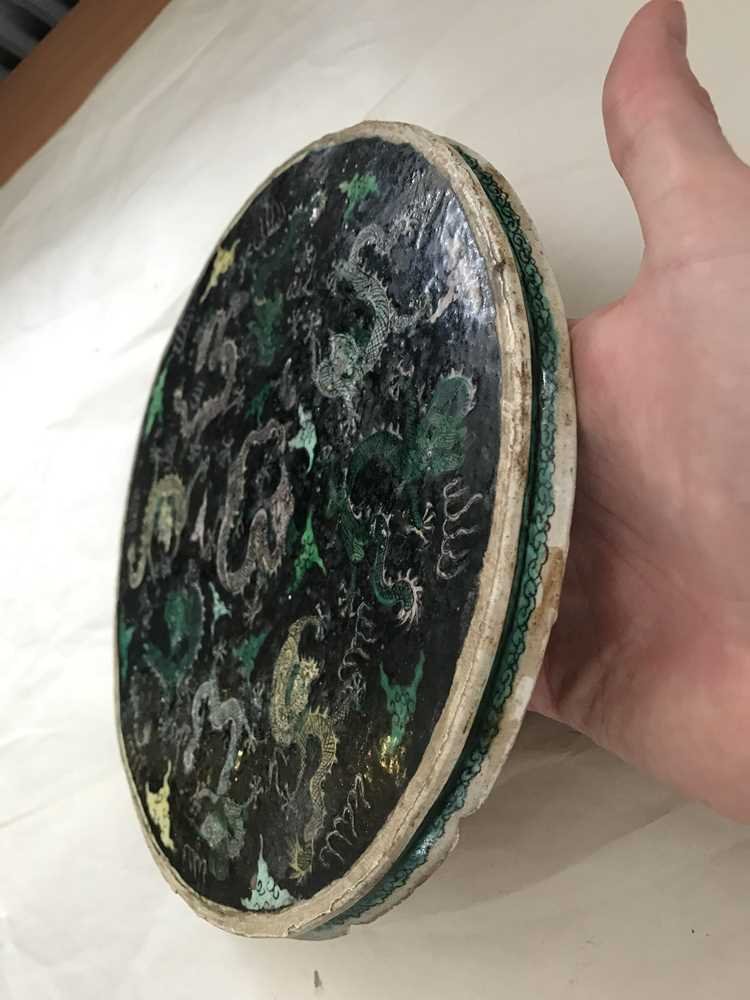
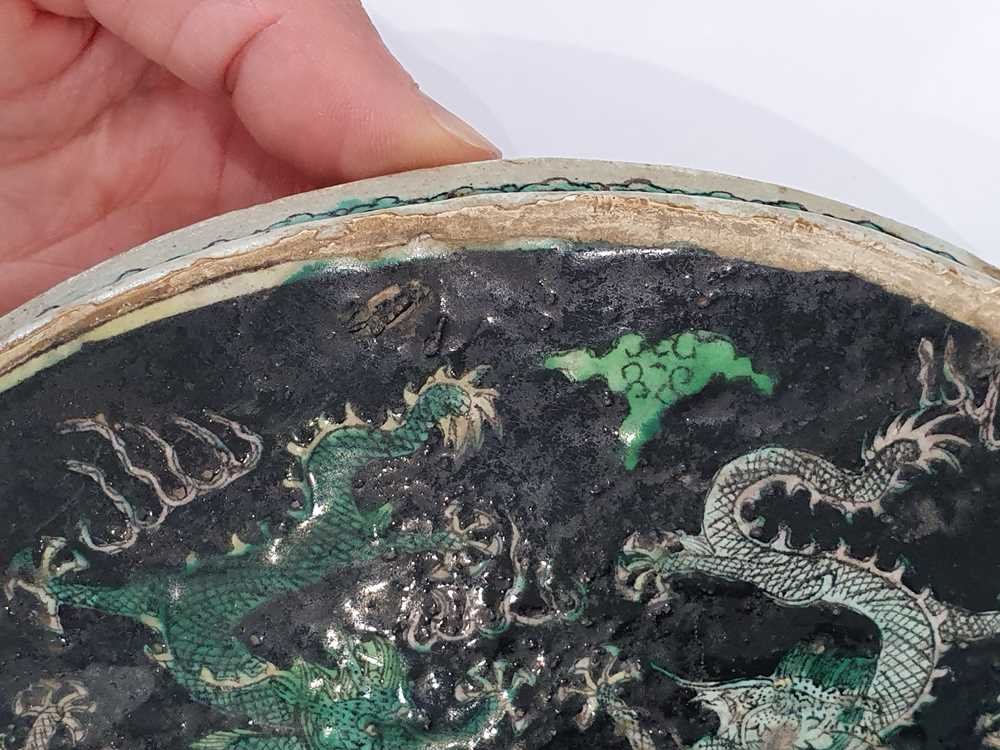
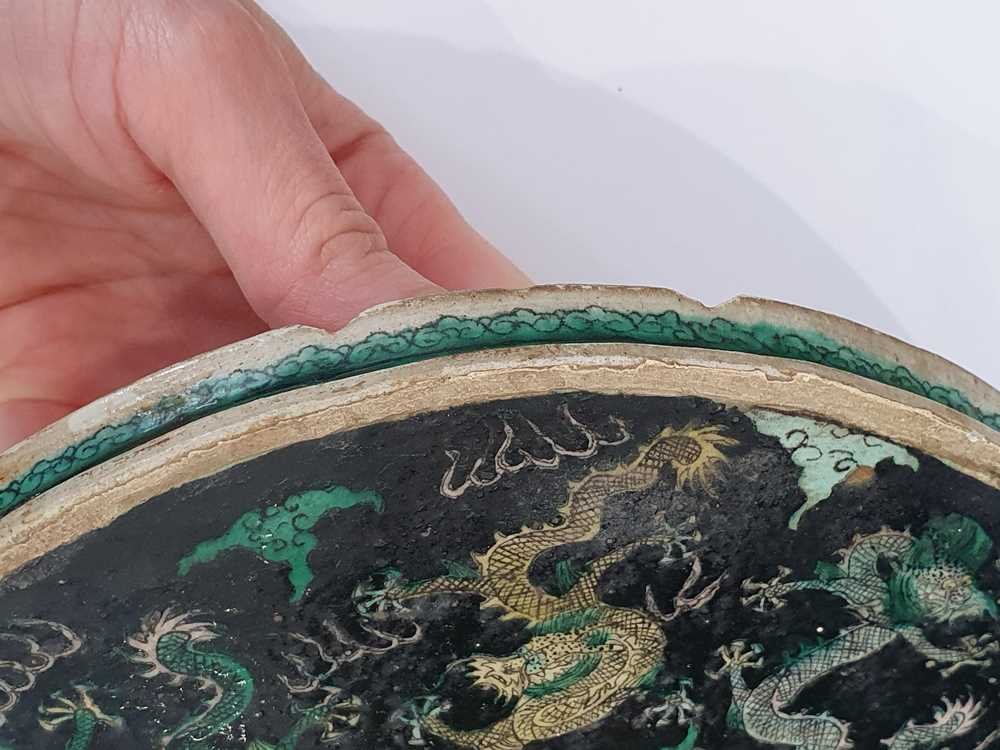
A circular plaque painted in famille noire enamels — yellow, green and aubergine over a black ground — with nine five-clawed dragons writhing among ruyi clouds and fire wisps.
Both the number and the claws matter. Nine is the imperial number, and five claws were reserved by convention for the emperor; the two together place this firmly in the imperial iconographic register. Famille noire is among the most technically demanding of the Kangxi palettes, the black ground laid over biscuit and washed with translucent green, which is why so much of what is offered as famille noire is later redecoration.
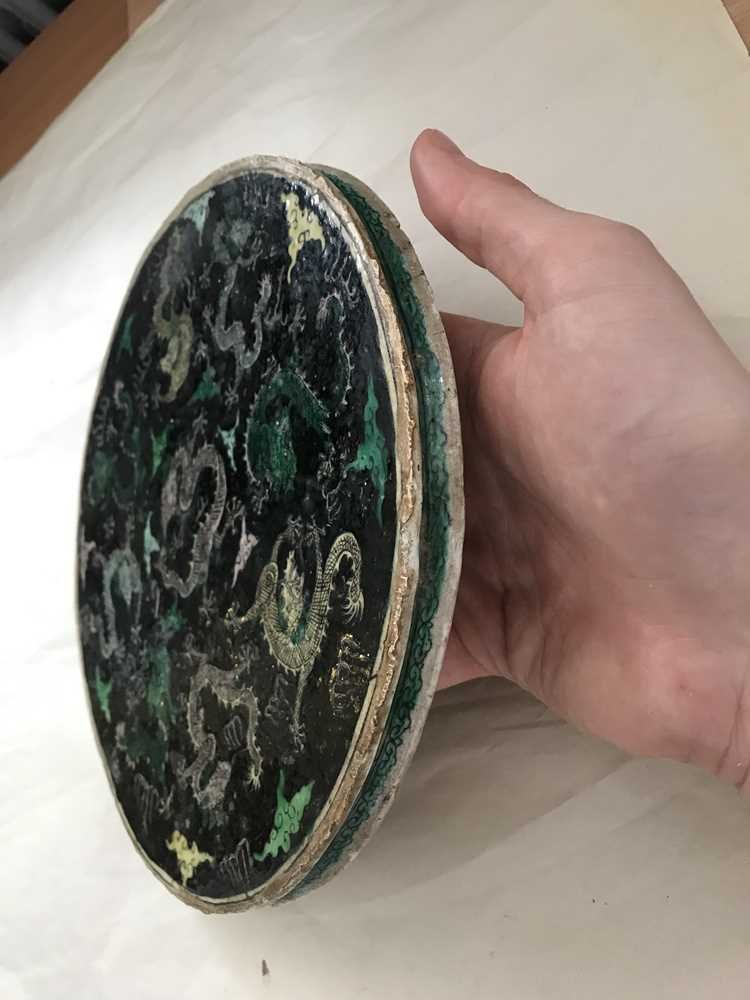
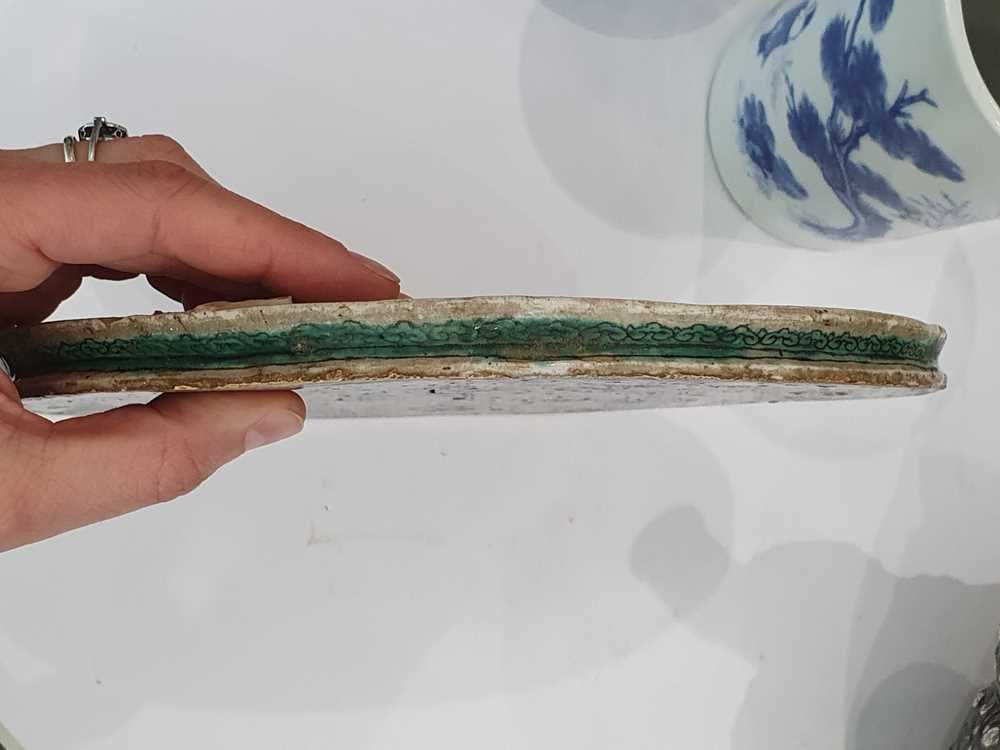
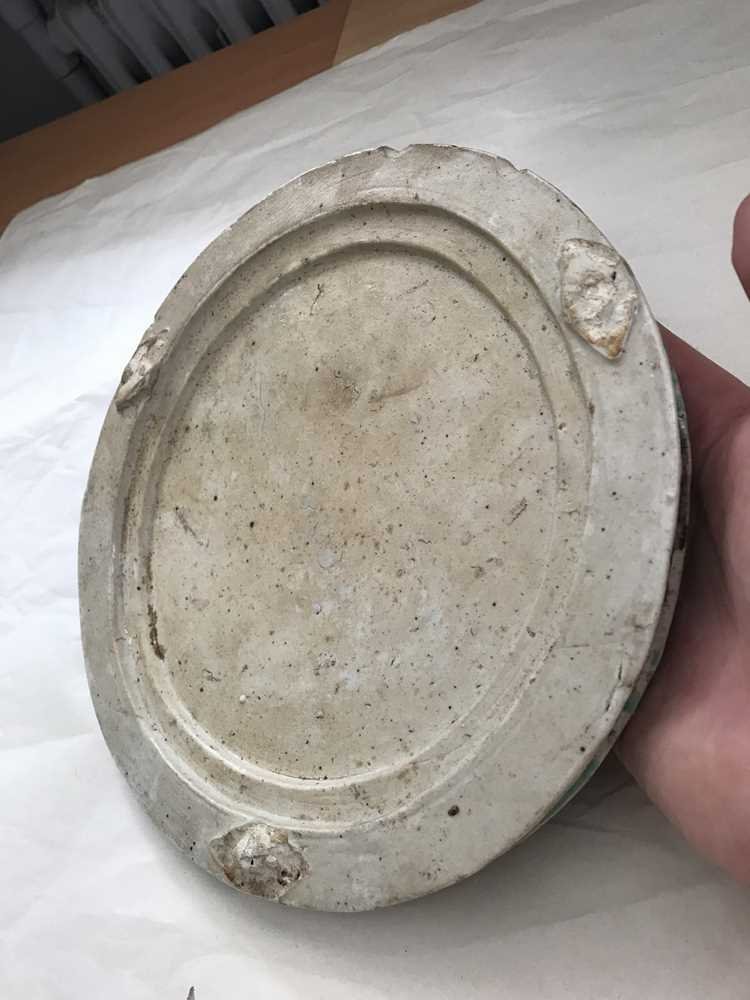
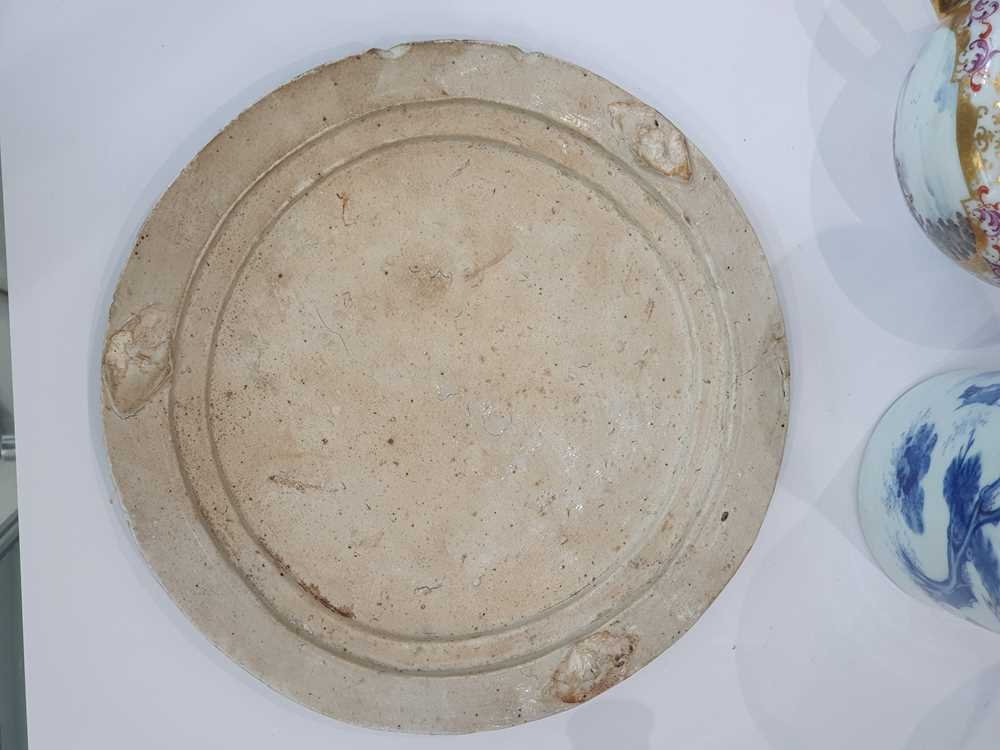
The feet are missing. That is stated here, at the top of the condition note, rather than buried mid-paragraph, and it is reflected in the price.
Famille noire in context
Famille noire is not a separate palette. The Metropolitan Museum describes famille noire and famille jaune as subcategories of famille verte — the same translucent “hard colour” enamels, painted on the biscuit against a black ground. The great Kangxi examples (1662–1722) are rare and were prized enough that the type was copied extensively in the nineteenth century; genuine early pieces are judged on the quality of the enamels, the drawing and the body beneath, not on the ground colour alone.
Nine dragons is an imperial number: the five-clawed dragon is the emperor’s emblem, and nine, the largest single digit, carries the same association across Chinese imperial art from the Nine Dragon Screen in the Forbidden City downward. A plaque — a flat panel for a screen or a wall — is an unusual and demanding form in enamelled porcelain. This is the most valuable object in the catalogue, and it is offered with its damage disclosed in full and photographed, because at this level the condition record is the description.
Read more: the famille palettes, our condition guide and famille noire.
The object, up close
The finer
details.
Reference XA-0019
A question about this piece? Ask for measurements, close-up photographs or a condition report.
Discuss this piece- Dimensions
- 22.3 cm diameter
- Period
- Qing dynasty (1644–1911), Kangxi period (1662–1722)
- Mark
- Unmarked
- Condition
- Damage disclosed — read the faults below before buying
- Faults
- • Feet missing.