Chinese
Chinese ceramics from the Song dynasty to the Republic. The range is wide enough to be confusing: imperial monochromes made under close supervision at Jingdezhen, export wares shipped by the boatload, and a great deal of late nineteenth-century and Republic porcelain carrying earlier reign marks. This page sets out how the collection is organised and how we look at a piece before we list it.
How the collection is arranged
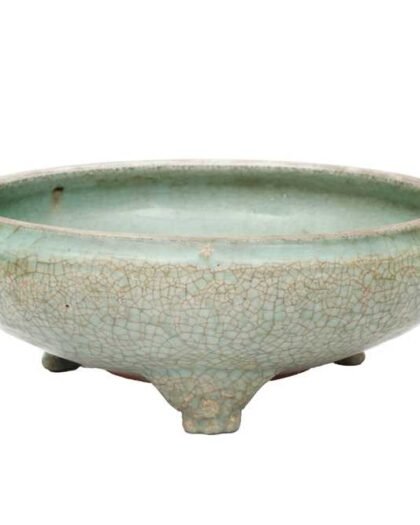
The Chinese collection is divided by dynasty because the dynasty is usually the first thing a base tells you, and the last thing a mark can be trusted on. Song (960–1279) is the age of the great stoneware glazes: Longquan celadon, Ding, Jun, Cizhou and the crackled Guan wares of the Southern Song court at Hangzhou. Yuan (1279–1368) is the moment Jingdezhen became the centre of the porcelain world and cobalt blue, imported from the Middle East and Central Asia, was first painted under a porcelain glaze on a large scale (British Museum, Room 95). Ming (1368–1644) runs from the imperial blue and white of Yongle and Xuande through the polychrome enamels of Chenghua and Jiajing to the mass export of Wanli kraak ware and the freer painting of the Transitional decades. Qing (1644–1911) is the largest group here, as it is on the market: Kangxi blue and white and famille verte, the famille rose palette from around 1720, the imperial yellows and copper reds of the eighteenth century, and the enormous late-Qing output of Tongzhi and Guangxu. Republic (1912–1949) closes the sequence with porcelain that is often better potted than its reputation and very often marked with a reign it never saw.
What we check before a piece is listed
Start at the foot, not the mark. The unglazed foot rim shows the colour the body fired, how the glaze was stopped or wiped, whether the rim was ground after firing, and whether there is the fine kiln grit and iron-flecking one expects of a particular kiln and period. Glaze pooling in the recesses, the crazing pattern, the wear on the foot from three hundred years of being put down on tables — these are the evidence. A reign mark tells you what a pot claims; it does not tell you what the pot is, and for most of the last four centuries it was normal practice to sign an earlier reign as an act of homage. Our guide to reign marks explains how to read one and why so many name the wrong emperor, and Reading the base shows what the underside can settle that the mark cannot.
Condition is itemised on every listing. A hairline, a rim chip, a firing crack, a restored foot — each is named and photographed rather than folded into a phrase like “good for age”. What a hairline does to value sets out the vocabulary we use and what each fault does to price.
Browsing by ware
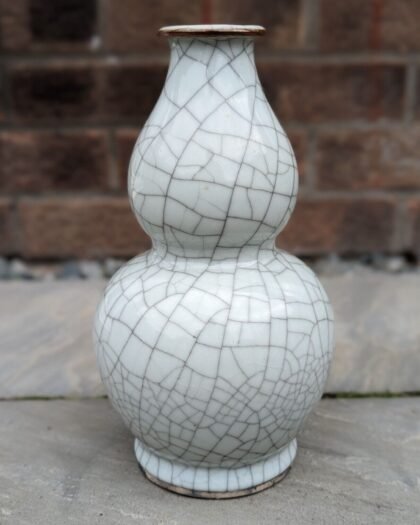
If you know the glaze you are looking for rather than the period, the collection can also be read by ware: blue and white, celadon and Longquan, monochromes, Ge and Guan crackle, iron red, and the three famille palettes — rose, verte and noire. The journal explains how the three palettes relate and why the names are French.
What is here now
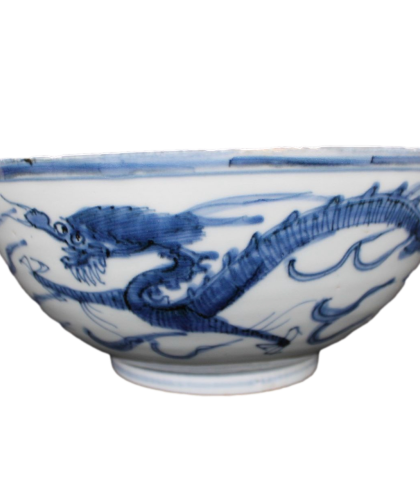
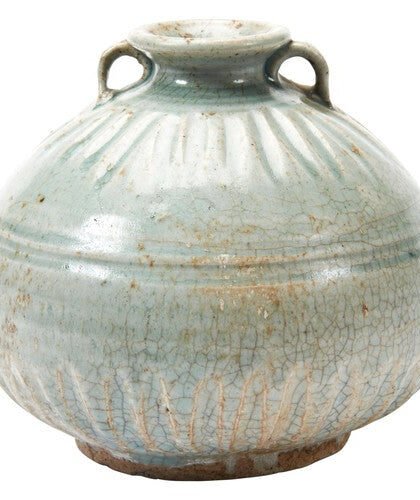
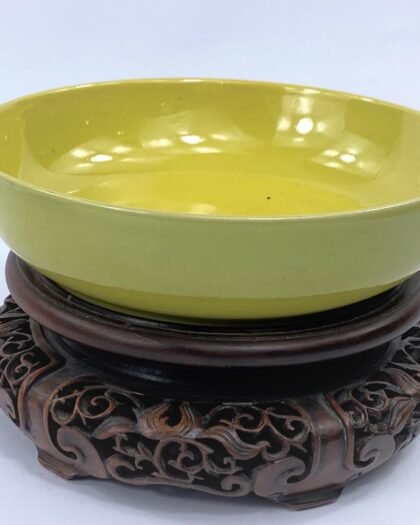
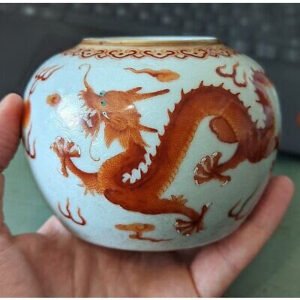
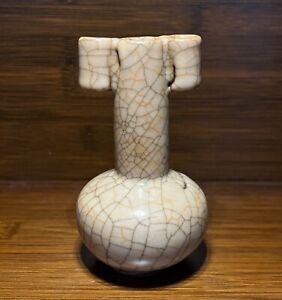
The Chinese group currently runs from a Song celadon jar with an exhibition history to a Guangxu mark-and-period dragon bowl, by way of a Kangxi mark-and-period blue and white bowl, an eighteenth-century Ge-type crackle arrow vase, imperial yellow bowls with Qianlong marks, two groups of Ming shipwreck cargo and a nineteenth-century famille rose bottle vase with its old dealer’s label still on the base. Prices run from a few hundred pounds for a Ming Longquan brushwash to five figures for a Kangxi famille noire plaque. Anything over £1,500 is sold by enquiry rather than at the basket, so that we can talk about the piece first.
Showing 1–12 of 26 results