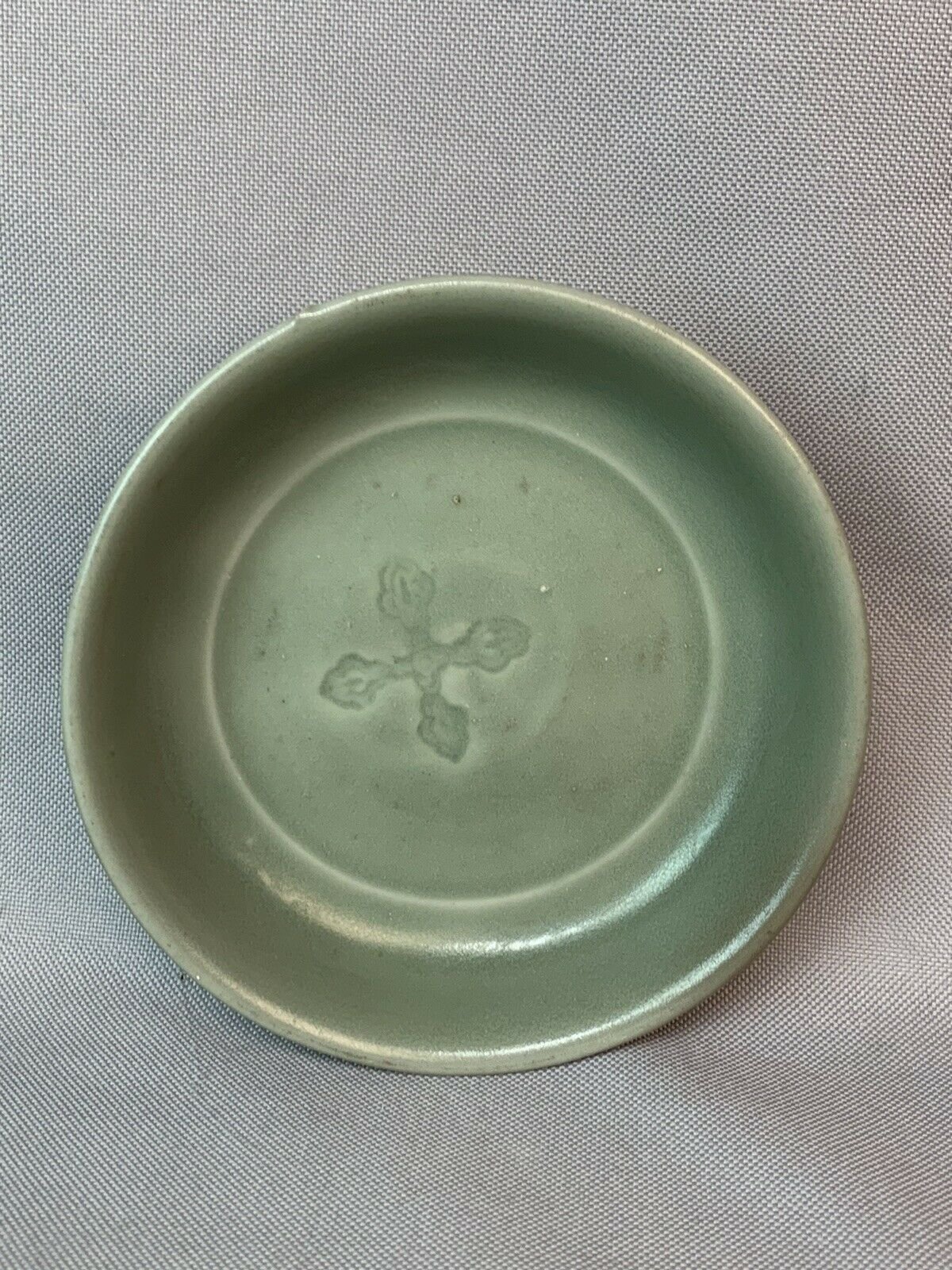
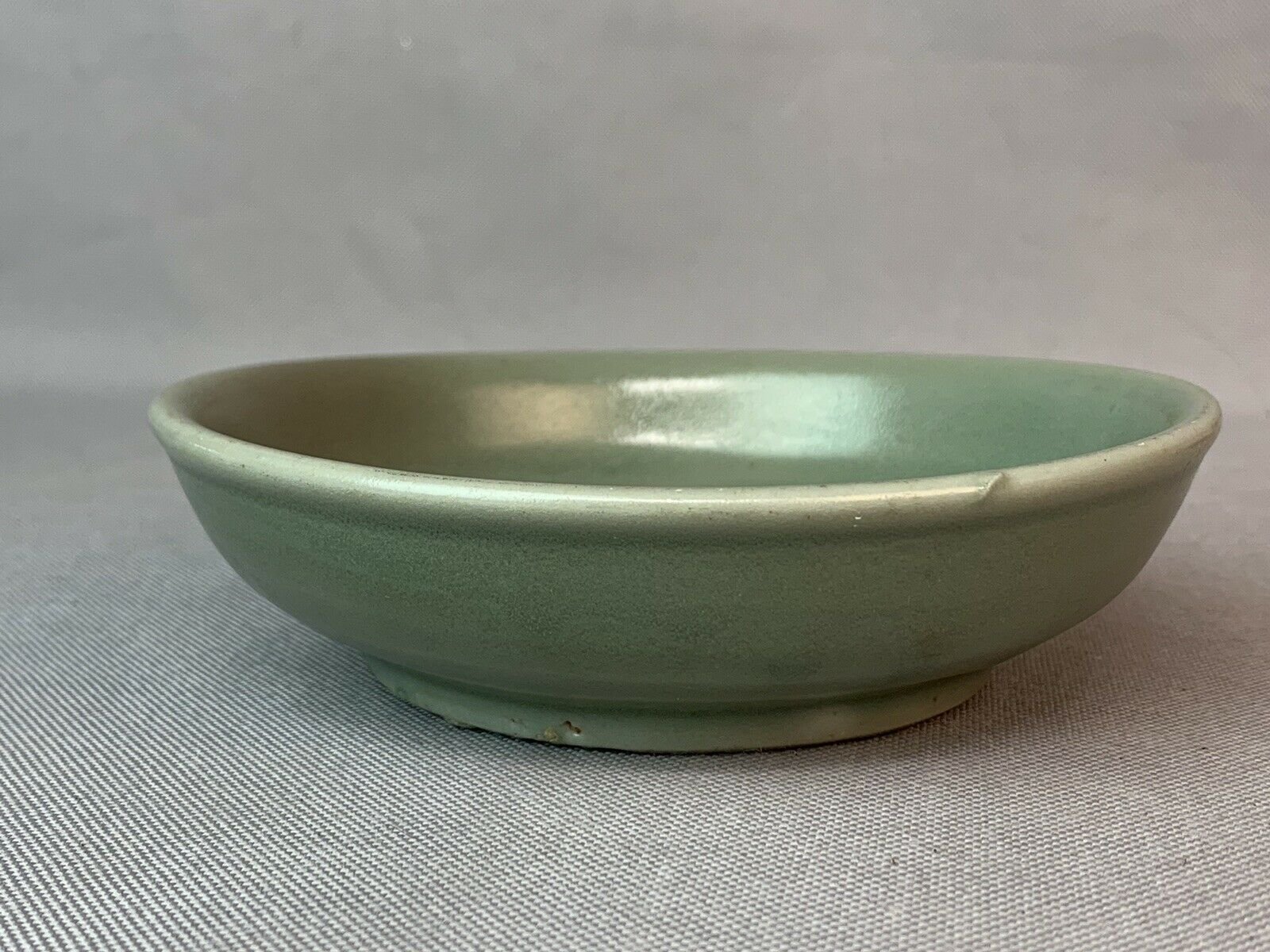
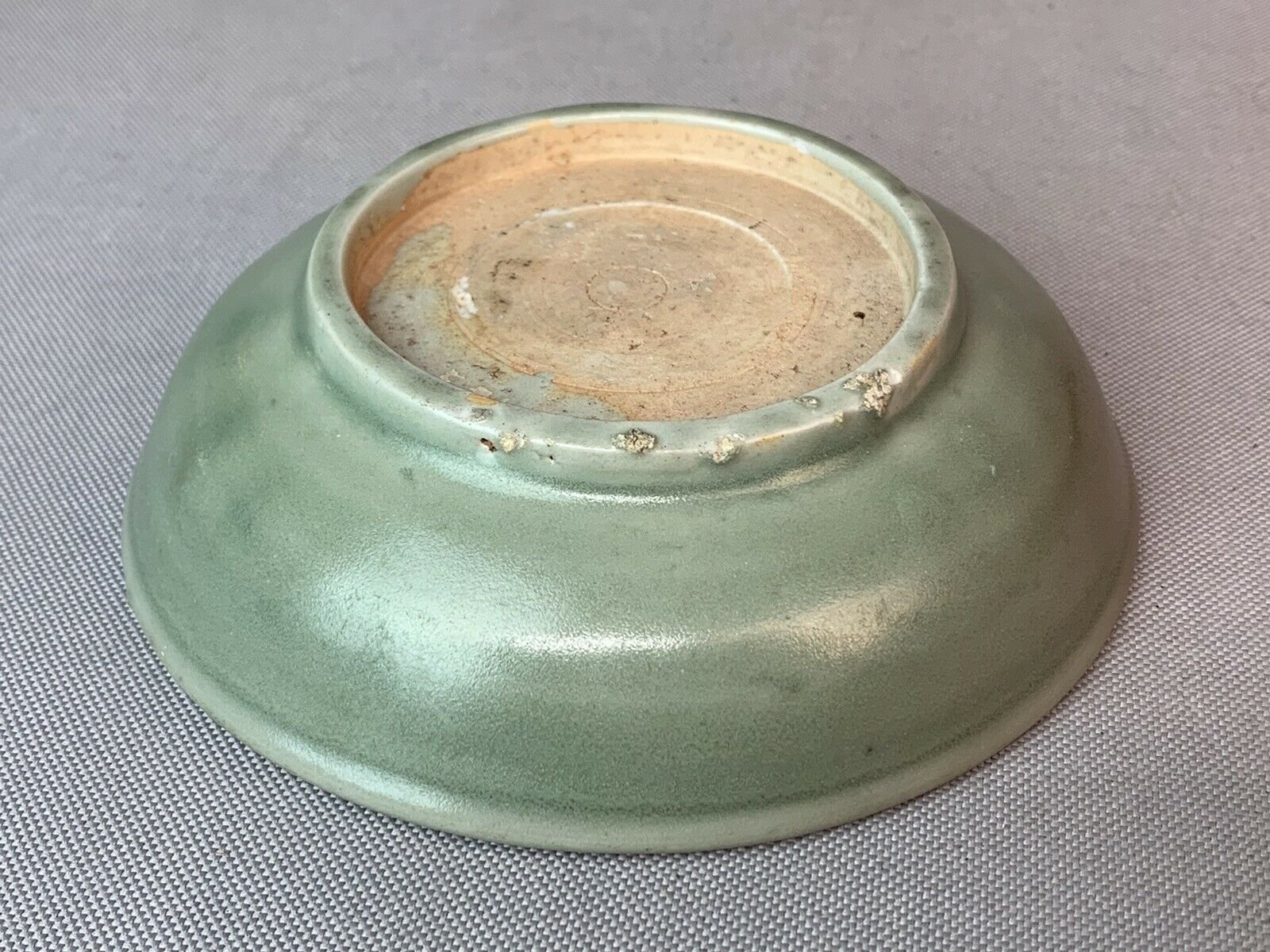
A Longquan celadon brush washer under a soft green glaze, the centre impressed with a cross-form mark. Ming dynasty or earlier.
Longquan is the great celadon kiln complex of southern Zhejiang, producing from the Northern Song into the Ming, and its glaze — thick, slightly opaque, ranging from olive to a blue-green the Chinese called plum green — is the standard against which other celadons are judged. Impressed marks in the well are not reign marks; they are workshop or moulding marks, and they are useful for grouping pieces rather than dating them.
The old listing described this as a Song dish. It is a Ming brushwash, and the URL has been corrected.
Longquan in context
Longquan celadon continued in production long after the Song. The British Museum records that it “was widely exported from the Yuan period until the end of the 15th century”, fired in dragon kilns that by the late thirteenth century exceeded 100 metres in length and held tens of thousands of pieces. A Ming Longquan brush washer is a product of that industrial phase — still the thick, layered glaze over a grey body that fires orange at the foot, but made in quantity for a broad market.
The form matters as much as the ware. A brush washer, bixi, is a scholar’s desk object for rinsing the brush between strokes, and the desk was where the rarest things in Chinese ceramics were made: the Ru brush washer at the Cleveland Museum of Art belongs to a group of fewer than a hundred surviving pieces. This one is an honest, affordable Ming example, correctly dated — an earlier listing called it a Song dish, which it is not.
Read more: the scholar’s studio and celadon and Longquan.
The object, up close
The finer
details.
Reference XA-0031
A question about this piece? Ask for measurements, close-up photographs or a condition report.
Discuss this piece- Dimensions
- 14.8 cm (5¾ in) diameter × 4 cm (1½ in) high
- Period
- Ming dynasty or earlier
- Mark
- Impressed cross-form mark to the centre
- Condition
- Excellent — no cracks or chips