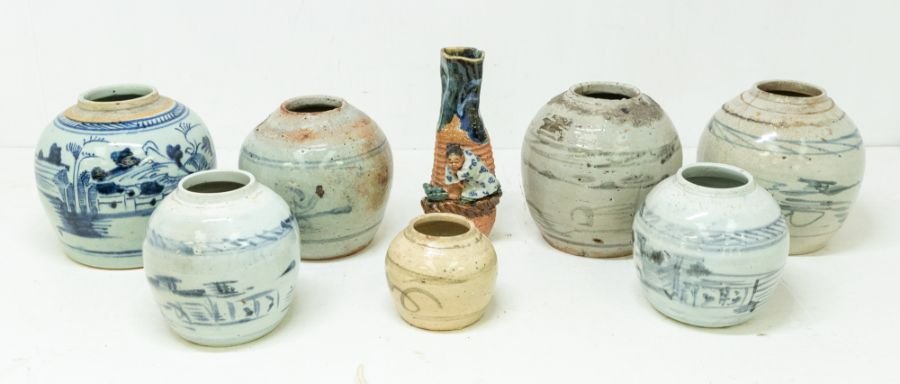
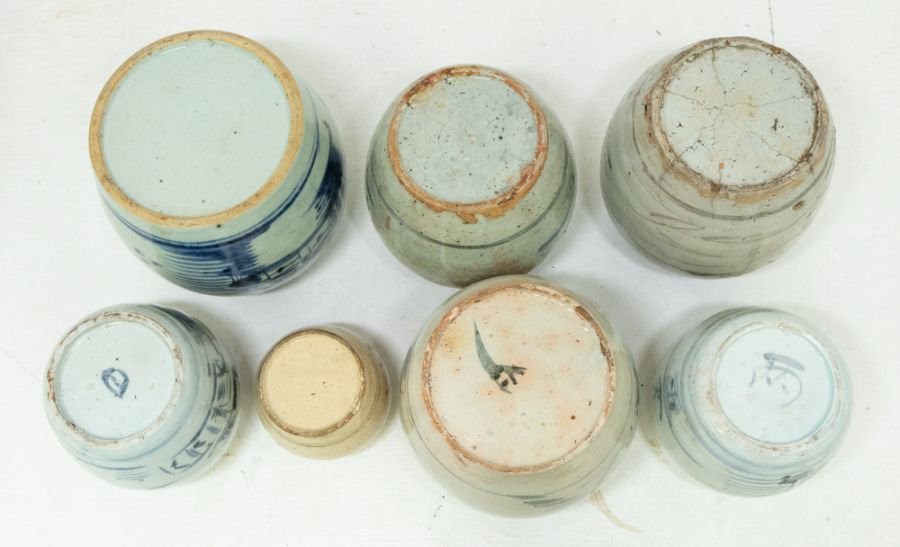
A group of blue and white ginger jars of graduated size, nineteenth century. The form — high shoulder, short neck, domed cover — was made in enormous quantity for export and for domestic use, and the name is a European trade term rather than a Chinese one.
Sold as a group of seven. As with the other collective lots on this site, individual jars can be described and offered separately on enquiry; several are worth more apart than together.
Nineteenth-century blue and white in context
The ginger jar — a Western name for a covered storage jar — is one of the most familiar forms of Chinese export porcelain, and the nineteenth century produced them in great numbers at Jingdezhen and the provincial kilns for both the domestic and the overseas market. Prunus-on-cracked-ice and other Kangxi-derived patterns were repeated for generations, which is why a nineteenth-century jar can carry a Kangxi mark: the Metropolitan Museum describes apocryphal marks as “widespread” and often a “salute” to the earlier reign.
The Met is candid that most later Qing production is modest — the imperial kilns halted in 1855 when Taiping forces burned them — and equally clear that good work continued. A group of jars is judged piece by piece on cobalt, potting and foot; each jar here is described individually and the bases are photographed.
Read more: Qing porcelain and blue and white.
The object, up close
The finer
details.
Reference XA-0013
A question about this piece? Ask for measurements, close-up photographs or a condition report.
Discuss this piece- Dimensions
- Largest 15.5 cm high; six further jars of various sizes
- Period
- Qing dynasty, 19th century
- Mark
- Unmarked
- Condition
- Good, minor faults