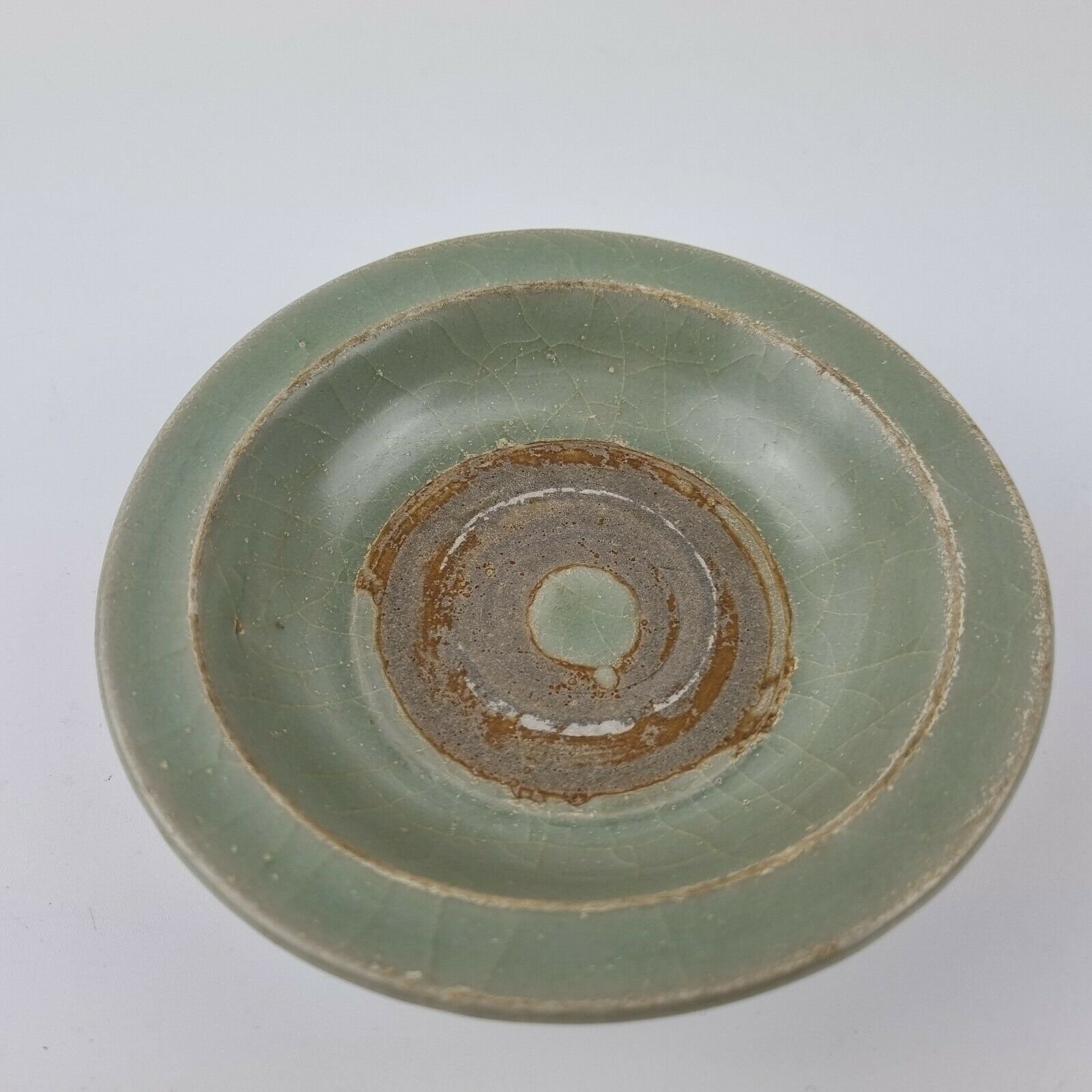
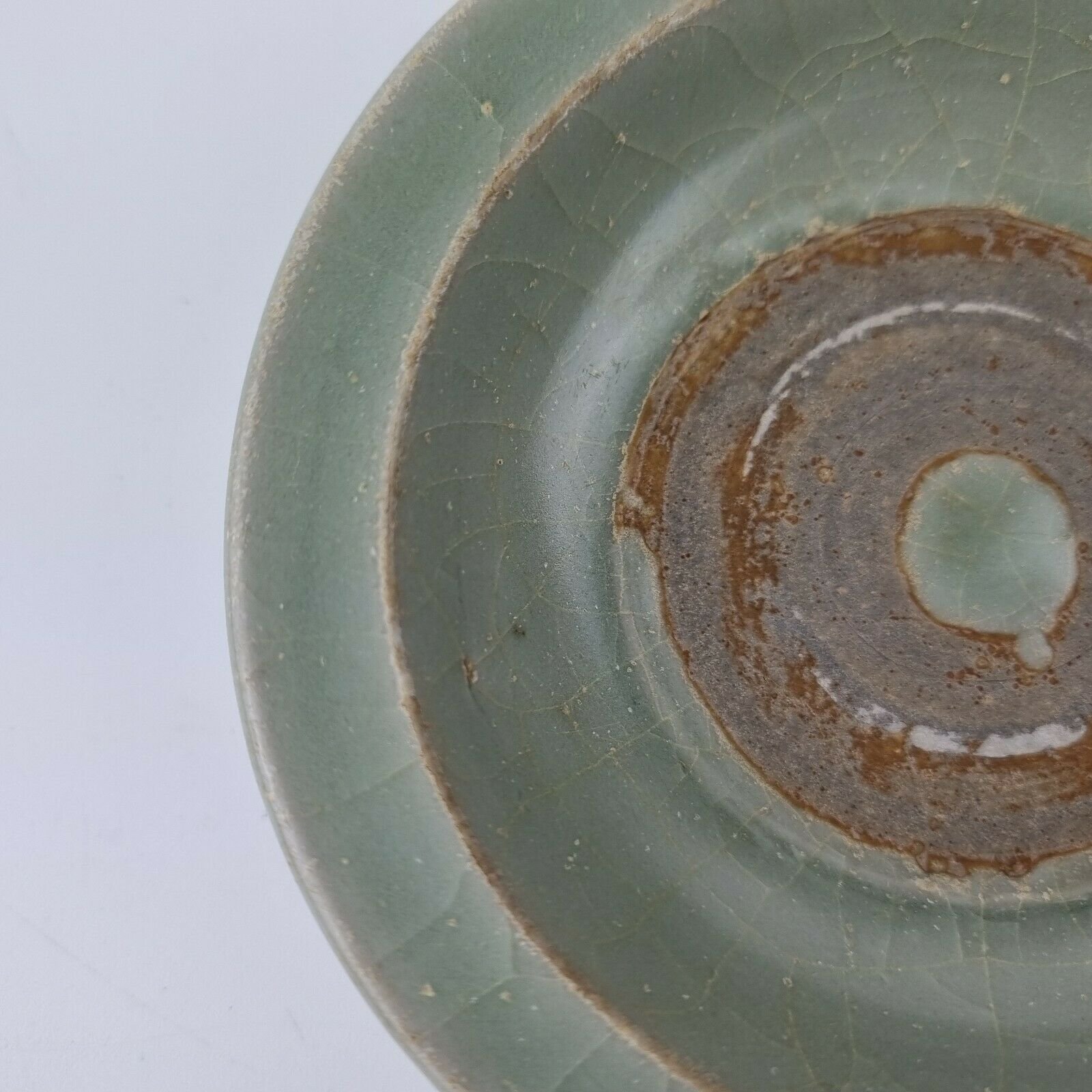
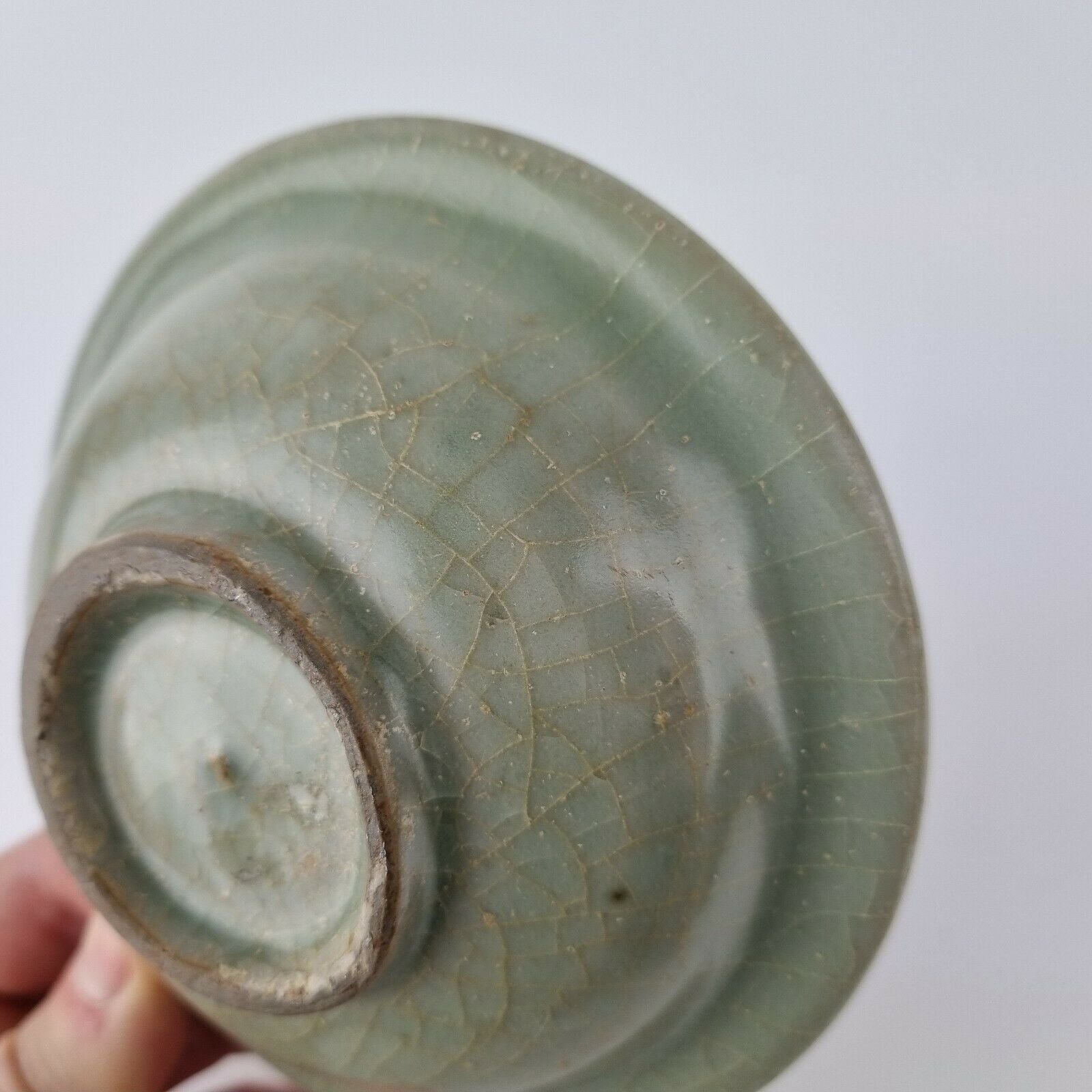
A small Longquan dish under a crackle-glazed celadon. Song dynasty.
Song celadon is about glaze and form rather than decoration: there is nothing painted on this dish, and nothing needs to be. The crackle is a consequence of the glaze and body contracting at different rates as the kiln cooled — an accident that Chinese potters learned to control and then to want.
Small Song dishes of this kind are the most accessible entry point into the period, and among the most quietly rewarding things to own.
Longquan in context
Longquan, in southern Zhejiang, was the great celadon centre of the Southern Song (1127–1279) and after. The British Museum records that Longquan potters applied up to four separate layers of glaze to build the depth and lustre the ware is prized for, and identifies the finest examples as the blue-tinged wares of the late twelfth and early thirteenth centuries. The grey body fires orange-brown wherever it is exposed at the foot, which is why a Longquan foot reads warm against the cool glaze.
“Celadon” itself is a Western word, not a Chinese one: the Smithsonian defines it as a family of high-fired wares whose glazes are coloured by small percentages of iron oxide, fired in a reducing atmosphere. Longquan is one ware within that family, and Song Longquan at its best is undecorated — the glaze is the point. Decoration in moulded relief was an innovation of the Longquan kilns in the thirteenth and fourteenth centuries; a plain, thickly glazed dish like this one belongs to the earlier taste.
Read more: Song ceramics and what celadon, Longquan and Yue actually mean.
The object, up close
The finer
details.
Reference XA-0033
A question about this piece? Ask for measurements, close-up photographs or a condition report.
Discuss this piece- Dimensions
- 12.2 cm diameter × 3.2 cm high
- Period
- Song dynasty (960–1279)
- Mark
- Unmarked
- Condition
- Very good