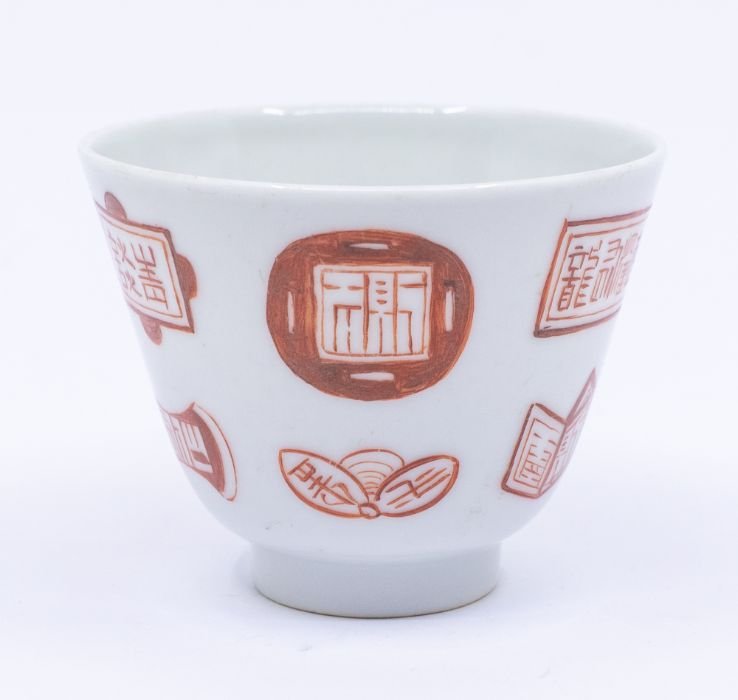
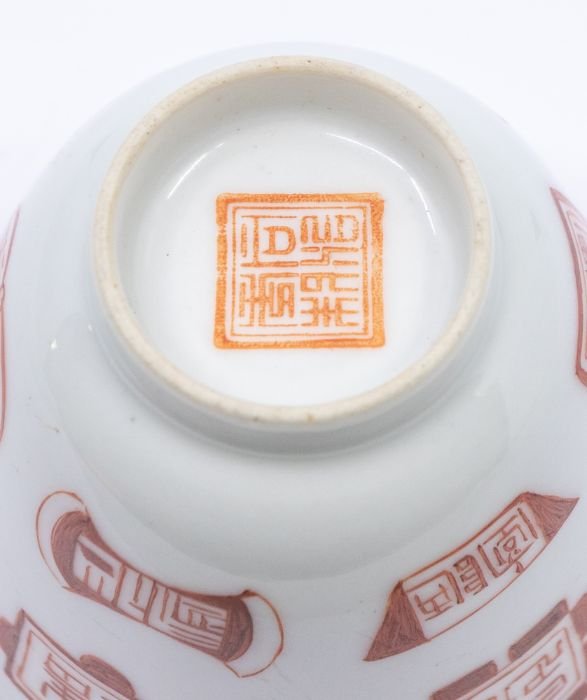
A small tea bowl decorated in iron red with auspicious motifs, of the Tongzhi period. Iron red is an overglaze enamel — applied on top of the fired glaze and fixed in a second, lower-temperature firing — so it sits proud of the surface and can be felt with a fingertip. That single test separates it from underglaze decoration and is worth learning on an inexpensive piece.
Tongzhi (1862–1874) is a short, late reign, made during the long decline of the imperial kilns. The painting is competent rather than court quality, which is precisely why it is a good first purchase.
Iron red in context
Iron red is an overglaze enamel coloured by iron oxide, fired at a low temperature after the glaze — a warm, slightly orange red quite distinct from the high-fired copper reds of the Kangxi monochromes. It was used on its own, as here, and as one colour within the famille verte and famille rose palettes. Auspicious motifs — bats, characters for happiness and longevity, the Eight Treasures — are the standard vocabulary of nineteenth-century decoration and carry specific wishes for the owner.
The Tongzhi reign (1862–74) fell just after the Taiping war had halted the imperial kilns in 1855, and the Metropolitan Museum notes it is not certain they were ever rebuilt; a good Tongzhi piece was made against that background. Small tea bowls of this kind are among the most affordable ways into marked and dated Qing porcelain, and this one is the least expensive object in the catalogue.
Read more: Qing porcelain and iron red wares.
The object, up close
The finer
details.
Reference XA-0012
A question about this piece? Ask for measurements, close-up photographs or a condition report.
Discuss this piece- Dimensions
- Ask for measurements
- Period
- Qing dynasty, Tongzhi (1862–1874)
- Mark
- Tongzhi mark
- Condition
- Very good