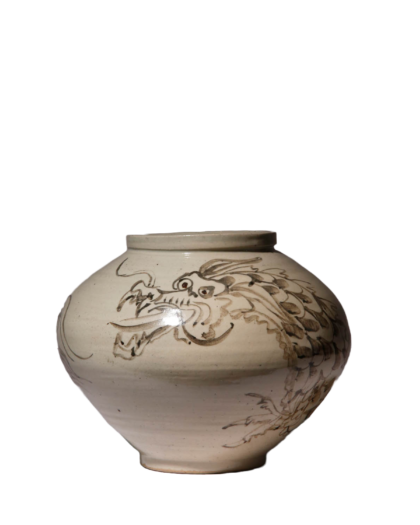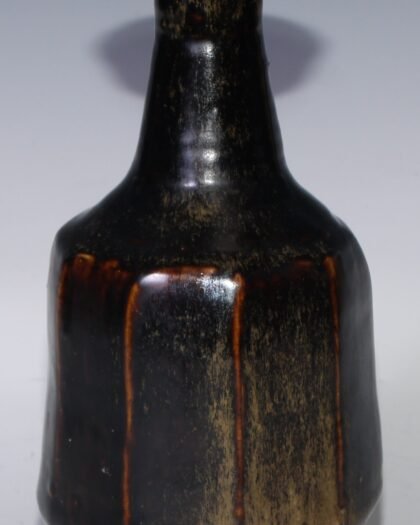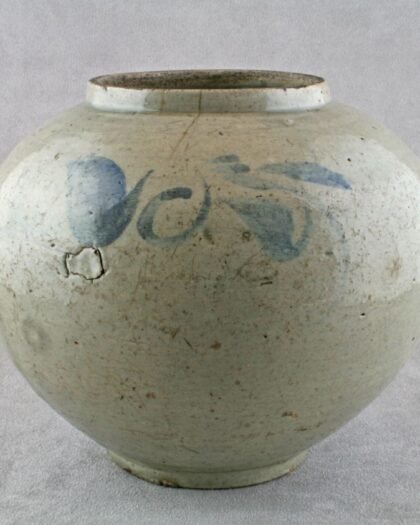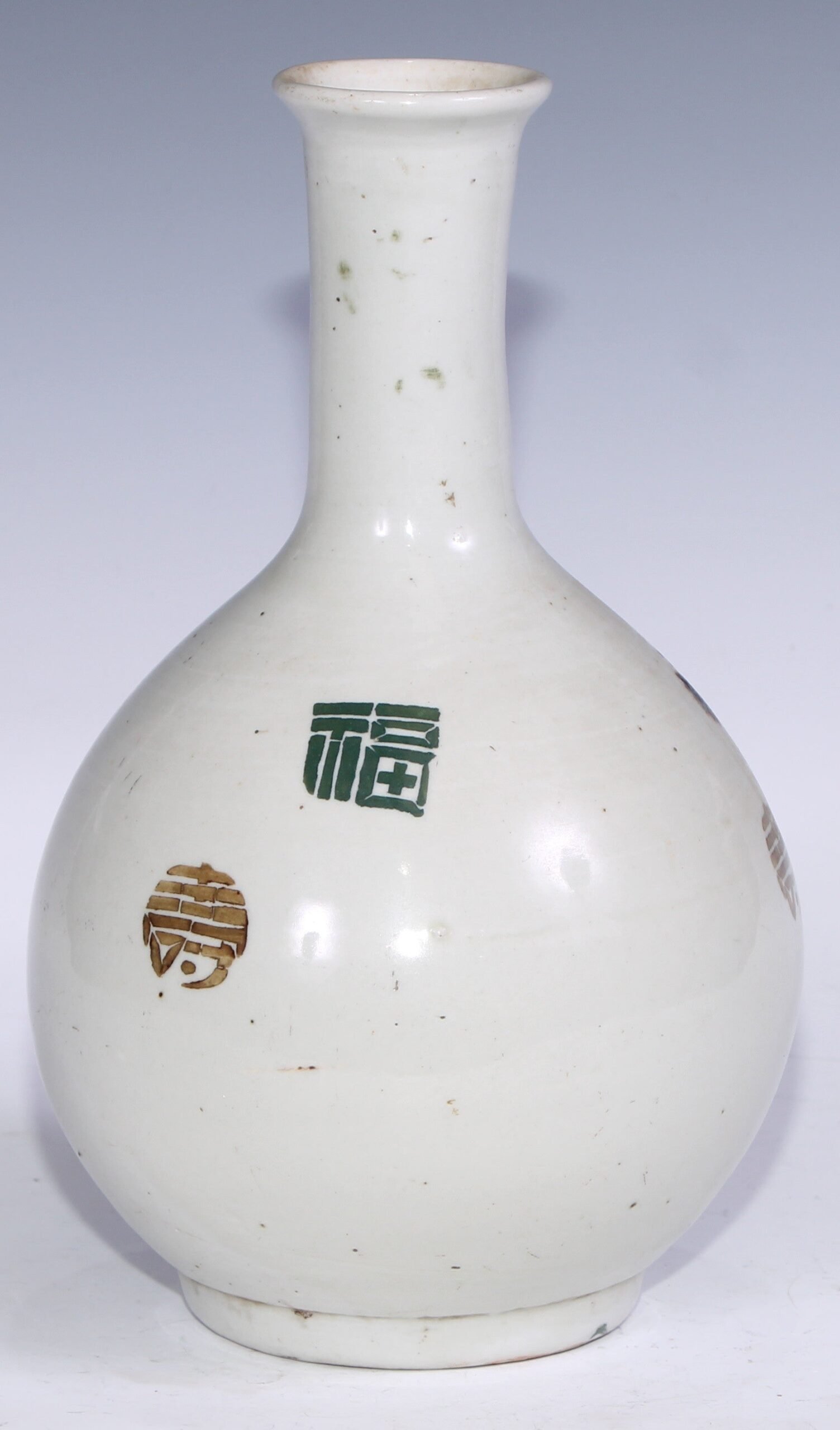
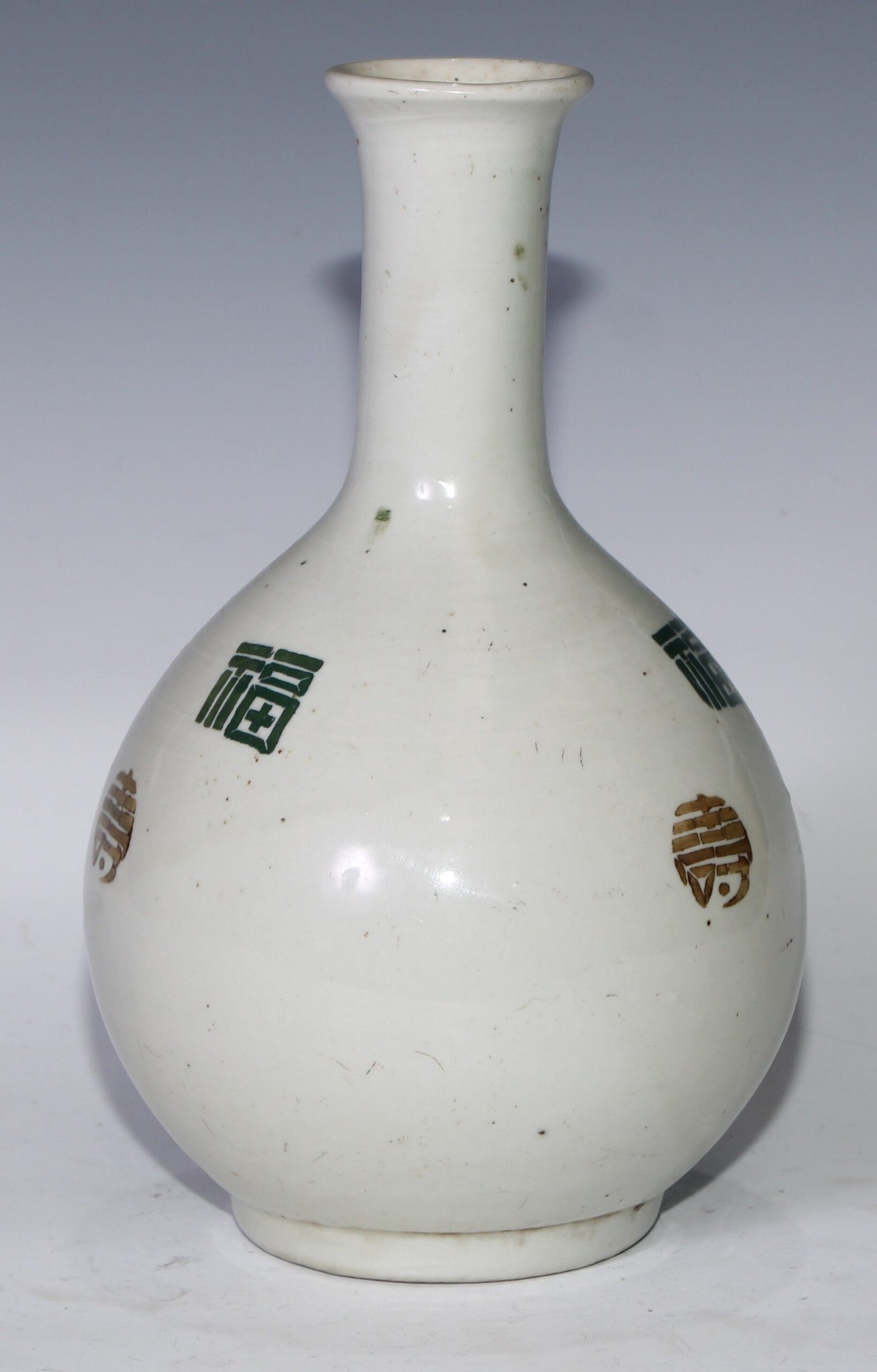
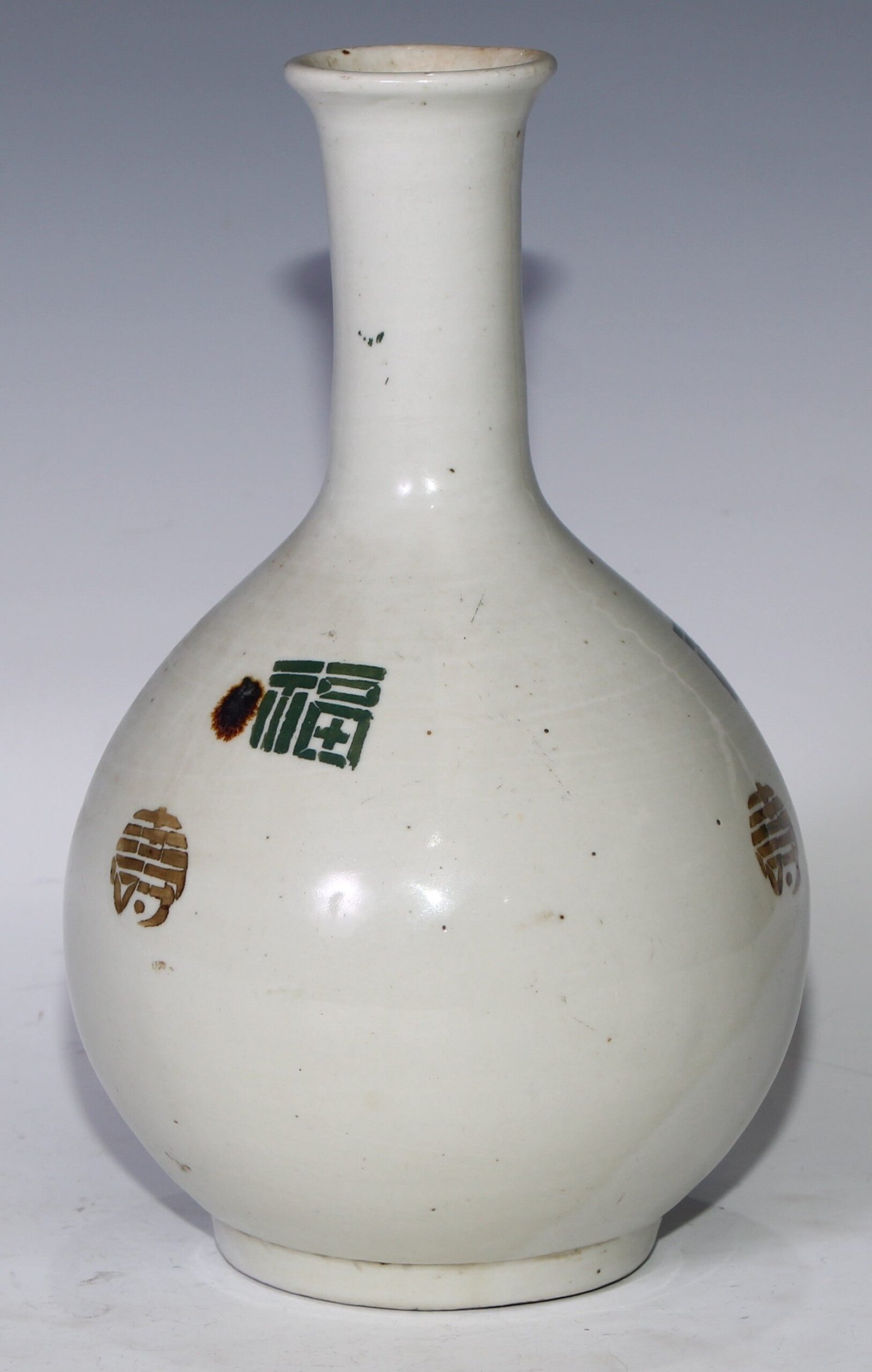
A Korean guglet — a tall, narrow-necked water bottle — painted with shou characters and seal forms. Joseon dynasty.
Shou is the character for longevity, and it appears across Chinese, Korean and Japanese decorative arts in dozens of stylised variants, sometimes to the point of abstraction. Korean blue and white is considerably rarer than its Chinese equivalent and far less written about in English; the cobalt was expensive, imported, and used sparingly, which is why Joseon painters left so much white ground.
The guglet, and its decoration, in context
A guglet is a long-necked water bottle, and Joseon potters made them in white porcelain for the table and for ritual use. The shou character — longevity — is one of the commonest auspicious motifs in East Asian decoration, often repeated in stylised or seal-script forms, and a bottle painted with shou characters and seal motifs is carrying a wish rather than a picture. Blue-and-white was prized in Korea from the fifteenth century; the Metropolitan Museum notes it was valued perhaps even above plain white, and cobalt was expensive enough that iron brown was often substituted.
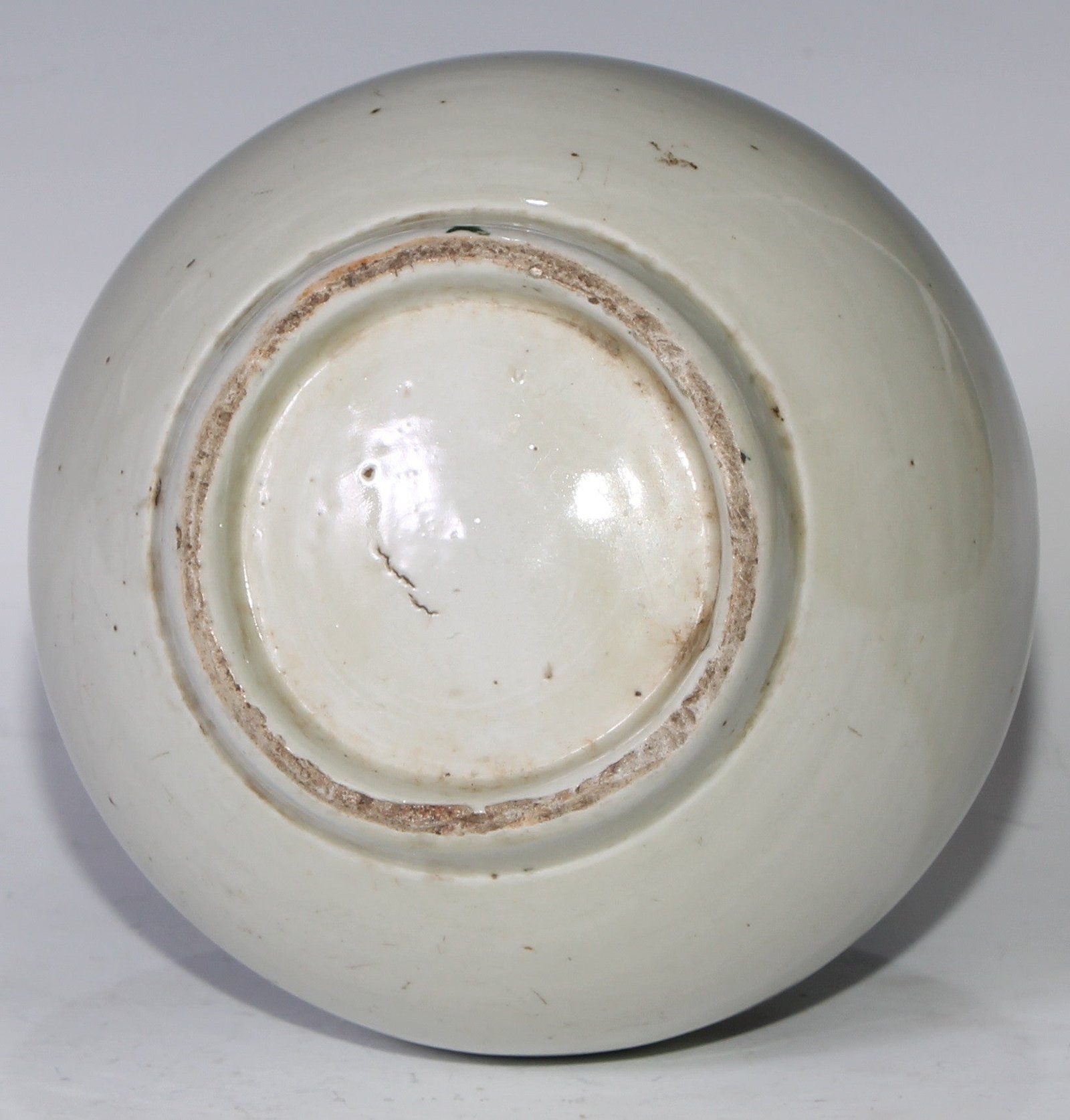
Korean marks are administrative and ritual rather than dynastic: bureau stamps on buncheong, royal kitchen inscriptions, a single character for a palace hall or for “ancestral rite”. There is no Korean equivalent of the Chinese reign mark, so a bottle like this is dated by its potting, glaze and foot. On the old site this was one of our most-visited pieces.
Read more: Korean porcelain marks and the Joseon collection.
The object, up close
The finer
details.
Reference XA-0020
A question about this piece? Ask for measurements, close-up photographs or a condition report.
Discuss this piece- Dimensions
- 26 cm high
- Period
- Joseon dynasty
- Mark
- Unmarked
- Condition
- Very good