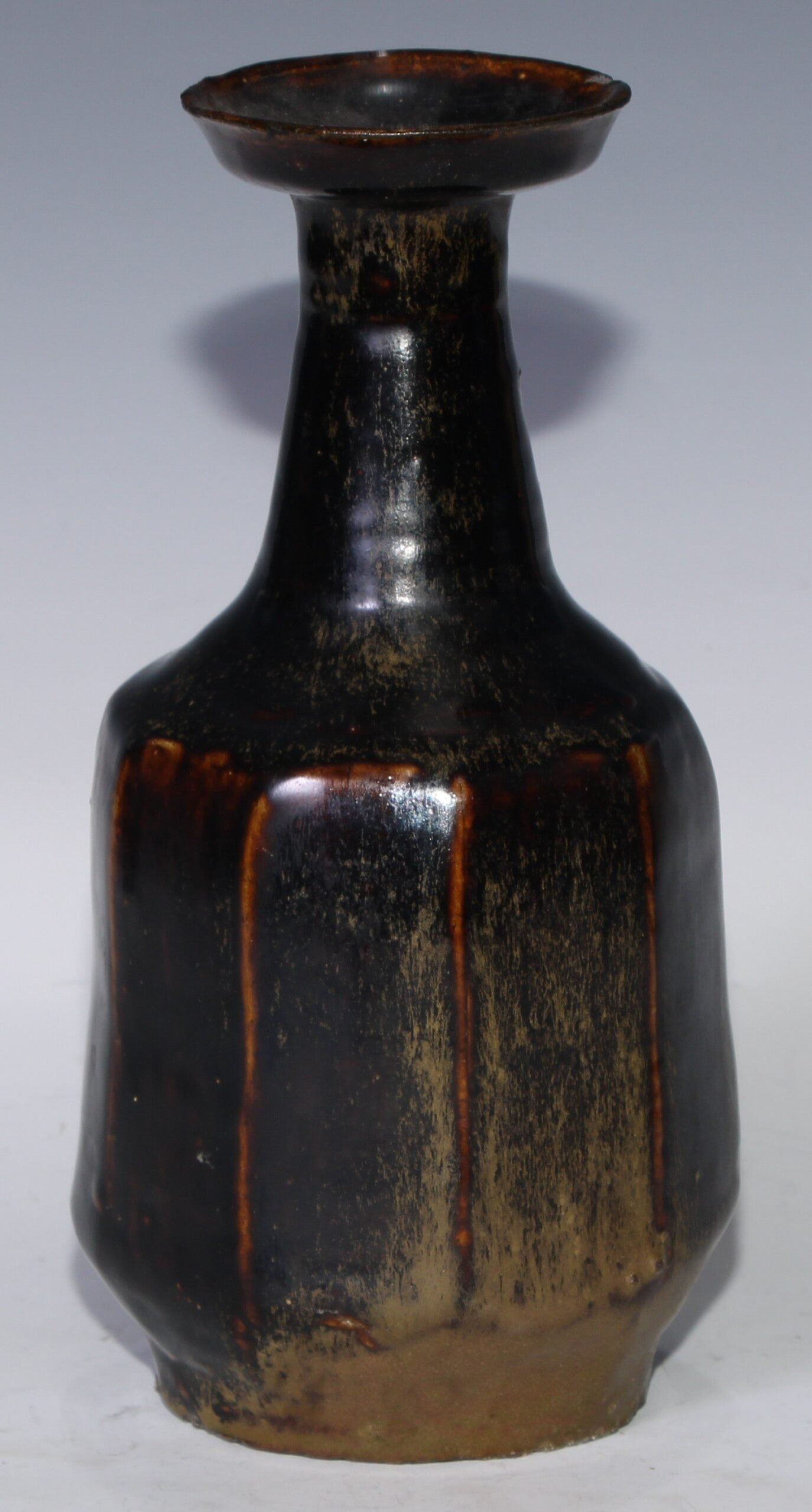
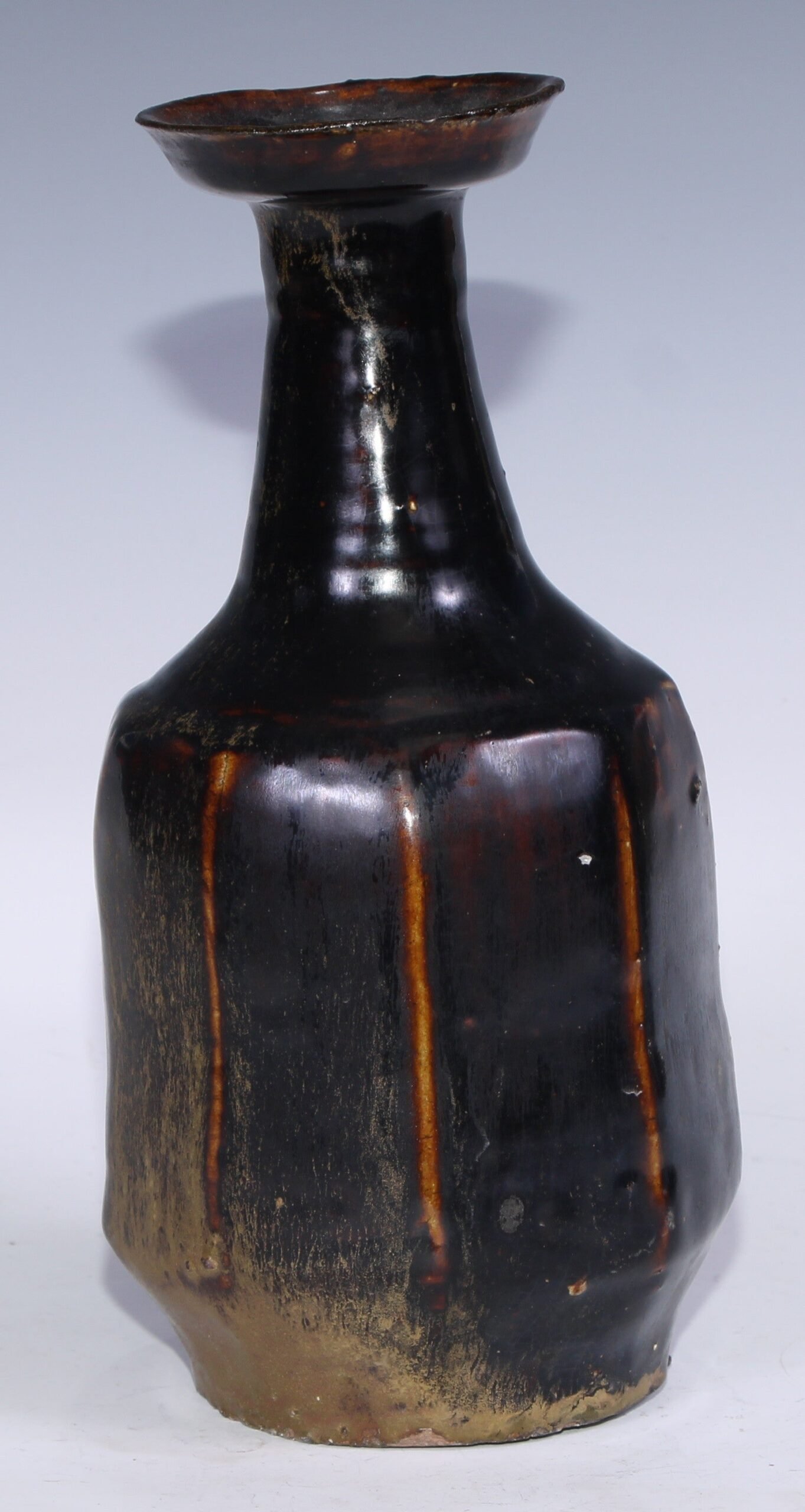
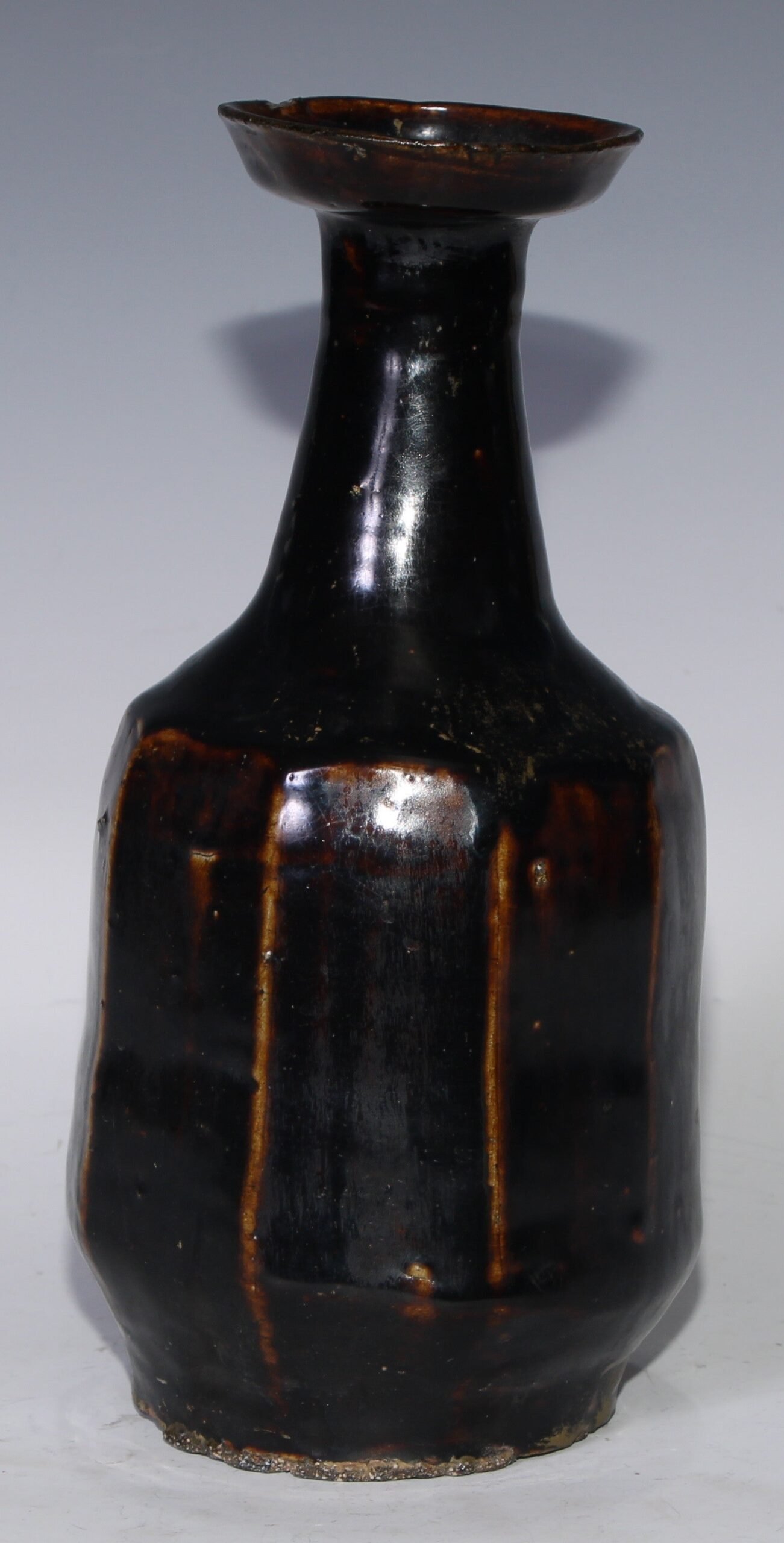
A panelled mallet-shaped bottle vase under a mottled brown glaze. Joseon dynasty.
The faceting is what makes this piece: a mallet form cut into panels has to be thrown, then trued by hand, and each facet changes how the glaze runs. Brown and iron glazes were the everyday Korean alternative to cobalt — cheaper to fire and, to modern eyes, often the more interesting surface.
Joseon monochrome in context
The Joseon dynasty (1392–1910) is Korea’s great age of porcelain. White porcelain was adopted as court ware in the fifteenth century, and the official Bunwon kilns at Gwangju, outside Seoul, ran from the 1460s until their privatisation in the 1880s — but the Metropolitan Museum is explicit that by the sixteenth century white ware “was no longer the sole domain of the court”. Alongside white and blue-and-white, Joseon potters produced iron-painted and monochrome wares, and a mottled brown glaze of this kind belongs to that quieter, more utilitarian tradition.
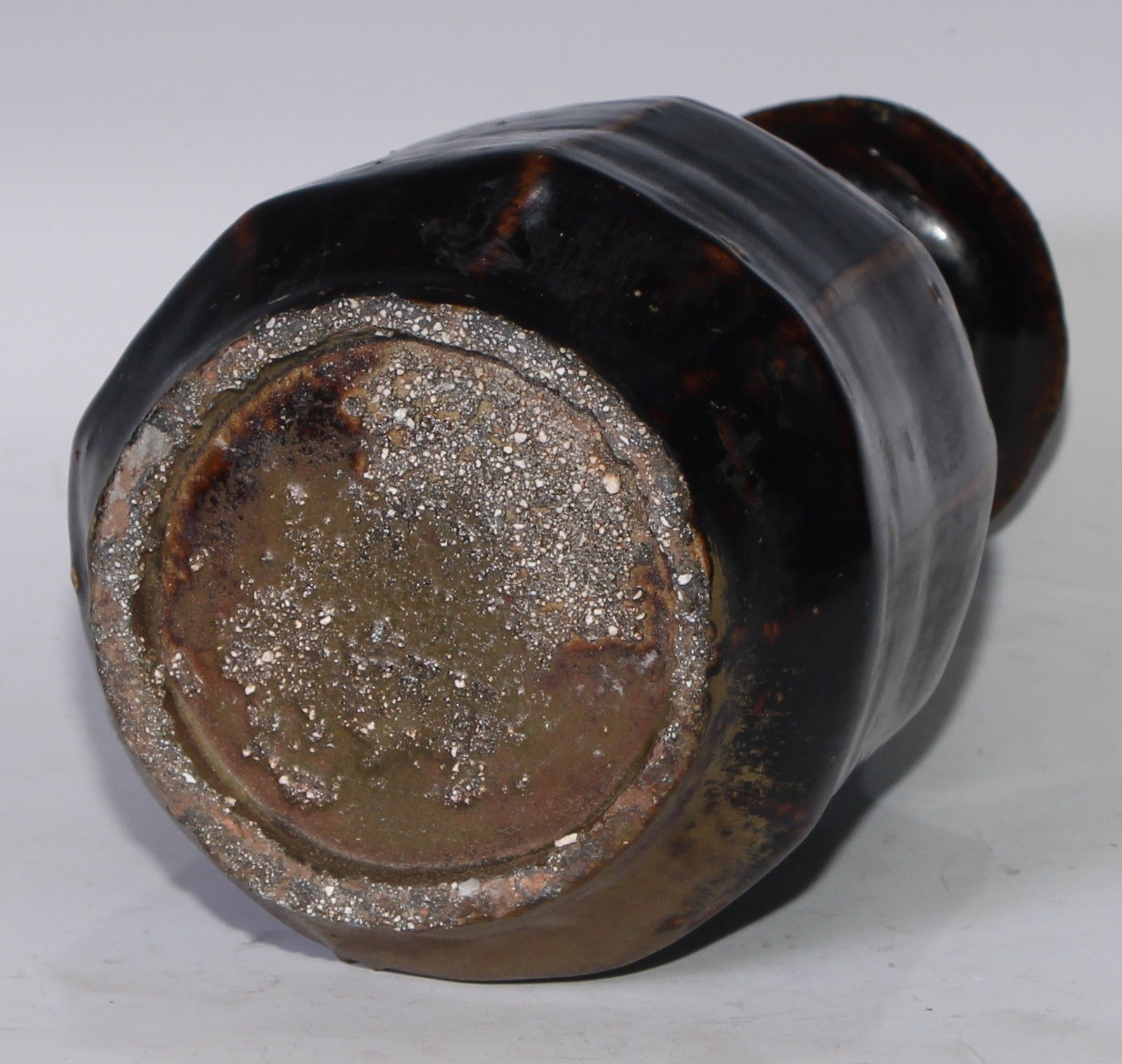
The mallet-shaped bottle, with its panelled body, is a form with a long East Asian history; the Chinese Longquan mallet vases exported to Japan gave the collectors’ term kinuta. Korean ceramics carry no reign marks, so an unmarked bottle is normal rather than suspect, and dating rests on body, glaze and foot rather than on inscription.
Read more: collecting Korean ceramics and Korean marks, and why there are almost none.
The object, up close
The finer
details.
Reference XA-0021
A question about this piece? Ask for measurements, close-up photographs or a condition report.
Discuss this piece- Dimensions
- 26 cm high
- Period
- Joseon dynasty
- Mark
- Unmarked
- Condition
- Very good