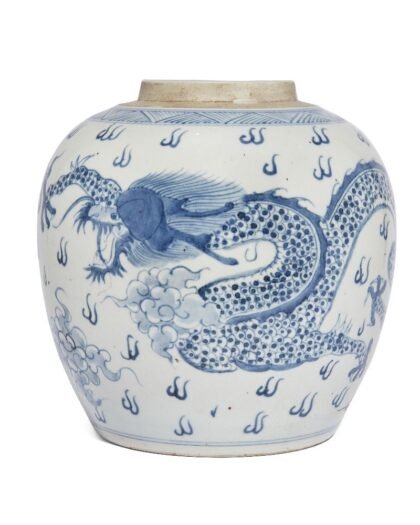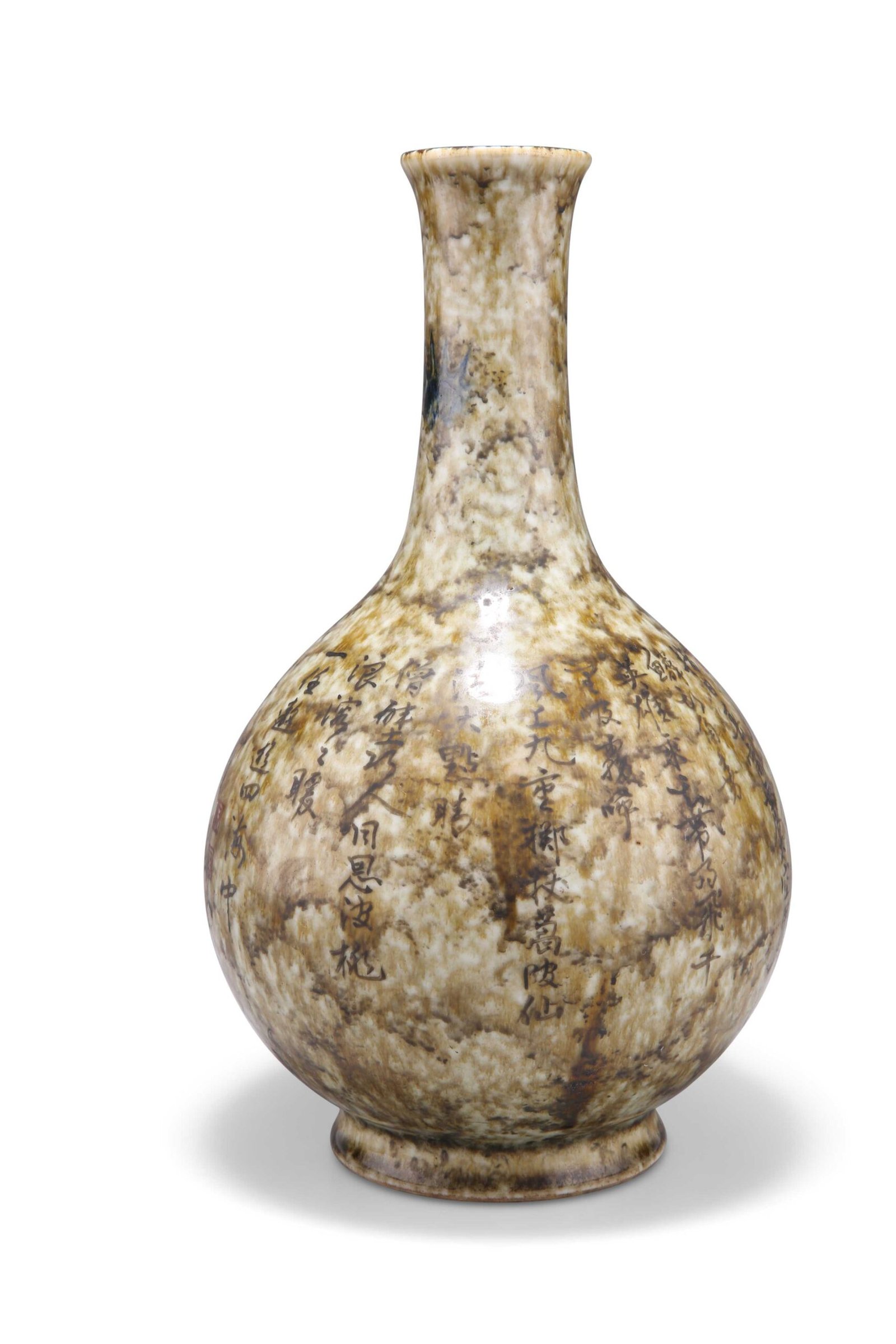
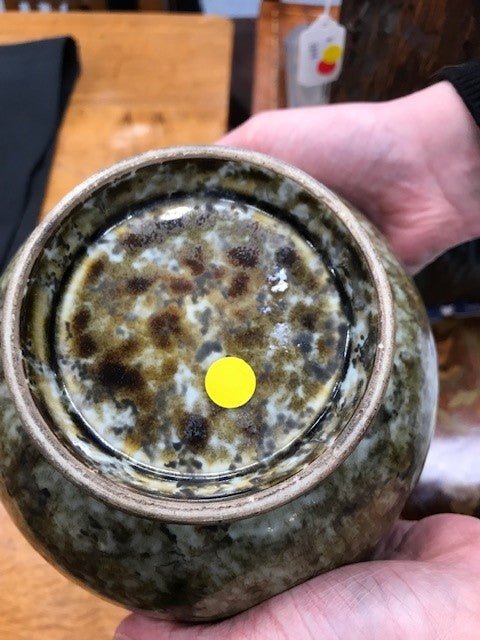
A bottle-shaped vase painted in blue with a dragon and a poem, set against a mottled green glaze. Late Qing to Republic.
Inscribed poetry on porcelain is characteristic of the late imperial and Republic periods, when literati taste and commercial production met: the vase is meant to be read as well as looked at. Republic-period porcelain (1912–1949) is rising in the market and is still routinely mistaken for eighteenth-century work, usually because it carries an earlier reign mark. This piece does not pretend, which makes it a useful teaching object.
Late Qing and Republic in context
The Qing dynasty ended with the abdication of Puyi, the Xuantong emperor, in 1912; the Republic period runs to 1949. Museums treat the divide as a continuity rather than a break — the British Museum labels its Jingdezhen enamel wares “Qing to Republican period” straight through — because the kilns did not stop and the painters did not change overnight. A large dragon vase of around 1900–1930 sits exactly on that seam, and is dated here as such rather than pushed back to an earlier reign it does not belong to.
The quality of Republic-period work is bimodal. The Met records wares of “surprisingly fine quality” made under Yuan Shikai in 1915–16, and Jingdezhen was producing reproductions of Qianlong pieces in the 1930s good enough to sit beside the originals in the Percival David collection. Judge the object — potting, painting, foot — and read any mark afterwards.
Read more: Republic-period porcelain and the Republic collection.
The object, up close
The finer
details.
Reference XA-0026
A question about this piece? Ask for measurements, close-up photographs or a condition report.
Discuss this piece- Dimensions
- 26 cm high
- Period
- Late Qing to Republic
- Mark
- Unmarked
- Condition
- Good overall — no damage or restoration noted