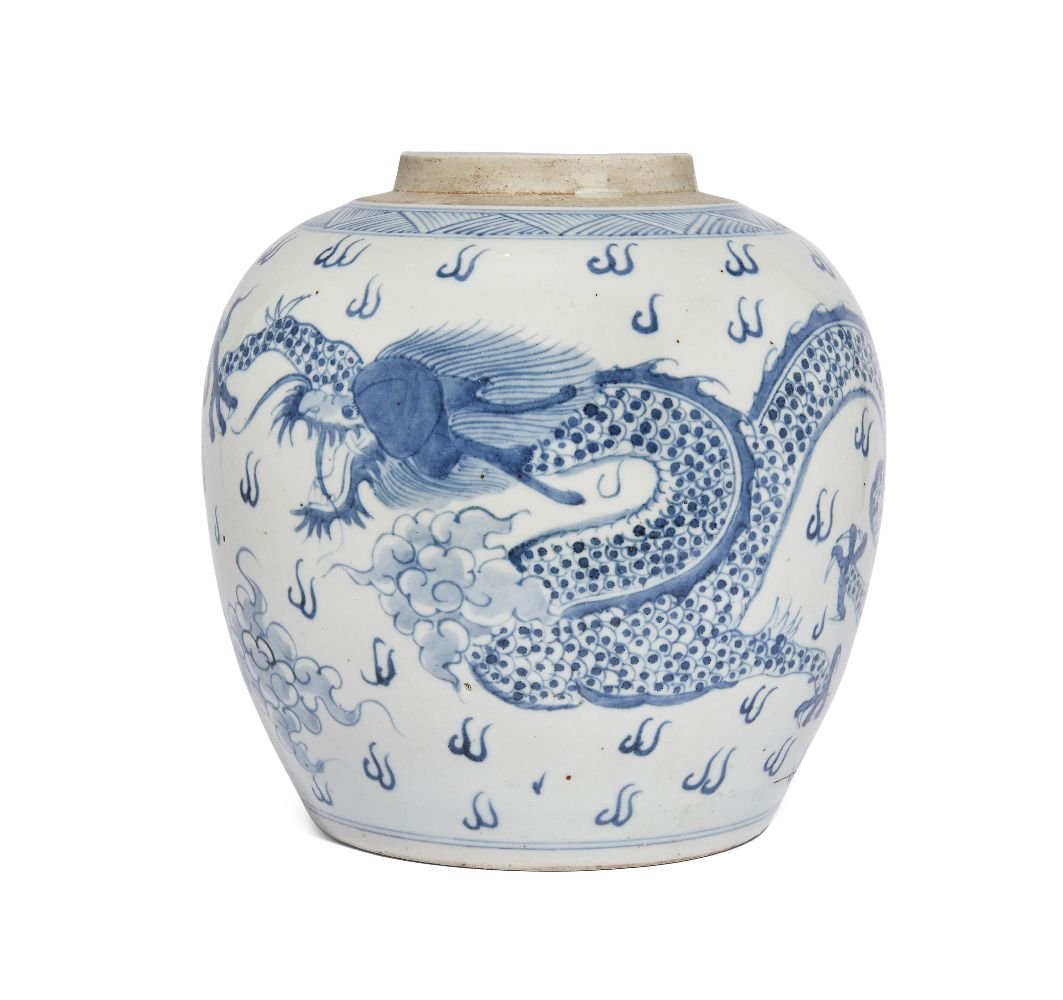
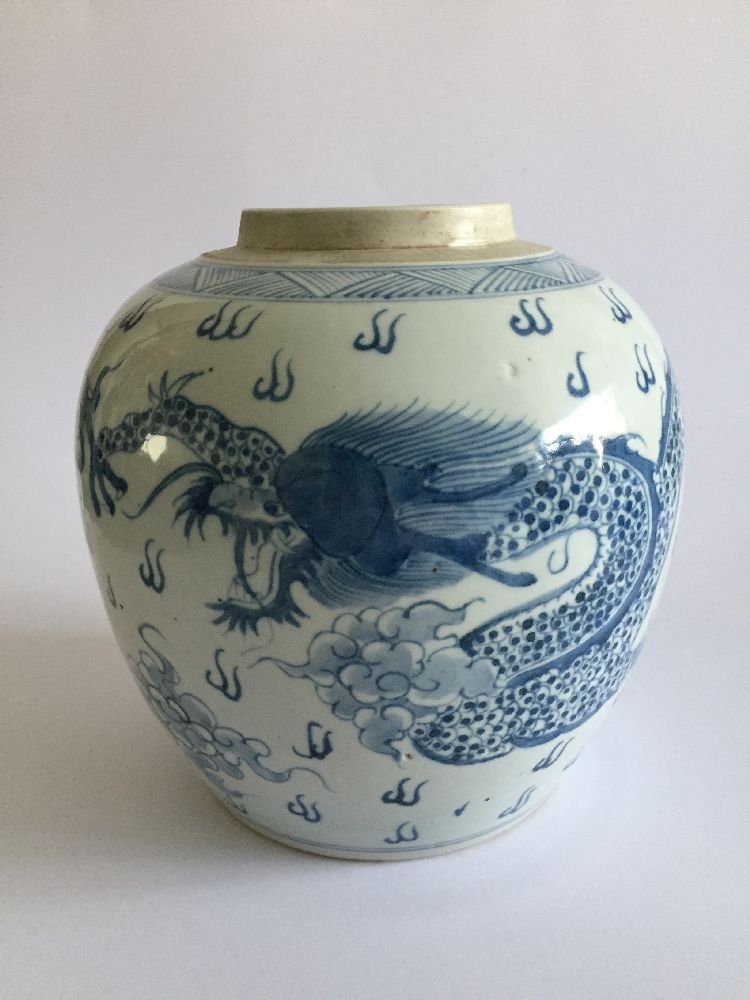
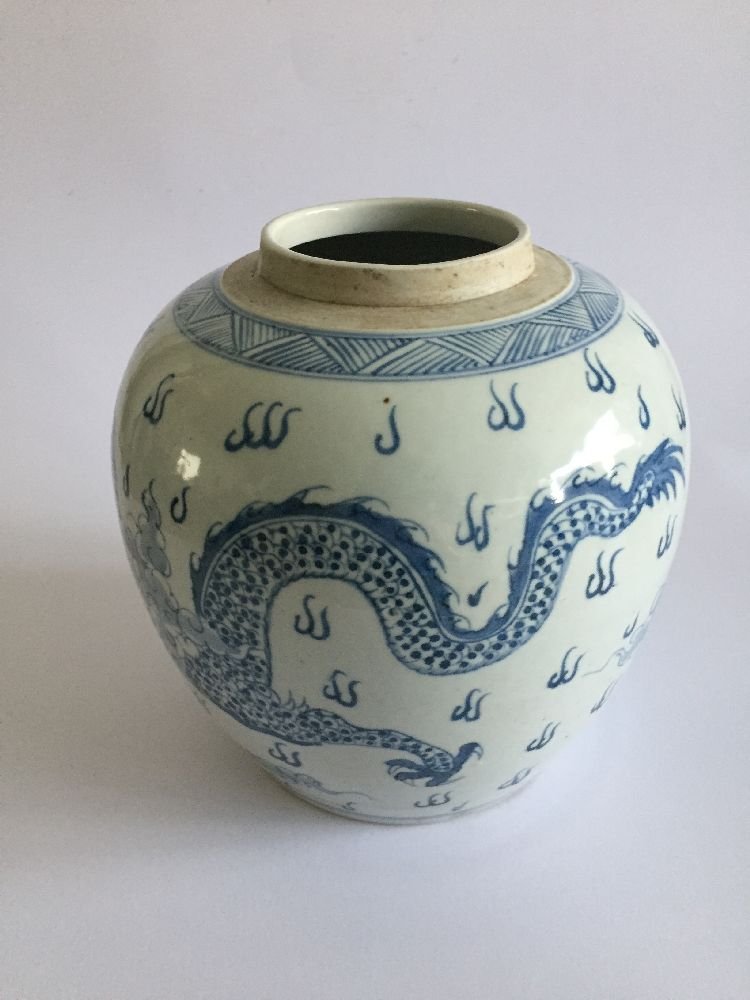
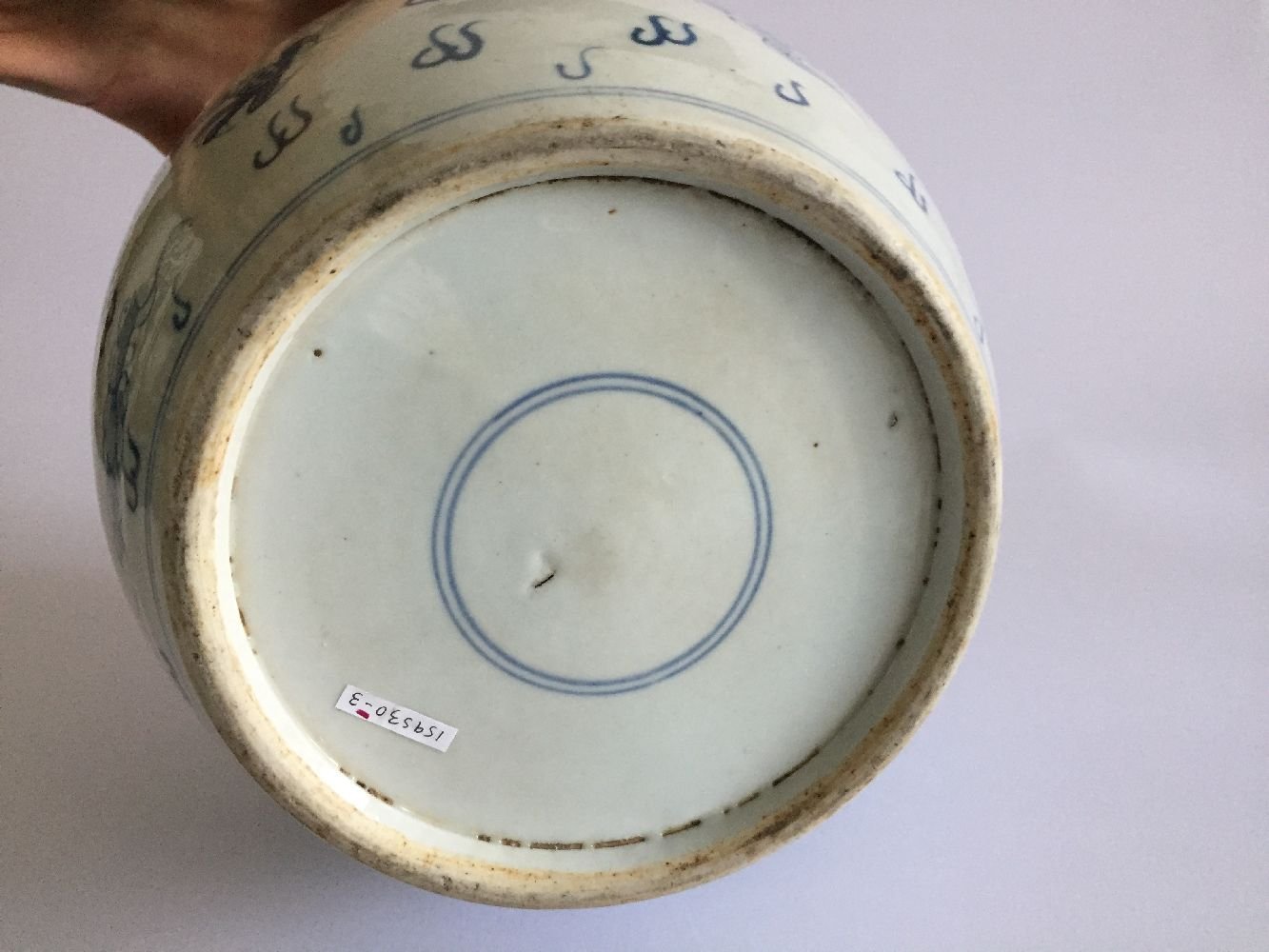
A blue and white jar painted with a four-clawed dragon chasing a flaming pearl among clouds, with a double-ring mark in underglaze blue to the base. Late Kangxi.
Claw count is worth knowing: five claws were reserved by convention for imperial use, four for princely and general use. A four-clawed dragon on a well-painted jar is not a lesser object — it is a differently permitted one, and the distinction is a useful thing to be able to read across a room.
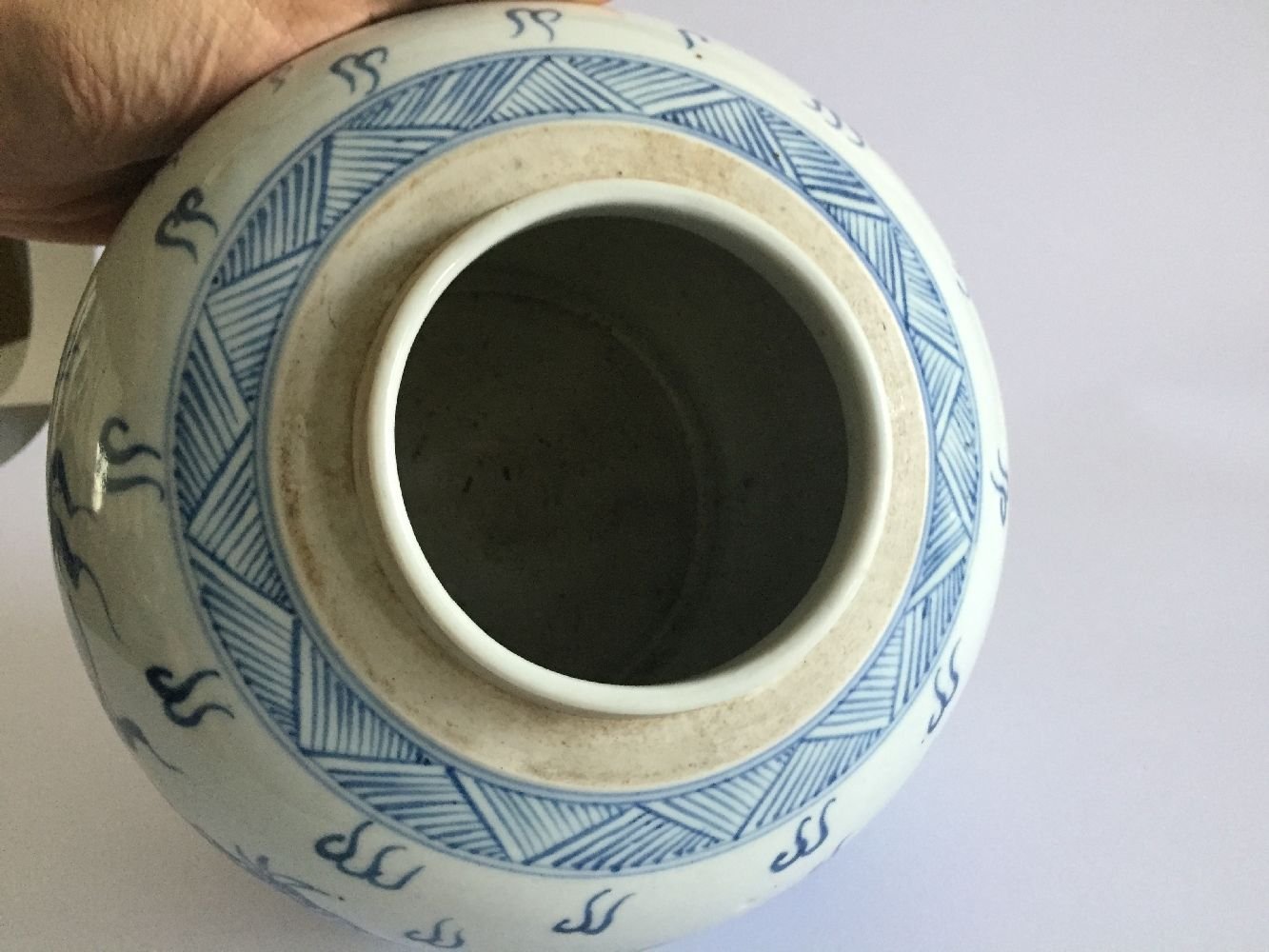
Condition is disclosed in full below. Several old star cracks to the interior, and firing flaws in the glaze. Firing flaws are original to the making, not damage.
Chinese: 清康熙晚期 青花四爪雲龍紋罐.
Kangxi blue and white in context
The Kangxi reign (1662–1722) is the beginning of what the Metropolitan Museum calls “the golden age of Qing porcelains”. Kangxi blue “has often been described as having a sapphire hue”, set against an almost faultless white, and the V&A notes the fenshui technique of graded cobalt washes that gave the period’s painting its ink-like depth. The imperial factory came back under court direction in 1683, and the finest Qing work dates from then until about 1756.
A ginger jar is a Western name for a covered storage jar, and the dragon among clouds is the imperial motif. This jar carries a double ring in underglaze blue and no reign mark, which is unremarkable: reign marks are rare on early Kangxi porcelain and cluster in the later part of the reign, and the trade’s story of an imperial edict forbidding the mark has no institutional source. What can be said is that a late Kangxi jar is dated by its cobalt, potting and foot, not by a mark it does not carry.
Read more: Qing porcelain and Chinese reign marks.
The object, up close
The finer
details.
Reference XA-0018
A question about this piece? Ask for measurements, close-up photographs or a condition report.
Discuss this piece- Dimensions
- 19.7 cm high
- Period
- Qing dynasty, late Kangxi period
- Mark
- Double ring in underglaze blue to the base
- Condition
- Good, faults disclosed below
- Faults
- • Several old star cracks to the interior.
• Firing flaws to the glaze in areas — original to the making, not damage.