Qing
The Qing dynasty (1644–1911) accounts for most of the Chinese porcelain on the market and most of the Chinese porcelain in this collection. Its 267 years cover the finest technical achievements of Jingdezhen under Kangxi, Yongzheng and Qianlong, and the enormous, uneven output of the nineteenth century, when the same kilns supplied the court, the domestic market and the West at very different levels of quality. Telling those levels apart is most of the job.
The three great reigns
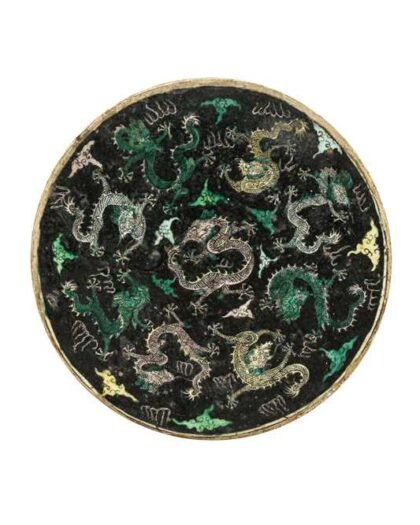
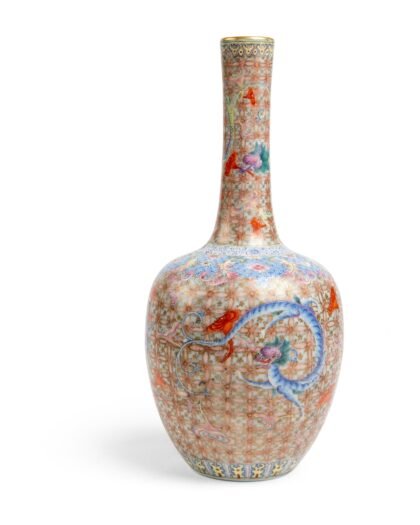
Kangxi (1662–1722) re-established the imperial kilns after the disorder of the dynastic change and produced the blue and white that European collectors would later prize above all others, painted in graded washes of a bright sapphire cobalt — the technique the V&A calls fenshui. Kangxi is also the reign of famille verte, the overglaze palette dominated by greens, and of the rarer black-ground famille noire. Yongzheng (1723–1735) is the connoisseur’s reign: perfectly potted monochromes and the arrival, around 1720, of the opaque enamel palette the French called famille rose, with a pink made from gold whose technique came from Europe and an opaque white that allowed shading (British Museum, Room 95). Qianlong (1736–1795) brought scale, virtuosity and a taste for archaism — copies of Song glazes, of bronze forms, of Ming blue and white — that makes the reign both magnificent and, for a dealer, treacherous, since so much later porcelain carries its mark.
The long nineteenth century
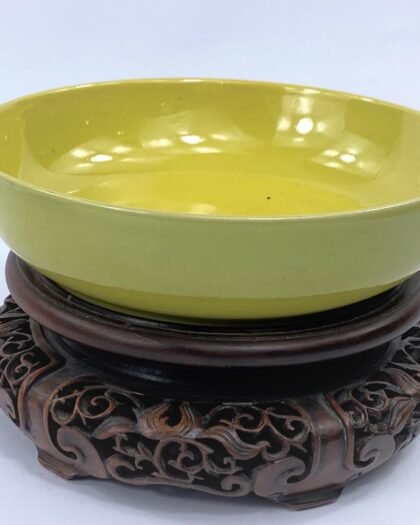
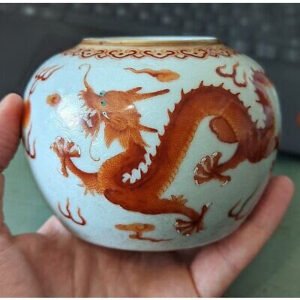
Jiaqing (1796–1820) and Daoguang (1821–1850) continued the Qianlong repertoire with a gradual loss of finesse. The Taiping war reached Jingdezhen in the 1850s, and the Tongzhi (1862–1874) and Guangxu (1875–1908) reigns rebuilt production for a court that still ordered in quantity — the imperial yellow bowls and iron-red dragon bowls of these reigns are a distinct and collectable category — alongside vast export lines in famille rose. A great deal of nineteenth-century porcelain carries a Qianlong or Kangxi mark. It is not fraud in the modern sense; it was the convention. The guide to reign marks explains how to tell a Guangxu mark-and-period bowl from a Guangxu bowl with a Qianlong mark, and why the price difference is real.
Reading a Qing piece
A Qing foot is usually finely finished, the unglazed rim smooth and white or faintly buff, the glaze stopping in a clean line; a rough, gritty or orange foot on a piece claiming a Qianlong mark is a warning. Seal-script marks in six characters become standard under Qianlong, regular script is normal under Kangxi and Yongzheng, and both are copied. Enamels wear in predictable places — the gilt rim, the high points of a raised design — and that wear is one of the better signs of age. Our aim is that every listing shows the base and the mark in macro; where a photograph is still to be taken, the listing says so.
Further reading
The guide to Qing porcelain goes reign by reign; the journal explains the three famille palettes; the ware pages for monochromes and iron red cover the glazes.
In the collection
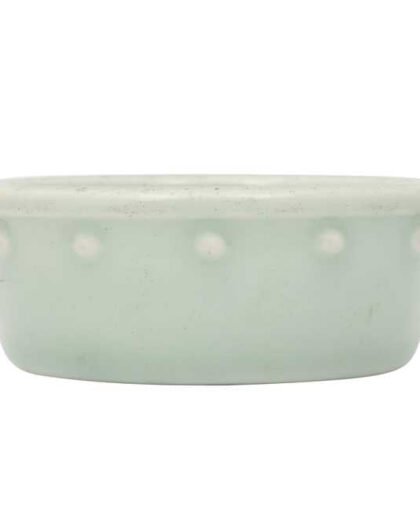
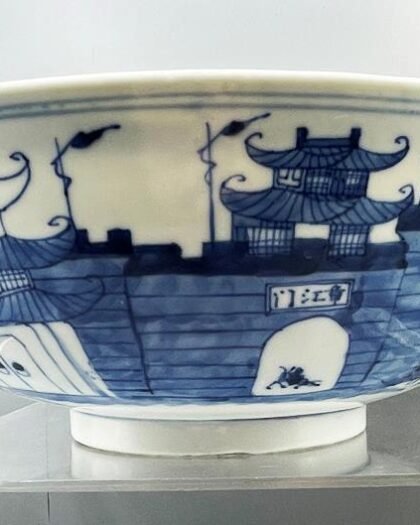
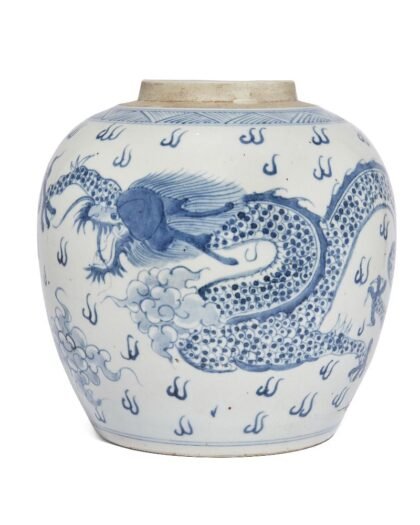
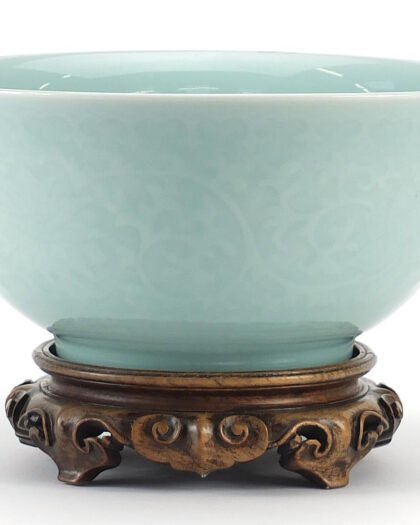
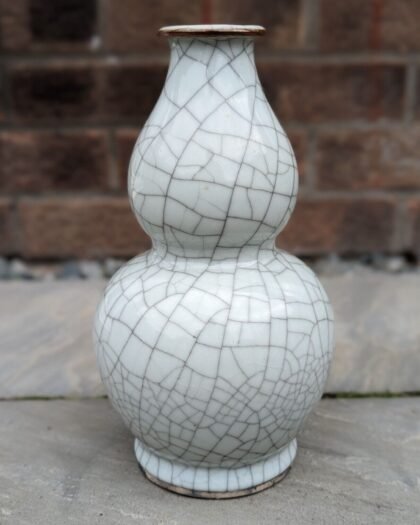
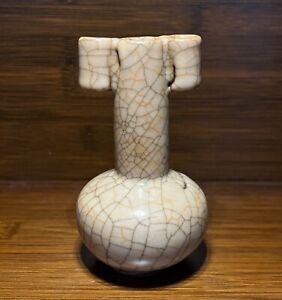
Sixteen pieces at present, from a Kangxi mark-and-period blue and white bowl and a Kangxi famille noire nine-dragon plaque (with damage disclosed) through an eighteenth-century Ge-type crackle arrow vase and an imperial yellow bowl with a Qianlong mark, to Tongzhi famille verte and iron red bowls and a Guangxu mark-and-period dragon bowl. Several carry Qianlong marks and nineteenth-century dates, and are described as exactly that.
Showing 1–12 of 16 results