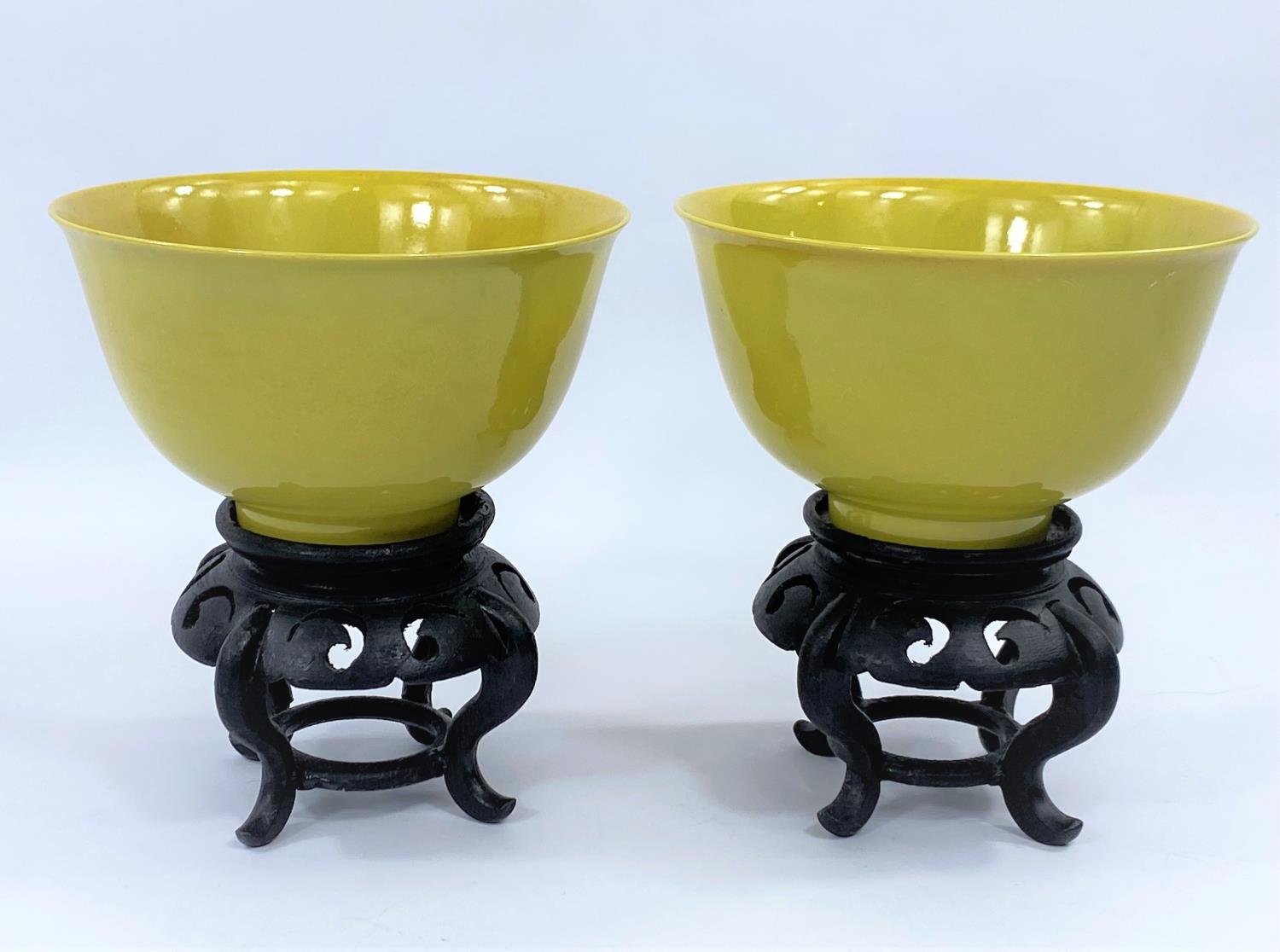
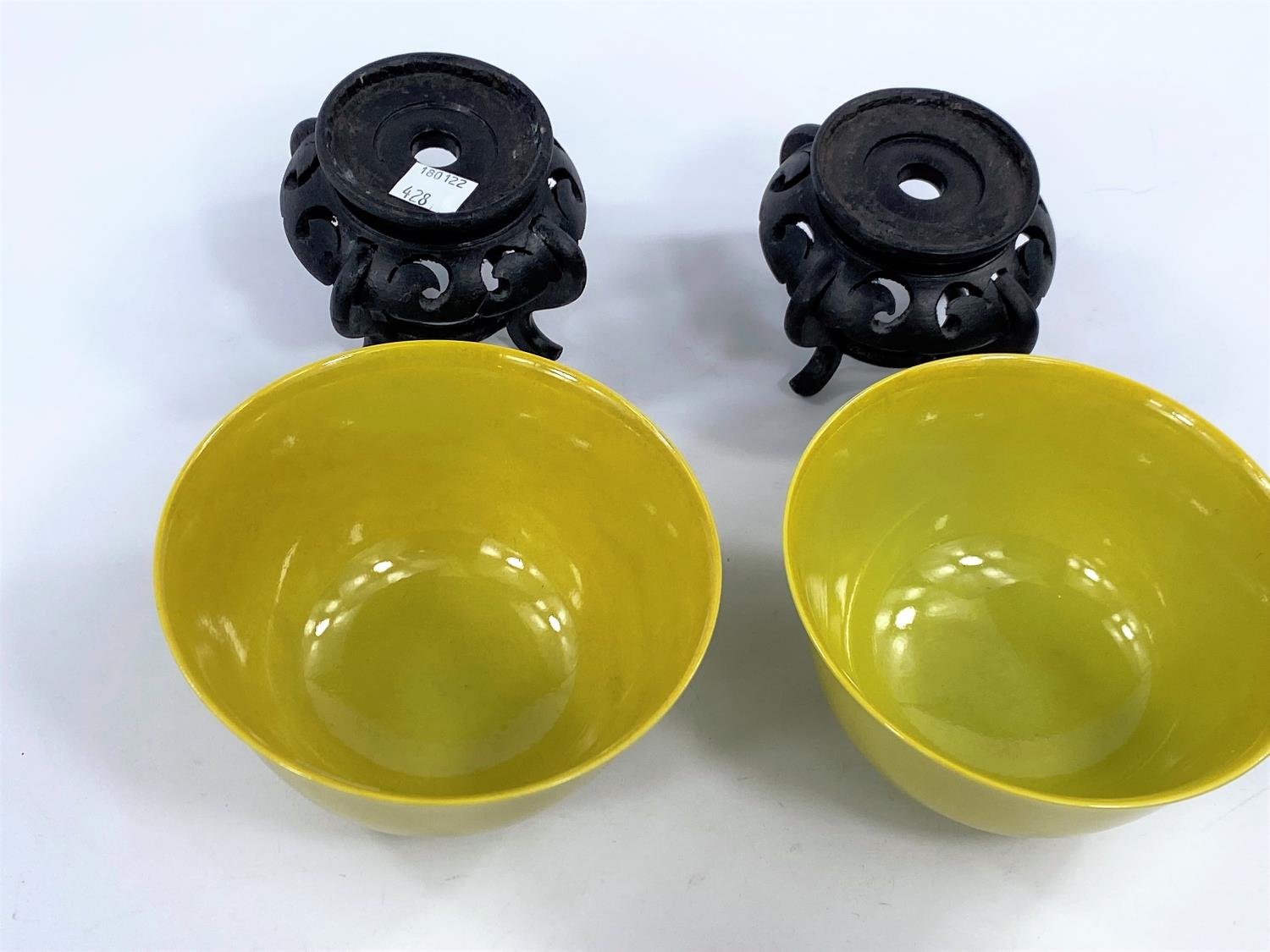
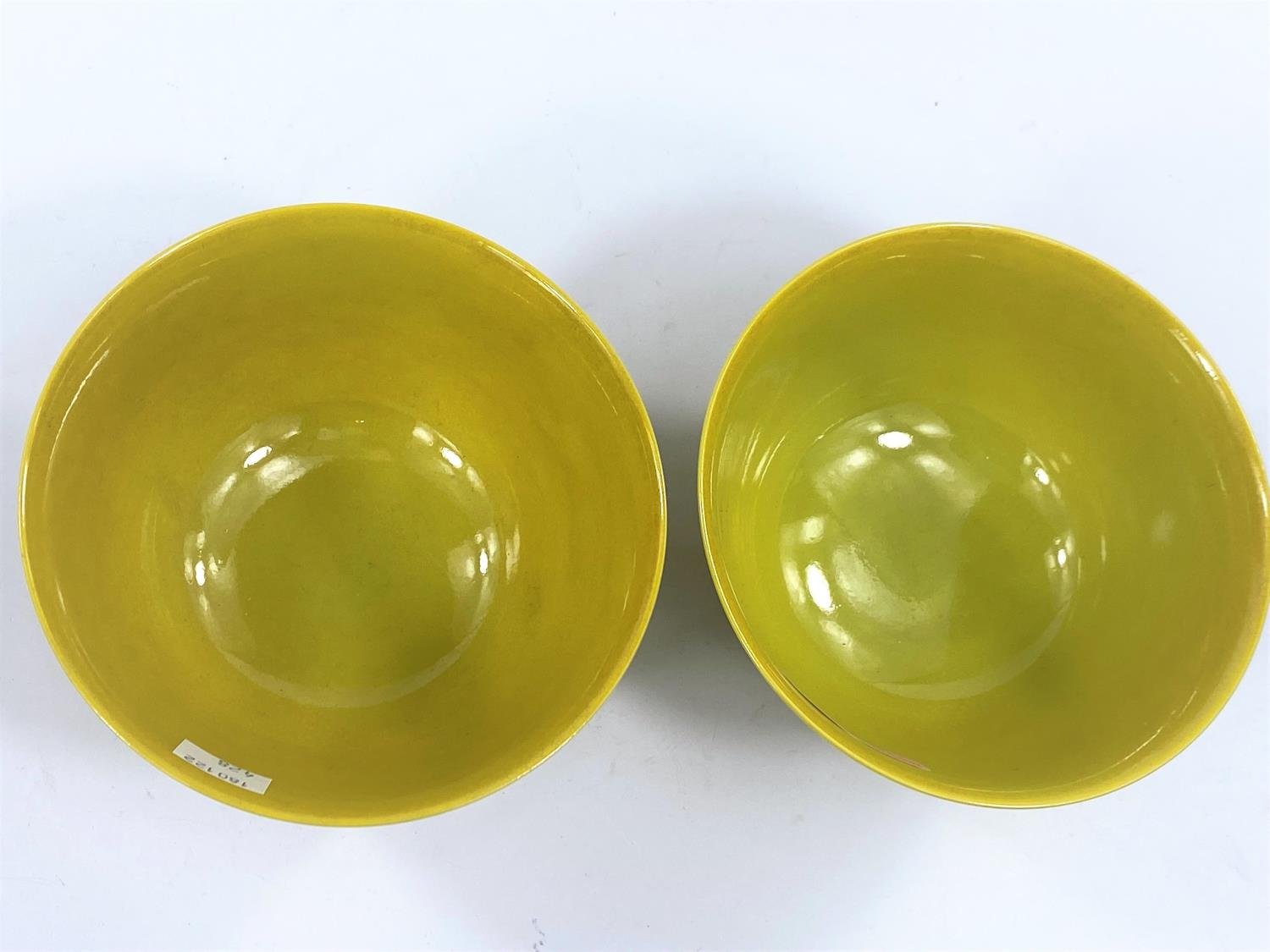
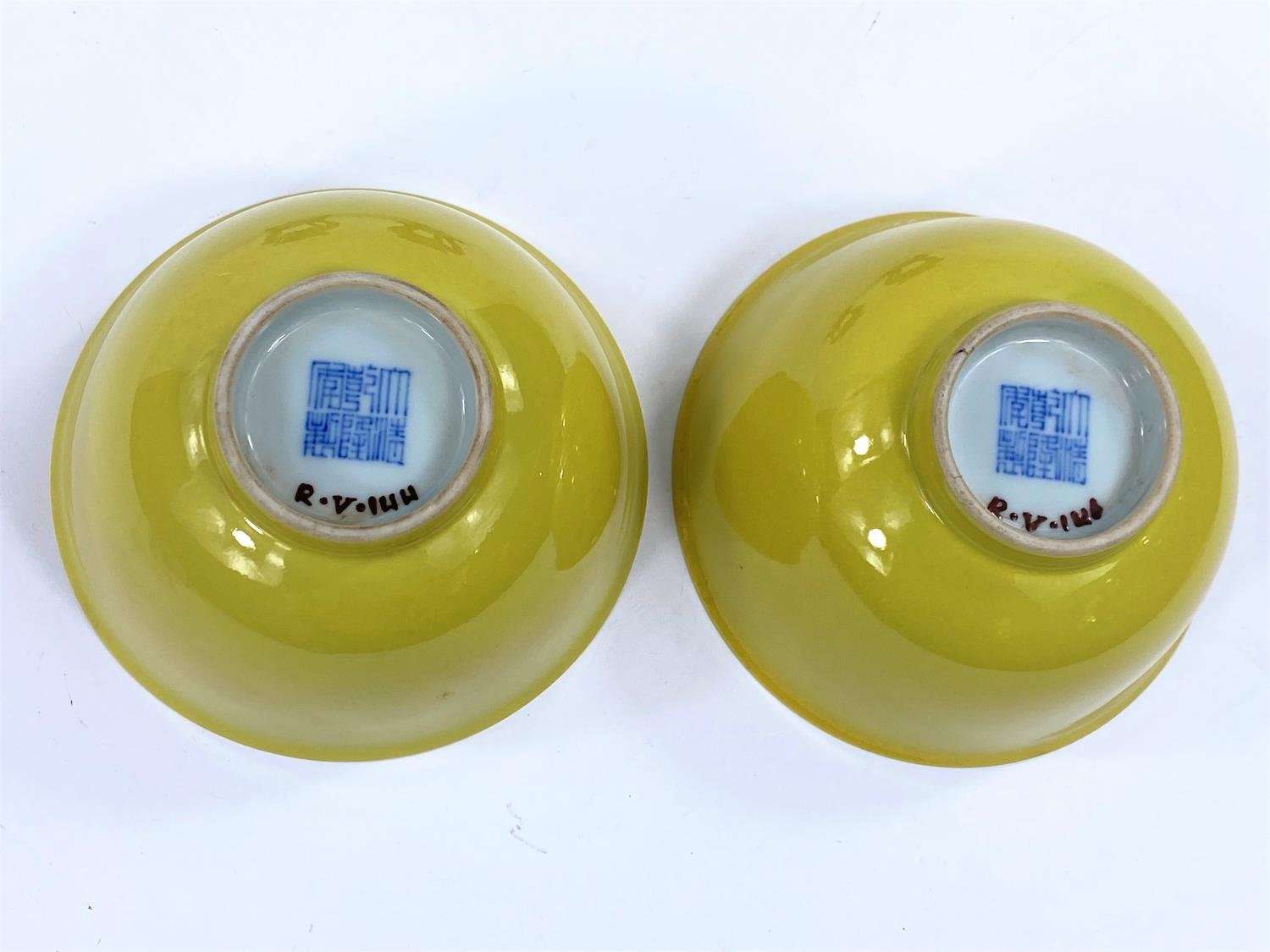
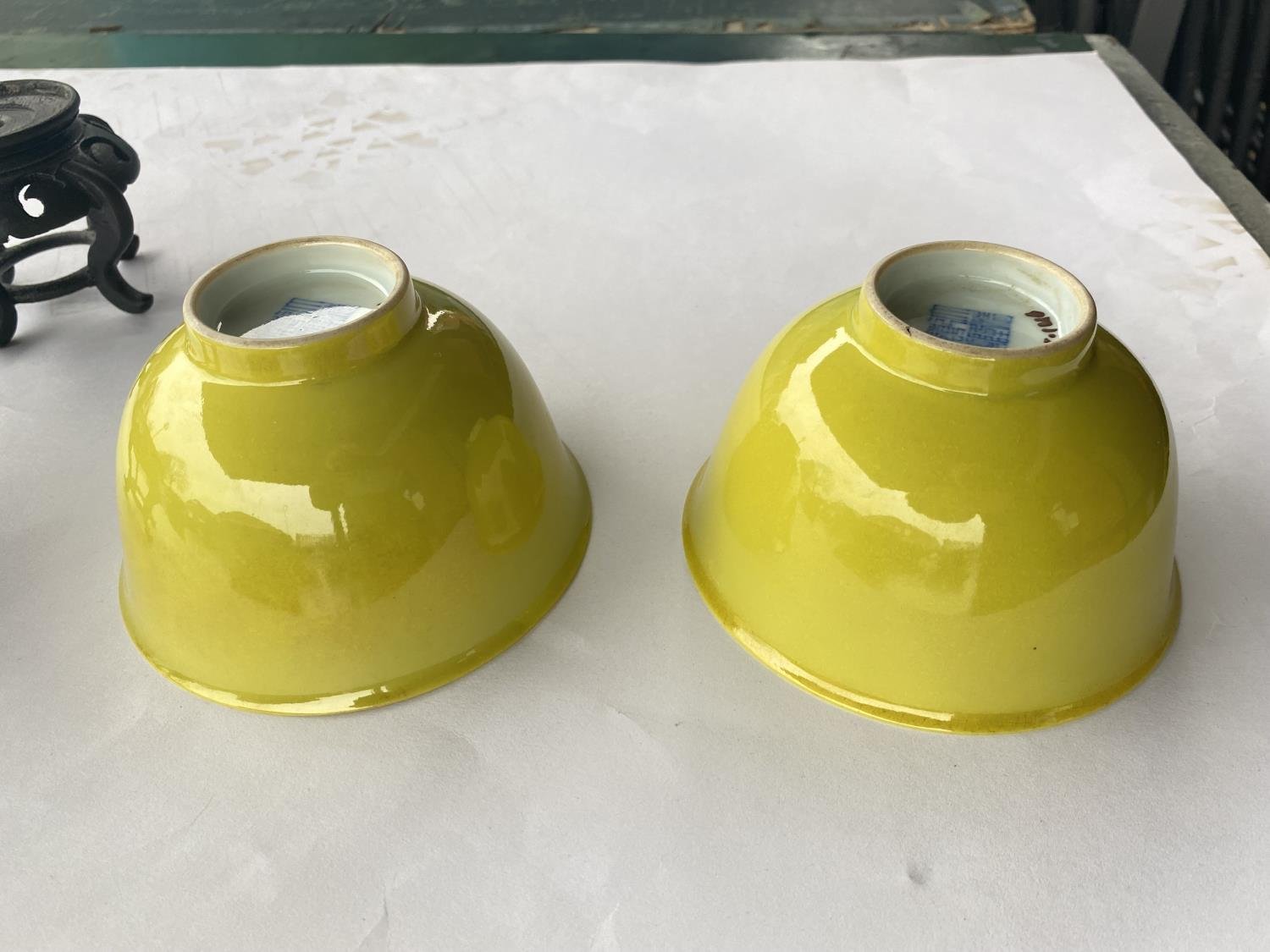
A pair of rice bowls under an imperial yellow monochrome glaze, on carved hardwood stands, each with a seal mark to the base. Yellow was a restricted colour in Qing court usage, reserved by sumptuary convention for the emperor and the most senior of the imperial household, which is why yellow monochromes carry a weight out of proportion to their plainness.
Monochromes are harder to judge than painted wares, because there is no decoration to date. The evidence is all in the glaze — its depth, how it pools where the form changes, and how it stops at the foot — and in the potting. Surviving as a pair, with their stands, is uncommon.
Imperial yellow in context
Yellow monochrome was, by the general agreement of scholars that the Cleveland Museum of Art records, reserved for the imperial household or used as diplomatic gifts, which is why the trade calls it imperial yellow. The glaze is a low-fired lead glaze coloured with iron, applied over the fired white porcelain and refired — a technique in use at Jingdezhen from the Ming. Rice bowls in this colour were made as table wares for the court and, in the nineteenth century, in imitation of them.
The carved hardwood stands are part of how these bowls have been kept and displayed, and worth a word for overseas buyers: Chinese stands are often rosewood, a CITES-listed genus, though a single stand falls well within the 10 kg finished-product exemption. The pair is sold with its stands. Marks are present but not yet read or photographed under magnification; that is recorded in the catalogue below rather than glossed over.
Read more: monochromes and CITES and hardwood stands.
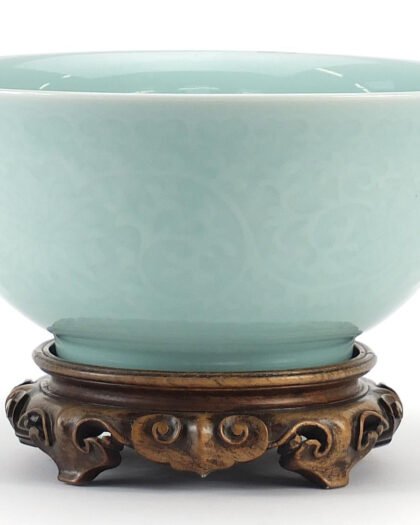
The object, up close
The finer
details.
Reference XA-0009
A question about this piece? Ask for measurements, close-up photographs or a condition report.
Discuss this piece- Dimensions
- 12.5 cm diameter; 14 cm high on the stands
- Period
- Qing dynasty
- Mark
- Seal mark to each base — reign not yet read
- Condition
- Good