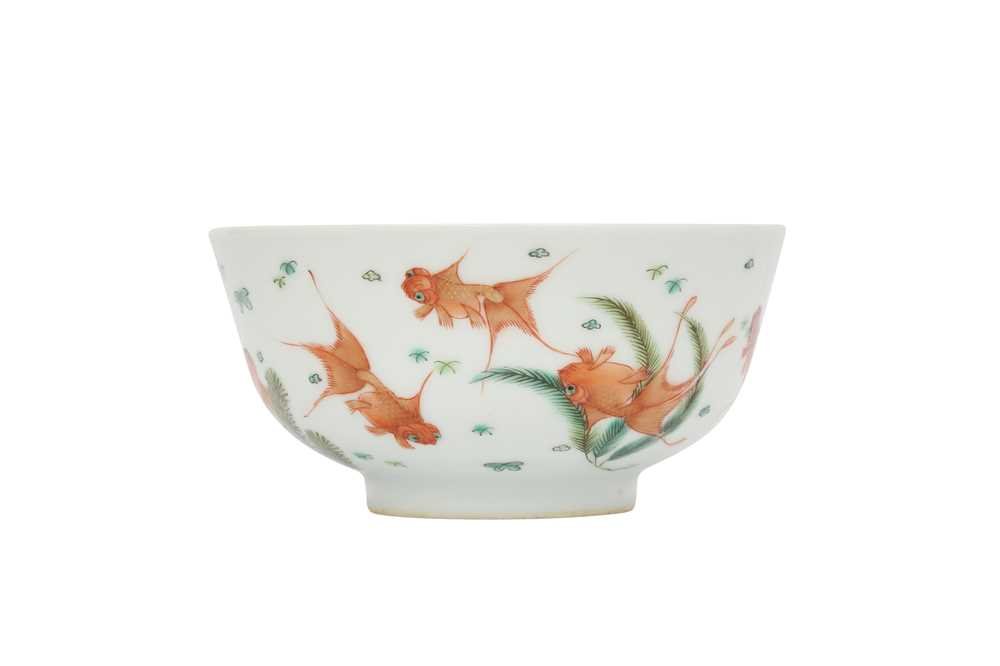
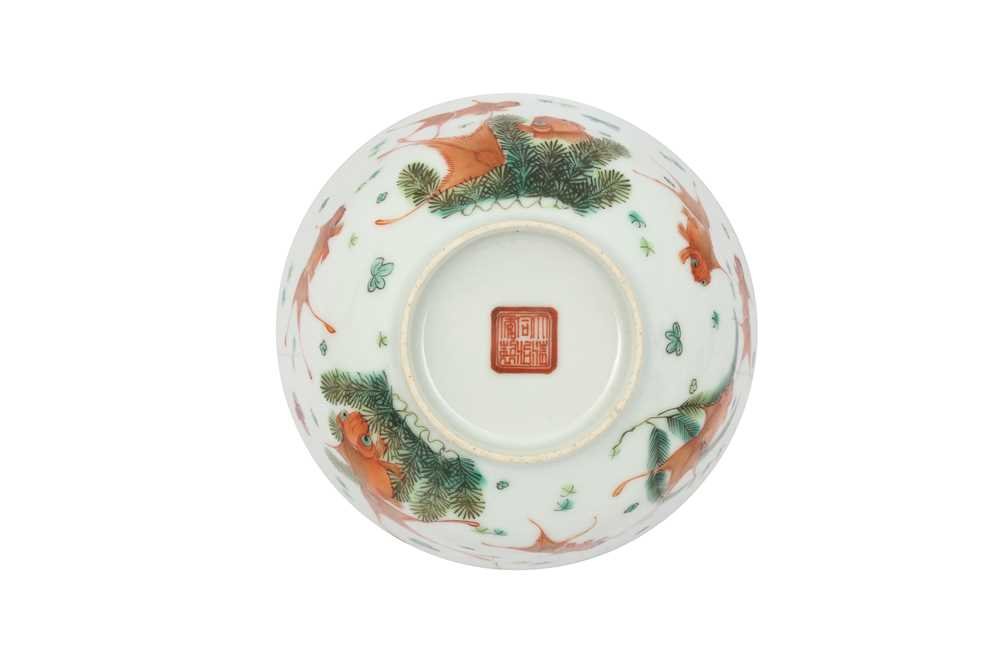
A small bowl painted to the exterior with eight goldfish among aquatic plants, the base with a six-character Tongzhi mark in iron red — and of the period.
Goldfish are a rebus: the words for fish and for abundance are homophones, so a bowl of fish is a wish for plenty. Eight is auspicious in its own right. Late-imperial porcelain is full of this kind of visual punning, and reading it is half the pleasure of the material.
A mark that is genuinely of its period on a modest, well-painted bowl is a better teaching object than a grand piece with an apocryphal one.
Famille verte in context
Famille verte is the Chinese wucai, “five colours”, or yingcai, “hard colours” — translucent overglaze enamels dominated by green, at their height in the Kangxi reign. The Metropolitan Museum notes that these enamels “did not permit much gradation in color”, so modelling had to be carried by fine drawn outlines; the palette is drawn rather than painted. The French name was coined by Albert Jacquemart, in print by 1862.
The goldfish is one of the most cheerful subjects in Chinese decoration, a pun on abundance (yu, fish, sounds like yu, surplus), and goldfish bowls were made for real use as well as display. The Tongzhi reign (1862–74) fell in the years after the Taiping war had halted the imperial kilns, when good work was scarcer than it had been; a bowl of this quality is worth having for that reason.
Read more: the famille palettes explained and famille verte.
The object, up close
The finer
details.
Reference XA-0029
A question about this piece? Ask for measurements, close-up photographs or a condition report.
Discuss this piece- Dimensions
- 12 cm diameter
- Period
- Qing dynasty, Tongzhi (1862–1874)
- Mark
- Six-character Tongzhi mark in iron red — mark and period
- Condition
- Very good