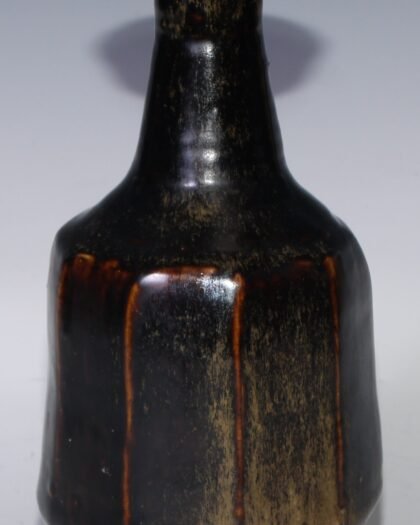
A monochrome is a pot whose whole statement is a single coloured glaze. The Chinese court collected them for a thousand years, and the Qing imperial kilns made them to a standard no one has matched since: copper reds, celadons, yellows, blues, blacks and whites, each fired to a precise recipe and each, in the eighteenth century, with a specific ritual or courtly use. For a collector they are demanding — there is nowhere for a fault to hide — and rewarding for the same reason.
The glazes
Copper red. The hardest colour in the kiln, because copper turns red only in a narrow reducing window. Ming Xuande copper red is legendary; the Qing revived it as sang de boeuf (langyao), a deep streaked red that runs and stops in a neat line above the foot, and as the pale, mottled “peachbloom” of the Kangxi scholar’s wares.
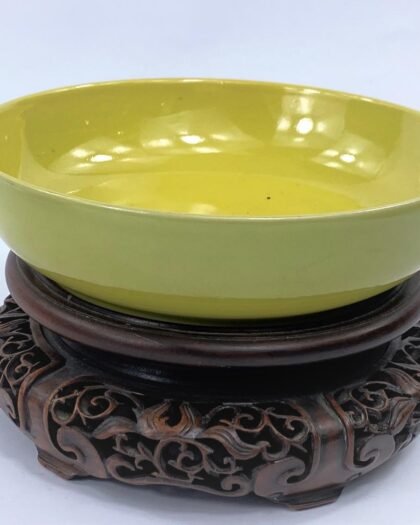
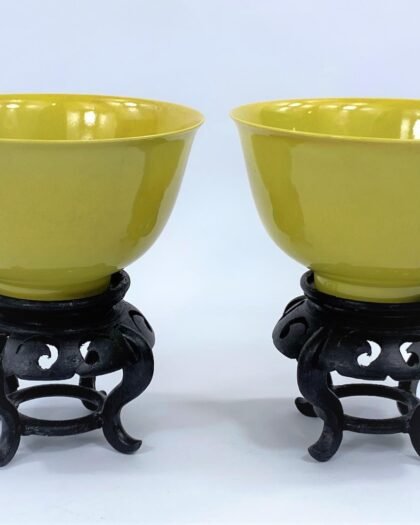
Yellow. An iron-based lead glaze over the fired porcelain, yellow was reserved for the emperor and the highest ranks of the court under the Qing and appears on the ritual and dining wares of every reign from Kangxi to Guangxu. Imperial yellow bowls with Qianlong, Tongzhi and Guangxu marks are a distinct, active area of the market.
Blue. Cobalt in the glaze rather than under it gives the sacrificial or “altar” blue used for ritual vessels, the powder-blue of Kangxi, and the pale clair de lune of the eighteenth century.
White, black and others. Dehua‘s blanc de Chine and Jingdezhen’s white; mirror black; tea-dust and iron-rust glazes imitating bronze; and the archaistic Guan-type and Ru-type glazes of the Yongzheng and Qianlong kilns, made in conscious homage to the Song.
How to read a piece
Everything is at the foot. A monochrome glaze has to stop somewhere, and how it stops — a controlled line above an unglazed rim, a run that was ground off after firing, a wash of brown dressing on a copper red — is one of the most period-specific things on a pot. The colour of the glaze where it thins on the rim, the depth of the pooling in the interior, and the quality of the white or pale body underneath do the rest. The mark, where there is one, is usually in underglaze blue on the glazed base and is copied as freely as any other; the reign marks guide applies. The reading the base guide shows glaze stops and foot rims on Met examples, including a Qianlong clair de lune vase.
Condition
On a monochrome, condition is the whole story. A chip shows the body; a hairline shows as a fine dark line under a raking lamp; restoration shows under ultraviolet and often as a change in the surface texture. Crazing in a glaze meant to craze — Guan-type, Ru-type — is not damage. We describe every fault and photograph it, and we say when a glaze has been ground at the foot. See what a hairline does to value.
Read more
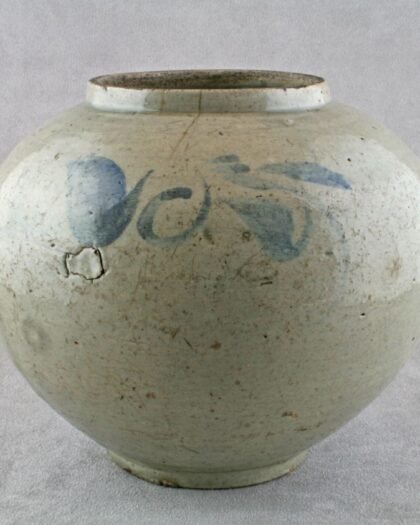
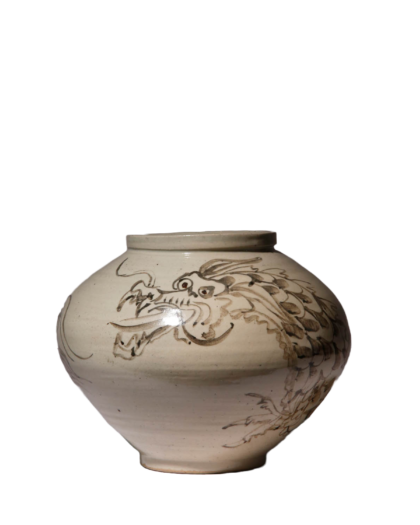
The Qing porcelain guide covers the imperial monochromes reign by reign. Korean white porcelain, a monochrome tradition in its own right, is on the Joseon page.