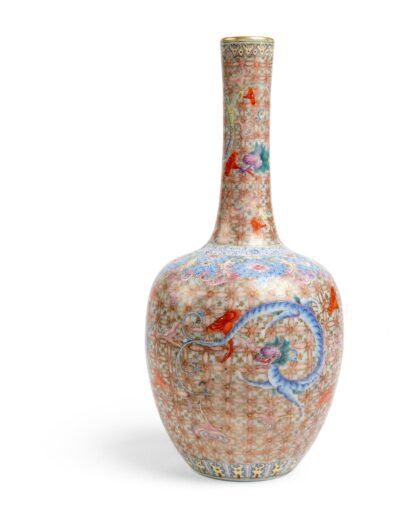
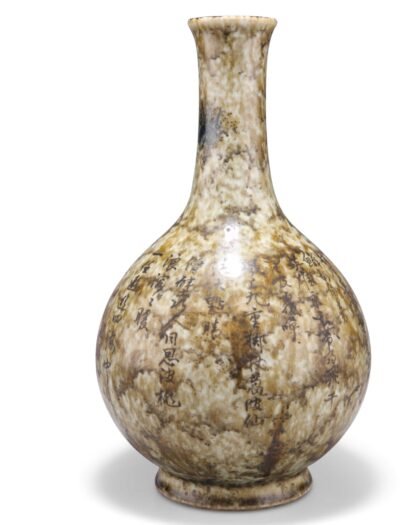
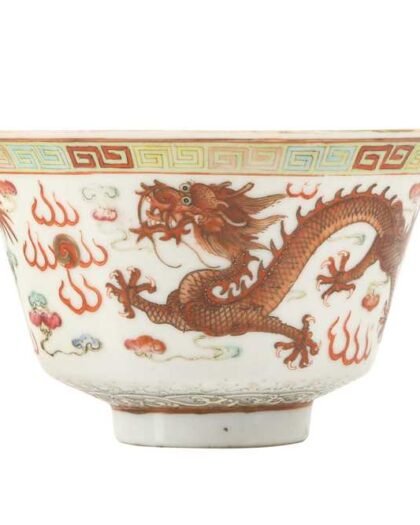
Famille rose is the French name, given by nineteenth-century collectors, for the opaque overglaze enamel palette introduced at Jingdezhen around 1720. The British Museum’s summary is exact: a new opaque palette was invented around AD 1720; white enamel increased the shades available to the potter; a new pink softened the whole effect; and the technique for making that pink from gold was introduced to China from Europe. It replaced the translucent greens of famille verte as the court’s palette under Yongzheng and Qianlong, spread to export ware within a generation, and remained the dominant decoration of Chinese porcelain through the nineteenth century and the Republic. Most of the enamelled porcelain a collector will meet is famille rose of some period.
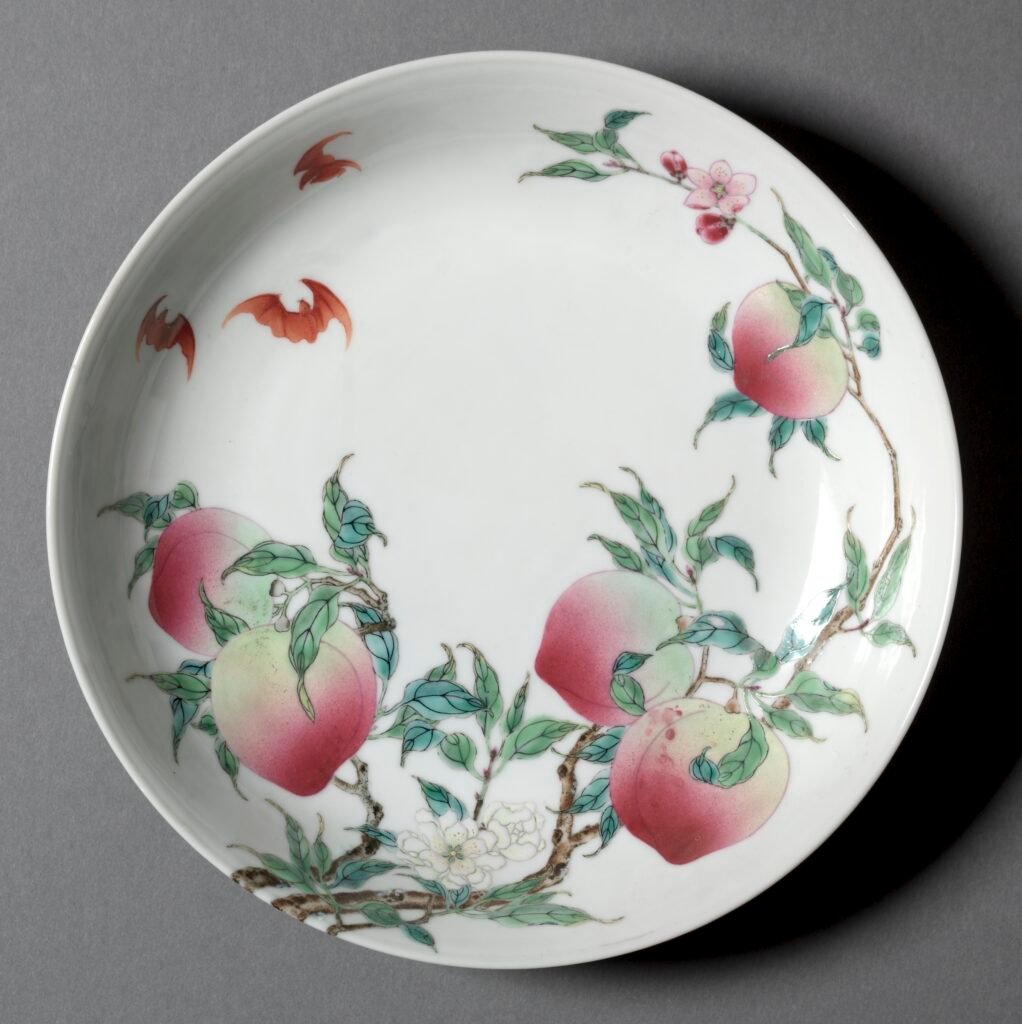
How it is made
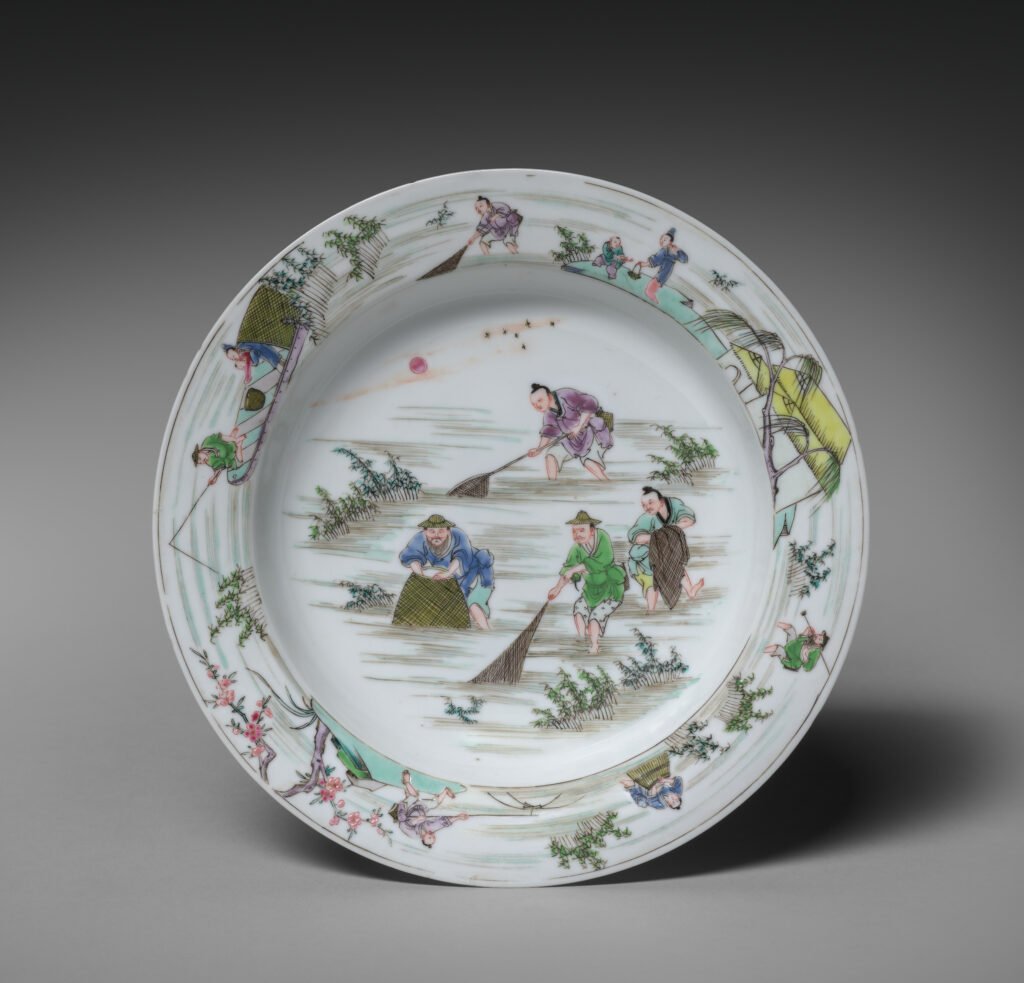
The porcelain is fired and glazed first. The enamels — coloured glass ground into a medium — are then painted onto the glazed surface and fixed in a second, low-temperature firing in a muffle kiln. Because the colours are opaque and can be mixed with white, the painter can shade a petal or a face from dark to light the way a watercolourist would, which the earlier translucent enamels could not do. The result sits on the surface and can be felt with a fingertip, and it wears: rims, handles and high points lose enamel and gilding with handling.
Reading a piece
Yongzheng and early Qianlong famille rose is thin, precise and sparing, on flawless white porcelain, with the pink used in small quantities. Later Qianlong and Jiaqing enamels are richer and busier, often on coloured grounds — ruby, yellow, turquoise — with sgraffiato scrolling scratched through them. Nineteenth-century famille rose, the Tongzhi and Guangxu court wares and the vast export lines, uses thicker enamels, more gilding and denser patterns; the famous “Canton” or rose-medallion export porcelain belongs here. Republic famille rose is often finer than its reputation, on a very white, thin body, with a bright, glassy surface and a Qianlong mark it does not deserve. Weighing the mark against the enamels is the whole exercise; the reign marks guide and the Republic guide show how.
Condition
Enamel wear is expected and is not damage, but it is graded: light rubbing to gilding is normal on a two-hundred-year-old rim, flaking enamel is not. Overglaze enamels also conceal restoration easily, because a repainted area can be fired or cold-painted to match; we check under ultraviolet and describe what we find. See what a hairline does to value.
Read more
The journal explains the relationship between the rose, verte and noire palettes, and the Qing porcelain guide places famille rose in its reigns.